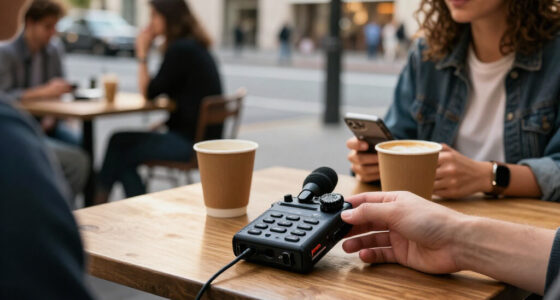
The best podcast microphones for interviews depend on where you record and how many people need a mic. I’d choose the DJI Mic Mini (2 TX + 1 Mobile RX) as the best overall for two-person mobile interviews, with the COMICA Revo S standing out for a handheld interview style and the ZealSound USB mic for desk-based recording. The main tradeoff is between wireless freedom and the steadier, simpler setup of a USB microphone. Compatibility, how each guest wears or holds a mic, and whether your recording device supports the connection matter as much as the microphone itself. Read on for the full breakdown of all 13 options and the interview setups each one suits.

Get everyday essentials delivered free with Prime
- Fast, free delivery on millions of items
- Prime Video, Amazon Music and more included
- Member-only deals all year
Complete the kit


Key Takeaways
- The DJI Mic Mini kits lead for two-person mobile interviews: each includes two transmitters, while the Mobile RX version is aimed at phone recording and the charging-case kit adds a different receiver setup.
- The COMICA Revo S fills a distinct role: its wireless handheld format suits host-led interviews better than clip-on lavaliers, though it asks both speakers to share or pass a mic.
- The ZealSound is the desk-recording outlier: USB controls and monitoring suit a fixed computer setup, but it is less suited to recording two people moving around.
- Several options are two-mic lavalier bundles: the Labstandard, 2 Pack, and other dual-mic kits can cover host and guest, but compatibility and receiver connection should guide the choice.
- More transmitters do not automatically mean a better interview kit: the 4 Pack offers extra coverage, while simpler one- or two-mic kits may be easier to manage for a regular host-and-guest show.
| Mini Mic Pro Wireless Microphone for iPhone & Android with Charging Case |  | Best for Solo Mobile Interviews | Microphone form factor: Lavalier | Polar pattern: Omnidirectional | Connectivity: USB | VIEW LATEST PRICE | See Our Full Breakdown |
| 4-in-1 Mini Mic & Desk Stand, Interview Handheld Wireless Lavalier Microphone |  | Best for Flexible Recording Setups | Microphone form factor: Lavalier | Configurations: 4-in-1 wireless microphone and desk stand, handheld interview mic, and video-recording setup with smartphone mount | Connectors: Lightning and USB Type-C | VIEW LATEST PRICE | See Our Full Breakdown |
| Labstandard Dual Wireless Lavalier Microphone Set for iPhone and USB-C Devices |  | Best for Two-Person Interviews | Microphone type: Two omnidirectional condenser lavalier microphones | Connectivity: 2.4 GHz wireless; Bluetooth also listed | Connectors: Lightning and USB Type-C | VIEW LATEST PRICE | See Our Full Breakdown |
| Mini Mic Pro Wireless Lavalier Microphone for iPhone and Android | 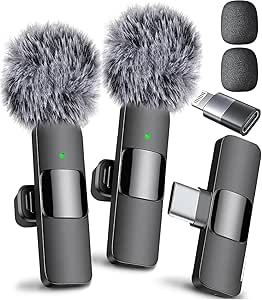 | Best for Quick Outdoor Interviews | Microphone form factor: Lavalier | Polar pattern: Omnidirectional | Connectivity: Wireless | VIEW LATEST PRICE | See Our Full Breakdown |
| 4 Pack Wireless Lavalier Microphone for iPhone and Android |  | Best for Group Interviews | Microphone count: 4 | Polar pattern: Omnidirectional | Connectivity: Auxiliary and USB | VIEW LATEST PRICE | See Our Full Breakdown |
| 2 Pack Wireless Lavalier Microphone for iPhone, iPad, and Android Phones |  | Best Value for Two-Person Phone Interviews | Microphone type: Wireless lavalier | Included microphones: 2 | Connectivity: 2.4 GHz wireless | VIEW LATEST PRICE | See Our Full Breakdown |
| DJI Mic Mini (2 TX + 1 Mobile RX), Ultralight, Active Noise Cancelling |  | Best for Discreet, Long-Range Interviews | Microphone type: Lavalier | Transmitters: 2 | Transmitter weight: 10 g | VIEW LATEST PRICE | See Our Full Breakdown |
| MAYBESTA Wireless Mini Microphone for iPhone and Android – Lavalier Lapel Mic for Content Creators |  | Best for Mixed iPhone and Android Setups | Microphone type: Wireless mini lavalier | Connectors: Lightning and USB Type-C | Pickup pattern: Omnidirectional | VIEW LATEST PRICE | See Our Full Breakdown |
| COMICA Revo S Wireless Handheld Microphone |  | Best Handheld Pick for Focused Voice Capture | Microphone type: Wireless handheld | Capsule: 14 mm condenser | Pickup pattern: Cardioid, unidirectional | VIEW LATEST PRICE | See Our Full Breakdown |
| DJI Mic Mini Wireless Microphone Kit (2 Transmitters, 1 Receiver, Charging Case) | 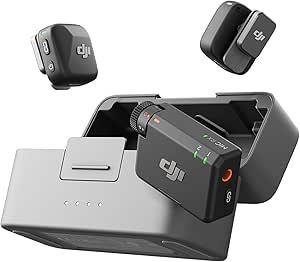 | Best for Extended Two-Person Recording | Included: 2 transmitters, 1 receiver, charging case, and accessories | Transmitter weight: 10 g | Maximum transmission range: Up to 400 m | VIEW LATEST PRICE | See Our Full Breakdown |
| ZealSound Podcast Microphone for PC, Noise Cancellation USB Mic with Gain, Volume Adjustment & Mute Button, Monitoring & Echo, for YouTube, TikTok, Podcasting, Streaming, iPhone, iPad, Android, Mac |  | Best for Seated, Desk-Based Interviews | Frequency response: 40 Hz–18 kHz | Sampling rate: 46 kHz | Sensitivity: –45 dB ±3 dB | VIEW LATEST PRICE | See Our Full Breakdown |
| Wireless Lavalier Microphone for iPhone, iPad, Android – 2 Pack with Noise Reduction and Plug & Play |  | Best for Simple Two-Person Mobile Interviews | Connectivity: 2.4 GHz wireless | Connector: USB Type-C | Microphone form: Lavalier | VIEW LATEST PRICE | See Our Full Breakdown |
| Wireless Mini Microphone for iPhone and Android, 2 Pack Clip-On Lavalier Mic with Noise Reduction and USB-C & Lightning Compatibility |  | Best Compact Dual-Mic Pick | Connectivity: Wireless | Connectors: Lightning, USB Type-C | Microphone form: Mini | VIEW LATEST PRICE | See Our Full Breakdown |
| podcast microphones for interview | Connectivity | Connectors |
|---|---|---|
| Mini Mic Pro Wireless Micropho | USB | Lightning and USB Type-C |
| 4-in-1 Mini Mic & Desk Stand | — | Lightning and USB Type-C |
| Labstandard Dual Wireless Lava | 2.4 GHz wireless; Bluetooth also listed | Lightning and USB Type-C |
| Mini Mic Pro Wireless Lavalier | Wireless | Lightning and USB Type-C |
| 4 Pack Wireless Lavalier Micro | Auxiliary and USB | USB Type-C, Lightning, PC |
| 2 Pack Wireless Lavalier Micro | 2.4 GHz wireless | — |
| DJI Mic Mini | — | — |
| MAYBESTA Wireless Mini Microph | — | Lightning and USB Type-C |
| COMICA Revo S Wireless Handhel | — | — |
| DJI Mic Mini Wireless Micropho | Bluetooth, DJI OsmoAudio, and USB Type-C | — |
| ZealSound Podcast Microphone f | USB-C, Lightning, 3.5 mm headphone jack | — |
| Wireless Lavalier Microphone f | 2.4 GHz wireless | — |
| Wireless Mini Microphone for i | Wireless | Lightning, USB Type-C |
More Details on Our Top Picks
Mini Mic Pro Wireless Microphone for iPhone & Android with Charging Case
For interviews recorded on a phone, this lavalier keeps the setup simple: plug-and-play USB connectivity, a clip-on mic, and wind protection let a solo host get started without a desk rig. Its up to six hours of recording suits shorter interviews and field segments, while the charging case makes carrying the kit easier. Compared with the Labstandard Dual Wireless Lavalier Microphone Set, this is a more straightforward choice for one speaker; Labstandard is the better fit when host and guest both need separate mics. The tradeoff is the single-channel omnidirectional pickup, which can capture surrounding noise and offers less control in busy locations. I’d choose it for a lightweight phone workflow, not for recording two-person conversations on separate microphones.
Pros:- Plug-and-play compatibility with Lightning and USB-C devices
- Compact lavalier form factor with a charging case
- Includes wind protection for mobile recording
- Up to six hours of recording
Cons:- Single-channel, omnidirectional pickup is less suited to two-person interviews
- Omnidirectional pickup may collect background sound outdoors
- Battery details are unclear: the product description cites rechargeable operation, while the specs list included C batteries
Best for: Solo podcasters recording short, phone-based interviews who want a clip-on mic and a portable charging case.
Not ideal for: Interviewers who need two separately mic’d speakers or who regularly record in noisy outdoor locations.
- Microphone form factor:Lavalier
- Polar pattern:Omnidirectional
- Connectivity:USB
- Connectors:Lightning and USB Type-C
- Compatible devices:Android, laptop, smartphone, tablet, iPad
- Recording time:Up to 6 hours, according to product description
- Special features:1-touch recording, battery indicator light, clip, noise reduction
- Warranty:90-day refund guarantee and 6-month replacement or warranty
Our verdict“Choose this for convenient solo phone interviews; pick the Labstandard set if both people need their own microphone.”
4-in-1 Mini Mic & Desk Stand, Interview Handheld Wireless Lavalier Microphone
This pick is aimed at interviewers who switch between a desk, handheld questions, and phone video: its 4-in-1 format combines a desk stand, handheld configuration, lavalier mic, and smartphone mount. That range of setups is a clear contrast with the Mini Mic Pro Wireless Microphone for iPhone & Android, which is the simpler choice when a clipped mic and quick phone connection are enough. Auto pairing and noise reduction may reduce setup friction, but the supplied information does not specify battery life or wireless range, making it harder to plan longer sessions than with the Labstandard set, which lists about six hours. The multiple parts also add handling and setup complexity. I’d favor its versatility for creators who vary their interview format, rather than for someone seeking the smallest, simplest kit.
Pros:- Multiple configurations for desk, handheld, lavalier, and phone video use
- Plug-and-play setup with auto pairing
- Noise-reduction feature is intended to help with clearer interview audio
- Lightning and USB Type-C connector options
Cons:- No battery runtime or wireless range is provided in the product data
- The multi-part design may take more setup and handling than a basic clip-on mic
- Battery replacement may be needed; the listing specifies two included 12V batteries
Best for: Phone-based interview creators who alternate between seated desk conversations, handheld questions, and video recording.
Not ideal for: Minimalist solo podcasters who want a clearly specified battery runtime and a single, simple lavalier setup.
- Microphone form factor:Lavalier
- Configurations:4-in-1 wireless microphone and desk stand, handheld interview mic, and video-recording setup with smartphone mount
- Connectors:Lightning and USB Type-C
- Compatible devices:Smartphone
- Features:Noise reduction, plug-and-play setup, auto pairing
- Batteries:Two included 12V batteries
- Materials:Metal and plastic
- Dimensions:5 x 5.9 x 1.4 inches
Our verdict“Pick this if you need several phone-interview formats in one kit, but choose the Mini Mic Pro for a simpler clip-on workflow.”
Labstandard Dual Wireless Lavalier Microphone Set for iPhone and USB-C Devices
The strongest reason to choose this kit is right in its name: two wireless lavalier microphones let an interviewer and guest record on separate mics, rather than relying on one device to capture both voices. That gives it a more interview-focused setup than the single-mic Mini Mic Pro Wireless Microphone for iPhone & Android with Charging Case. The listed two audio channels and 2.4 GHz transmission support a dedicated two-person workflow, and Lightning and USB-C connectors suit common phones and tablets. Its roughly six-hour battery life is workable for standard sessions, but may constrain a full day of interviews. The product data is also inconsistent about batteries, listing C batteries while describing rechargeable components, so I would verify the power arrangement before a recording day. It’s the clearest fit here for host-and-guest phone interviews.
Pros:- Includes two microphones for host-and-guest recording
- Two audio channels are listed
- Supports Lightning and USB Type-C devices
- Noise reduction and real-time audio syncing are included in the product description
Cons:- About six hours of battery life may not cover extended recording days
- Power information is inconsistent between the rechargeable description and C-battery specification
- Wireless transmission and Bluetooth are both listed, which may leave the connection method unclear
Best for: Podcast hosts recording one-on-one interviews on compatible phones, tablets, or cameras who want a microphone for each speaker.
Not ideal for: Interviewers who need a clearly documented power system, longer sessions beyond six hours, or a larger group than two speakers.
- Microphone type:Two omnidirectional condenser lavalier microphones
- Connectivity:2.4 GHz wireless; Bluetooth also listed
- Connectors:Lightning and USB Type-C
- Audio channels:2
- Latency:0.008 seconds
- Battery life:About 6 hours
- Compatibility:Smartphones, tablets, cameras, Lightning and USB-C devices
- Dimensions:4.5 x 3.3 x 0.7 inches
Our verdict“Choose Labstandard for a two-person mobile interview kit, provided its battery arrangement suits your recording routine.”
Mini Mic Pro Wireless Lavalier Microphone for iPhone and Android
When an interview moves between indoor rooms and outdoor locations, the included foam and deadcat wind covers give this compact lavalier a practical advantage over a bare clip-on. It connects through Lightning and USB-C adapters without requiring an app or Bluetooth pairing, so the phone setup stays direct. Compared with the Labstandard Dual Wireless Lavalier Microphone Set, this Mini Mic Pro is better suited to a single speaker who values portability and included wind protection; Labstandard is the stronger match for recording both host and guest on separate mics. This listing includes two lavalier microphones, but its stated omnidirectional pattern and single-channel specification do not clearly establish a two-person, two-channel workflow. The up-to-six-hour runtime may also call for a recharge during longer interview days.
Pros:- Includes foam and deadcat wind covers for varied recording locations
- Lightning and USB-C adapters support common phones and tablets
- No app or Bluetooth pairing is required
- Up to six hours of recording per charge
Cons:- Up to six hours may be limiting for long interview days
- Omnidirectional pickup can collect surrounding noise
- The listing includes two lavalier microphones but specifies one audio channel, leaving simultaneous two-speaker recording unclear
Best for: Mobile creators recording solo interviews outdoors who want wind covers and direct Lightning or USB-C phone connection.
Not ideal for: Interview teams who need clearly specified dual-channel recording or a microphone system for sessions longer than six hours.
- Microphone form factor:Lavalier
- Polar pattern:Omnidirectional
- Connectivity:Wireless
- Connectors:Lightning and USB Type-C
- Battery life:Up to 6 hours per charge
- Weight:80 g
- Included components:Two lavalier microphones, one receiver, USB charging cable, two clips, two foam tips, two deadcat tips
- Dimensions:3 x 0.5 x 0.25 inches
Our verdict“Choose this for a compact solo interview setup with outdoor wind protection, not for a confirmed two-channel host-and-guest rig.”
4 Pack Wireless Lavalier Microphone for iPhone and Android
For roundtables and multi-guest interviews, this set stands apart with four wireless microphones and support for simultaneous connection, a capacity none of the other listed kits clearly matches. The up-to-164-foot transmission range also gives speakers more room to spread out than the more compact phone setups, such as the Labstandard Dual Wireless Lavalier Microphone Set, which is designed around two mics. The tradeoff is a less streamlined workflow: Android users may need to enable OTG, and the product data lists AA batteries rather than rechargeable power. Its omnidirectional pickup can capture room sound alongside voices, so a lively setting may need extra care. I’d choose it when recording several people is the priority; for a standard host-and-guest interview, a two-mic kit is simpler to manage.
Pros:- Supports simultaneous connection of up to four microphones
- Listed wireless range reaches up to 164 feet
- Compatible with iPhone, Android, computers, tablets, and cameras
- Noise reduction is included
Cons:- Android users may need to enable OTG
- Requires an AA battery and is not described as rechargeable
- Omnidirectional pickup may capture room noise in busy interview settings
Best for: Interview hosts recording panels or group conversations with as many as four speakers on compatible phones, computers, or cameras.
Not ideal for: Solo or two-person podcasters seeking the simplest setup, or Android users who do not want to configure OTG and manage replaceable batteries.
- Microphone count:4
- Polar pattern:Omnidirectional
- Connectivity:Auxiliary and USB
- Connectors:USB Type-C, Lightning, PC
- Wireless range:Up to 164 feet
- Signal-to-noise ratio:80 dB
- Audio sensitivity:90 dB
- Power:Battery powered; one AA battery required
Our verdict“Choose this for multi-speaker interviews where four-mic capacity and room to move matter more than a minimal setup.”
2 Pack Wireless Lavalier Microphone for iPhone, iPad, and Android Phones
For a simple interview recorded on a phone, this set’s main advantage is that it includes two clip-on transmitters, so both speakers can be miked without passing a single microphone back and forth. Its automatic pairing and plug-and-play setup suit quick shoots better than a more involved kit like the DJI Mic Mini Wireless Microphone Kit. The 2.4 GHz connection is specified for ranges up to 66 feet, giving an interviewer room to move, though crowded wireless environments can bring interference. Each mic runs for about four hours per charge, which is workable for short interviews but less forgiving than the DJI kit’s extended case-supported runtime. I’d pick this for basic, mobile conversations—not for long recording days or critical audio work where dependable connection and flexible controls matter most.
Pros:- Includes two microphones for recording an interviewer and guest at once
- Automatic pairing and plug-and-play operation simplify setup
- Specified wireless transmission range reaches up to 66 feet
- Rechargeable microphones provide up to four hours of use
Cons:- Four-hour working time may not cover long interview days
- Some devices require adapters for connection
- 2.4 GHz wireless operation may face interference in crowded environments
Best for: Phone-based interviewers who need two clip-on mics for short conversations and want a straightforward setup.
Not ideal for: Creators recording long sessions or working in busy wireless environments, where the four-hour runtime and possible interference may become limiting.
- Microphone type:Wireless lavalier
- Included microphones:2
- Connectivity:2.4 GHz wireless
- Connector:USB Type-C
- Pickup pattern:Omnidirectional
- Transmission range:Up to 66 feet
- Battery life:Up to 4 hours
- Special features:Clip and noise reduction
Our verdict“Choose this set for short, two-person phone interviews on a straightforward setup; choose the DJI Mic Mini kit for longer sessions and more recording headroom.”
DJI Mic Mini (2 TX + 1 Mobile RX), Ultralight, Active Noise Cancelling
The DJI Mic Mini is a strong fit when interview subjects need lightweight transmitters and the recording setup has to stay out of the way. At 10 g per transmitter, it is less conspicuous on clothing than the COMICA Revo S Wireless Handheld Microphone, which favors a visible, hand-held interview style. This kit’s active noise cancelling and stated 300-meter transmission range make it better suited to moving interviews or locations where some ambient sound needs control. Its listed 11.5-hour battery life also gives it more session time than the two-pack lavalier set in this roundup. The tradeoff is that noise cancelling cannot replace careful mic placement, and the system is not waterproof. I’d choose it for mobile, discreet interviews, but not for wet conditions or buyers who want a simple handheld mic.
Pros:- Ultralight 10 g transmitters are discreet and comfortable to wear
- Active noise cancelling offers adjustable control over ambient sound
- Listed transmission range reaches up to 300 meters
- Up to 11.5 hours of battery life supports extended recording
Cons:- Not waterproof, so wet-weather recording calls for protection
- Magnets may interfere with some electronic devices
- Battery replacement is required over time
Best for: Mobile interviewers who want two discreet, lightweight lavalier transmitters, long wireless reach, and noise-cancelling control.
Not ideal for: Interviewers who record in wet locations or prefer a handheld microphone that guests can easily speak into.
- Microphone type:Lavalier
- Transmitters:2
- Transmitter weight:10 g
- Transmission range:Up to 300 m
- Battery life:Up to 11.5 hours
- Signal-to-noise ratio:70 dB
- Connector:USB Type-C
- Special feature:Active noise cancelling
Our verdict“Pick the DJI Mic Mini for discreet, mobile two-person interviews with long wireless reach, and skip it if you need waterproofing or a handheld format.”
MAYBESTA Wireless Mini Microphone for iPhone and Android – Lavalier Lapel Mic for Content Creators
If an interview crew switches between Lightning and USB-C phones, the MAYBESTA’s dual-plug design reduces the need to carry separate adapters. That makes it more convenient across devices than the 2 Pack Wireless Lavalier Microphone for iPhone, iPad, and Android Phones, whose listing notes that some devices need adapters. The set also offers plug-and-play connection, noise reduction, and a mute function—useful basics for a quick remote or on-location conversation. Its omnidirectional pickup can capture voices without precise aiming, but it may also pick up room noise, so placement and a quiet setting still matter. Battery-life details are not specified, and the included battery requirement is listed as a C battery. I’d choose it for compatibility flexibility, not when runtime certainty or a more directional pickup is the priority.
Pros:- Dual Lightning and USB Type-C connectors support different phone generations
- Plug-and-play operation avoids the need for an app
- Mute function and noise reduction provide useful recording controls
- Listed compatibility includes smartphones, tablets, laptops, and iPads
Cons:- Omnidirectional pickup can capture unwanted room sound
- Battery-life details are not specified
- The listing specifies a C battery, which may not suit buyers expecting a rechargeable mic
Best for: Interviewers who record with a mix of Lightning and USB-C phones and want a compact lavalier with simple connection.
Not ideal for: Podcasters in noisy rooms or those planning long sessions who need a more directional pickup or clearly specified runtime.
- Microphone type:Wireless mini lavalier
- Connectors:Lightning and USB Type-C
- Pickup pattern:Omnidirectional
- Signal-to-noise ratio:80 dB
- Impedance:2200 ohm
- Frequency response:2.4 GHz
- Special features:Mute, noise reduction, and plug-and-play
- Battery listing:1 C battery required; included
Our verdict“Choose MAYBESTA when one compact mic needs to connect across Lightning and USB-C devices, but look elsewhere for known battery runtime or stronger room-noise rejection.”
COMICA Revo S Wireless Handheld Microphone
The COMICA Revo S takes a different approach from the clip-on systems here: its handheld form gives guests an obvious place to speak, while the cardioid pattern favors sound from the front rather than capturing the room equally from all directions. That makes it a better fit for structured sit-down interviews than the omnidirectional MAYBESTA lavalier, especially when background noise is a concern. It also offers 48 kHz/24-bit recording, three gain levels, and one-key noise reduction, giving the interviewer more control over recording level and processing. Up to 15 hours of battery life is generous for a session-heavy day. The tradeoff is the handheld format: it needs to be positioned and passed or held, and Lightning devices require a separate compatible adapter.
Pros:- Cardioid pickup focuses capture toward the speaker in front
- 48 kHz/24-bit recording supports detailed audio capture
- Three gain levels and one-key noise reduction add practical control
- Up to 15 hours of battery life suits extended recording days
Cons:- Handheld operation requires active positioning rather than hands-free use
- Lightning devices need a separate OTG-compatible USB-C-to-Lightning adapter
Best for: Interviewers who want a guest-facing handheld mic, front-focused pickup, and adjustable gain for phone or computer recordings.
Not ideal for: Creators who need hands-free lavalier recording or use Lightning devices without a compatible USB-C-to-Lightning adapter.
- Microphone type:Wireless handheld
- Capsule:14 mm condenser
- Pickup pattern:Cardioid, unidirectional
- Recording quality:48 kHz/24-bit
- Noise reduction:One-key CalMix denoise
- Gain adjustment:3 levels
- Battery life:Up to 15 hours
- Connector:USB Type-C
Our verdict“Choose the COMICA Revo S for a controlled, handheld interview with focused pickup; choose a lavalier such as the DJI Mic Mini when speakers need hands-free recording.”
DJI Mic Mini Wireless Microphone Kit (2 Transmitters, 1 Receiver, Charging Case)
For interviewers who need two speakers mic’d and want fewer interruptions between sessions, this kit stands out for its two transmitters and charging case, with up to 48 hours of battery life listed for the system with the case. That gives it more between-charge headroom than the DJI Mic Mini (2 TX + 1 Mobile RX), whose listed battery life is 11.5 hours. The kit also offers two noise-cancellation levels and automatic audio limiting, which can help manage changing background conditions and unexpectedly loud voices. Its listed 400-meter maximum range suits interviews with movement, while the 10 g transmitters stay discreet. The extra capacity comes with limits: it is not waterproof, and direct connection to DJI Osmo Mobile series devices requires a first-generation OM Multifunctional Module.
Pros:- Two transmitters support interviewer-and-guest recording
- Charging case extends listed battery life to up to 48 hours
- Two noise-cancellation levels and automatic audio limiting add control
- 10 g transmitters are lightweight, with a listed maximum range of 400 m
Cons:- Not waterproof, limiting suitability for wet-weather interviews
- Direct connection to DJI Osmo Mobile series requires a first-generation OM Multifunctional Module
Best for: Interviewers recording two people across long or multiple sessions who want a charging case, noise-control options, and lightweight transmitters.
Not ideal for: Creators who record in wet conditions or need direct Osmo Mobile connection without the specified first-generation module.
- Included:2 transmitters, 1 receiver, charging case, and accessories
- Transmitter weight:10 g
- Maximum transmission range:Up to 400 m
- Battery life with case:Up to 48 hours
- Sampling rate:48 kHz
- Maximum sound pressure level:120 dB SPL
- Connectivity:Bluetooth, DJI OsmoAudio, and USB Type-C
- Compatible devices:Camera and smartphone
Our verdict“Choose this DJI kit for extended two-person interview work with a charging case; skip it if waterproofing or straightforward Osmo Mobile pairing is required.”
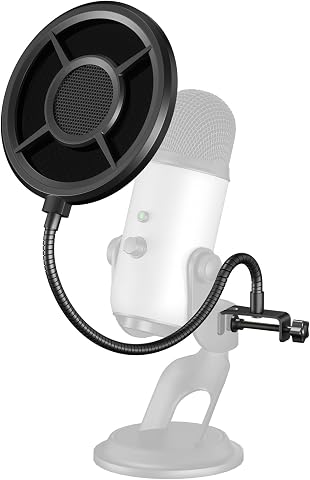
The ZealSound K66 suits interviews recorded at a desk, where both speakers can stay close to a fixed microphone and the host benefits from hands-on level control. Its physical gain and volume controls, mute button, and zero-latency headphone monitoring make quick adjustments easier than with the clip-on wireless sets, including the Wireless Lavalier Microphone 2 Pack. Broad device support also makes it flexible if your recording setup moves between a computer and a phone. The tradeoff is that a single USB microphone is less convenient for two people sitting apart: placement and mic-sharing can affect how evenly voices come through. It also lacks an XLR connection and advanced included editing software. Choose it for a controlled desk setup, not for roaming, standing, or two-person walk-and-talk interviews.
Pros:- Physical gain, volume, and mute controls allow quick adjustments during a conversation.
- Zero-latency headphone monitoring helps the host catch audio issues while recording.
- USB-C, Lightning, and a headphone jack support a range of devices.
- Noise reduction features can help limit unwanted background sound.
Cons:- A single desk microphone can be awkward for interview partners seated far apart.
- USB connectivity offers no XLR option for more expandable audio setups.
- No included advanced editing software.
Best for: Hosts recording seated interviews at a desk who want physical controls, headphone monitoring, and compatibility across computers and mobile devices.
Not ideal for: Interviewers recording two speakers at a distance or moving around, since this is a single, desk-oriented USB microphone rather than a pair of wireless clip-on mics.
- Frequency response:40 Hz–18 kHz
- Sampling rate:46 kHz
- Sensitivity:–45 dB ±3 dB
- Connectivity:USB-C, Lightning, 3.5 mm headphone jack
- Compatibility:Windows, Mac, iPhone, iPad, Android, PS4, PS5
- Monitoring:Real-time, zero-latency monitoring
Our verdict“Choose the ZealSound K66 for controlled, seated interviews with convenient on-mic adjustments; pick a dual wireless lavalier set for guests who need to move or sit farther away.”
Wireless Lavalier Microphone for iPhone, iPad, Android – 2 Pack with Noise Reduction and Plug & Play
For a two-person interview recorded on a smartphone, this set’s main advantage is straightforward: two wireless lavalier microphones let each speaker wear a mic instead of passing one between them. Its plug-and-play setup and claimed wireless range of up to 98 feet suit casual video interviews where the host and guest may not be right beside the phone. Compared with the desk-based ZealSound K66, it gives speakers more freedom to move, but sacrifices that mic’s physical gain controls and direct headphone-monitoring convenience. The omnidirectional pickup can capture voices from different angles, though it may also pick up more surrounding sound than a carefully positioned desk mic. Battery life is listed at around five hours, and Android users need OTG support, so check the phone before recording.
Pros:- Two microphones let the interviewer and guest record separately without sharing one mic.
- Plug-and-play setup reduces setup steps for smartphone recording.
- Wireless range of up to 98 feet allows flexible speaker and phone placement.
- Noise reduction and mute function add useful controls for on-location conversations.
Cons:- Battery life is around five hours, which may not cover longer recording days.
- Android compatibility depends on OTG support.
- Multiple operating modes may take time to learn.
Best for: Mobile interviewers who record two people on a compatible smartphone and want each speaker mic’d without a complicated setup.
Not ideal for: Creators who record long sessions, need detailed physical audio controls, or use an Android device without OTG support.
- Connectivity:2.4 GHz wireless
- Connector:USB Type-C
- Microphone form:Lavalier
- Polar pattern:Omnidirectional
- Channels:2
- Special features:Clip, mute function, noise reduction, reverb mode
- Compatible devices:Smartphone
- Power:Battery powered
Our verdict“Pick this set for uncomplicated, two-person smartphone interviews; choose the ZealSound K66 instead when a fixed desk setup and hands-on audio controls matter more.”
Wireless Mini Microphone for iPhone and Android, 2 Pack Clip-On Lavalier Mic with Noise Reduction and USB-C & Lightning Compatibility
This dual-pack mini set is a fit for interviewers who want small clip-on microphones and a receiver that can connect through either USB-C or Lightning. That connector flexibility gives it an advantage over the USB-C-only Wireless Lavalier Microphone 2 Pack when a crew records on a mix of newer Android phones and Lightning-equipped Apple devices. The listed 70 dB signal-to-noise ratio and noise-reduction feature are aimed at keeping speech clearer in everyday recording environments, while the plug-and-play design avoids app setup. Its compact form is convenient for video interviews, but it is not a replacement for the ZealSound K66’s desk controls and headphone monitoring. The battery is reported to last up to six hours, and the supplied specs call for C batteries, so power arrangements and device compatibility deserve a check before a planned session.
Pros:- Two microphones support recording an interviewer and guest at once.
- USB-C and Lightning connectors cover a wider range of mobile devices than USB-C alone.
- Plug-and-play operation avoids requiring an app or Bluetooth pairing.
- Compact clip-on form is easy to carry for location interviews.
Cons:- Listed battery life is limited to around six hours.
- The product data specifies C batteries, which may be less convenient than a rechargeable-only setup.
- Compatibility is limited to supported devices and does not provide the desk controls of the ZealSound K66.
Best for: Mobile interviewers who need a compact two-mic kit with both USB-C and Lightning connection options for supported phones and tablets.
Not ideal for: Hosts seeking a desktop microphone with live headphone monitoring, or buyers who want a kit without replaceable-battery requirements and device limitations.
- Connectivity:Wireless
- Connectors:Lightning, USB Type-C
- Microphone form:Mini
- Channels:2
- Signal-to-noise ratio:70 dB
- Frequency response:4.8 GHz (listed)
- Special features:One-touch recording, mute, noise reduction, plug-and-play, stable transmission
- Power:Battery powered; product data lists two included C batteries
- Dimensions:0.59 × 0.6 × 2.3 inches
Our verdict“Choose this compact set for dual-speaker mobile interviews across USB-C and Lightning devices, but favor the ZealSound K66 for a controlled desk recording with monitoring and physical controls.”

How We Picked
I ranked these microphones around the needs of an interview rather than general content creation. The main criteria were whether the kit can record a host and guest, how it connects to phones or computers, how practical it is to set up and monitor, and whether its form factor suits a seated conversation, a handheld exchange, or a mobile recording. I also weighed the value of included accessories and the flexibility each kit offers across recording situations.
The DJI Mic Mini two-transmitter kits rank highest because they directly support two-person recording while offering a more developed wireless setup than the basic clip-on bundles. The COMICA Revo S and ZealSound rank as strong alternatives for specific formats, not universal substitutes: one is handheld, the other desk-based. The remaining lavalier sets are differentiated by device compatibility, number of microphones, and simplicity. Product names alone do not confirm every connection detail, so buyers should check their phone or computer ports and the included receiver before choosing.
| podcast microphones for interview | Connectors |
|---|---|
| Mini Mic Pro Wireless Micropho | Lightning and USB Type-C |
| 4-in-1 Mini Mic & Desk Stand | Lightning and USB Type-C |
| Labstandard Dual Wireless Lava | Lightning and USB Type-C |
| Mini Mic Pro Wireless Lavalier | Lightning and USB Type-C |
| 4 Pack Wireless Lavalier Micro | USB Type-C, Lightning, PC |
| 2 Pack Wireless Lavalier Micro | — |
| DJI Mic Mini | — |
| MAYBESTA Wireless Mini Microph | Lightning and USB Type-C |
| COMICA Revo S Wireless Handhel | — |
| DJI Mic Mini Wireless Micropho | — |
| ZealSound Podcast Microphone f | — |
| Wireless Lavalier Microphone f | — |
| Wireless Mini Microphone for i | Lightning, USB Type-C |
Factors to Consider When Choosing Podcast Microphones For Interviews
Before choosing a microphone, decide how the interview will actually happen: two people at a desk, a host carrying a handheld mic, or guests recorded on phones while moving. The right setup can reduce handling and connection problems more than adding extra features. These factors help match a kit to your recording routine.
Match the microphone format to the conversation
A lavalier clips to clothing and keeps both hands free, which is useful when host and guest need to speak naturally without passing equipment. A handheld mic makes the speaker’s role clear and can work well for walk-and-talk interviews, but passing it between people changes the rhythm of a conversation. A USB desk microphone suits a fixed seat and computer recording, not guests spread around a room. Avoid buying on the word “podcast” alone; the physical format should fit how your interview will be conducted. If you expect both seated and mobile sessions, decide which format you will use most often and treat the other as a compromise.
Count microphones, not just transmitters or receivers
A two-person interview usually needs a microphone for each speaker if you want consistent placement and fewer interruptions. A receiver is not an extra microphone, and a kit advertised with multiple components may still have a different number of usable transmitters. A four-microphone bundle can help with roundtables, but extra channels add setup and coordination needs. For a host-and-guest show, a straightforward two-mic kit is often easier to operate than a larger bundle. Before buying, confirm how many people can record at once and whether the kit supports the recording app and device you plan to use.
Check device connections before choosing wireless
Phone microphones rely on the connection between the receiver and the recording device, so confirm whether your phone uses USB-C, Lightning, or another supported route. A kit that works with one phone may require an adapter or may not suit another device in your setup. If you record on both a phone and computer, check whether the receiver supports both workflows rather than assuming it does. Adapters can add clutter and introduce another point of failure during a live interview. A short compatibility check before purchase is more useful than choosing based on a broad “iPhone and Android” label alone.
Plan for room noise and microphone placement
Noise reduction can help with some surrounding sound, but it cannot replace a quiet room, suitable mic placement, or a clean recording technique. Clothing rustle, a fan, traffic, and people speaking nearby create different problems, so no single setting handles every environment equally well. Clip-on mics need secure placement and enough distance from necklaces, collars, and fabric that rubs. A handheld mic needs consistent distance from the speaker’s mouth. When interviews happen in unpredictable locations, prioritize reliable placement and a way to monitor the signal rather than expecting software or a noise feature to fix every recording.
Choose wireless convenience or desk control
Wireless lavaliers give guests room to move and avoid long cables across a table, but they add batteries, pairing, and receiver management to the recording routine. A USB desk mic keeps the connection and controls in one place, which can simplify a fixed studio session. Monitoring and mute controls are especially useful when recording alone or handling the session without a dedicated producer. Wireless setups make more sense when speakers sit apart, move around, or record directly to phones. If every episode happens at the same desk, paying for wireless flexibility may add complexity without improving the workflow.
Buy for your regular guest count, not the rare exception
Think about the number of speakers in most episodes, then account for occasional extra guests separately. A two-mic kit covers the common host-and-guest format without making each session feel like a small production. A larger bundle can make sense for panel interviews, but only if the recording setup can handle all microphones and you have a plan for managing placement and levels. A compact single-mic option may suit solo clips or quick guest segments but can constrain a full conversation. The best value is the kit that fits the interviews you record repeatedly, not the one with the most pieces.
Frequently Asked Questions
Should I buy two lavalier microphones or one handheld mic for a host-and-guest interview?
Choose two lavaliers when both speakers should be recorded at once, with hands free and consistent mic placement. A handheld mic works better when the exchange is intentionally led by one person or you want a mic passed between speakers. Passing one mic can interrupt natural conversation and make speaker distance less consistent. A two-transmitter kit is usually the more practical fit for a regular seated host-and-guest podcast. Pick the handheld format when that style is part of the interview rather than just a way to reduce equipment.
Can I use these interview microphones with both an iPhone and an Android phone?
Some listed kits are described for both iPhone and Android, while others specify a particular receiver or connector. Compatibility depends on the exact phone port, the included receiver, and sometimes the recording app. Check that the kit supports your current phone rather than relying only on a broad compatibility claim. If you switch between devices, confirm whether both connection types are included or whether an adapter is needed. For a two-phone workflow, test the connection and recording path before scheduling an interview.
Is a wireless microphone kit a good choice for interviews recorded at a desk?
It can be, especially when host and guest sit apart or need to move without cables. A desk-based USB microphone may be simpler when everyone stays in one position and recording happens on a computer. Wireless systems add charging and pairing steps that may not be worthwhile for a fixed setup. Consider whether each speaker needs a separate mic and whether your recording device accepts the receiver. Choose wireless for placement flexibility; choose a desk mic when a direct computer connection and local controls matter more.
Will noise reduction make a noisy interview location sound clean?
Noise reduction can help with some background sound, but it does not make every room suitable for recording. Loud or changing noise, fabric rubbing against a lavalier, and poor mic placement can still affect speech quality. The most reliable improvements usually come from moving to a quieter spot and placing the mic consistently. If location noise is unavoidable, select a kit with a workflow you can monitor and test it in a similar environment before recording an important conversation. Treat noise features as assistance, not a substitute for room choice and placement.
When is a four-microphone bundle worth choosing over a two-microphone kit?
A four-microphone bundle is useful when multiple guests regularly speak at the same time and the recording setup can accommodate them. For a standard host-and-guest show, the extra microphones may add charging, setup, and storage demands without improving the usual session. Also check whether the receiver and recording workflow support the number of people you plan to record together. If group episodes are occasional, a two-mic kit may be easier to use every week. Choose the larger bundle when panel interviews are a regular format, not just a possibility.
Conclusion
For most two-person mobile interviews, I’d pick the DJI Mic Mini (2 TX + 1 Mobile RX) as best overall, while the DJI Mic Mini kit with charging case is another strong choice for buyers who want its two-transmitter setup with a different receiver package. The best value is a compatible two-pack lavalier set if your needs are simple and you have confirmed its connection to your phone. For a premium wireless direction, the DJI kits stand apart from the simpler bundles through their more developed kit options. Beginners should favor a straightforward plug-and-play two-mic kit with the correct phone connector over a larger bundle. For specific needs, choose the COMICA Revo S for handheld interviews, the ZealSound for a fixed computer desk, and a four-mic bundle only when group conversations are routine.