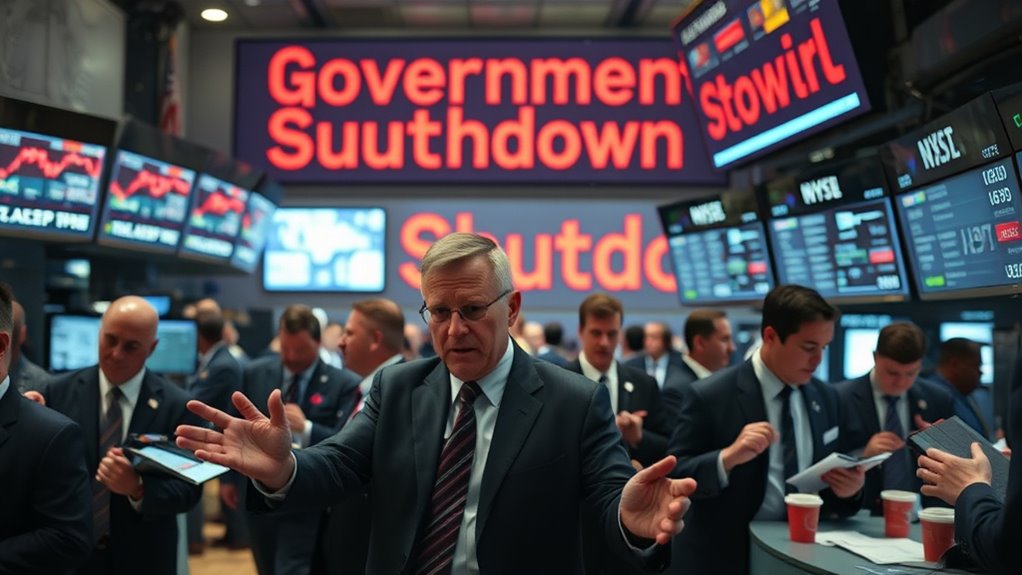

Government shutdowns cause immediate uncertainty in the markets, leading to increased volatility and affecting your investments. Stock prices often fall, especially in sectors linked to government contracts, while safe-haven assets like gold see demand. Markets react with swings and caution, which can slow economic growth and investor confidence. Longer shutdowns can amplify these effects, highlighting the impact of political instability on financial stability. To understand how these events influence your financial outlook, explore the details further.

Get everyday essentials delivered free with Prime
- Fast, free delivery on millions of items
- Prime Video, Amazon Music and more included
- Member-only deals all year
Key Takeaways
- Government shutdowns cause market volatility, leading to declines in stocks, bonds, and currency values.
- Investor confidence drops amid uncertainty, prompting shifts toward safer assets like gold and foreign currencies.
- Prolonged shutdowns negatively impact sectors reliant on government contracts, slowing investment and hiring.
- Funding delays and economic uncertainty can signal recession risks, influencing market perceptions of economic health.
- Political deadlock during shutdowns increases market instability and trading volume, emphasizing the need for fiscal stability.
Government shutdowns can substantially impact financial markets, often causing volatility and uncertainty that ripple through stocks, bonds, and currency values. When a shutdown occurs, the immediate concern for investors is funding delays. Essential government services and operations pause, creating fears that delayed payments or halted programs could disrupt economic stability. These delays can lead investors to question whether the government will meet its financial obligations on time, especially regarding treasury securities. As a result, bond yields might fluctuate, and there’s often increased demand for safe-haven assets like gold or foreign currencies. This shift in demand can cause currency values to swing, influencing international trade and investment flows.
Your confidence as an investor is directly affected during these times. When the government appears unable to resolve funding disagreements quickly, it fuels uncertainty about the broader economic outlook. Investors tend to become more cautious, pulling back from riskier assets like stocks and reallocating funds into safer options. This behavior can trigger declines in stock prices, especially in sectors closely tied to government spending or reliant on government contracts. The decline isn’t always immediate; it often unfolds as the shutdown drags on and the potential economic consequences become clearer.
Moreover, funding delays aren’t just about the government’s ability to pay its bills—they also impact business confidence. Companies face uncertainty about future government contracts or subsidies, which can slow down investment and hiring decisions. When investors see these signs of economic hesitation, they might anticipate slower growth or even a recession, adding downward pressure to stock prices. This chain reaction can be swift, as markets tend to react sharply to news of prolonged shutdowns or political deadlock.
Your perception of market stability during a shutdown hinges heavily on how quickly the government can reach an agreement. Short-term shutdowns might cause only temporary jitters, but longer ones tend to shake investor confidence markedly. The resulting volatility can last for days or even weeks, as markets digest the potential impacts on economic growth and fiscal health. During these times, you might notice increased market swings, heightened trading volumes, and a general sense of unease among investors. Ultimately, government shutdowns highlight the importance of political stability and fiscal management, reminding you that uncertainty can have real and immediate effects on your investments.
As an affiliate, we earn on qualifying purchases.
Frequently Asked Questions
How Long Do Government Shutdowns Typically Last?
Government shutdowns typically last between a few days to several weeks, depending on how federal budgeting and political negotiations unfold. During these periods, lawmakers often negotiate to reach an agreement, but delays can extend the shutdown. As an investor, you should stay alert to these fluctuations, understanding that prolonged shutdowns can impact markets, government services, and economic stability, so it’s essential to monitor political developments closely.
Do Shutdowns Impact Individual Retirement Accounts?
A government shutdown might cause temporary market volatility, but your retirement account usually remains unaffected directly. While market swings can influence your investments, your retirement savings are generally protected from immediate impact. Keep an eye on market trends, and remember that long-term growth isn’t derailed by short-term hiccups. Stay focused on your goals, and don’t let market fluctuations during shutdowns shake your confidence in your retirement plan.
Are Government Shutdowns Covered by Insurance Policies?
Government shutdowns aren’t typically covered by insurance policies, as insurance coverage usually excludes losses from government actions like shutdowns. You should check your policy’s exclusions carefully because some may specify government-related disruptions aren’t covered. If you’re concerned about potential financial impacts, consider discussing options with your insurer or a financial advisor to understand how shutdowns could affect your coverage and what protections you might need.
What Sectors Are Most Affected During Shutdowns?
During shutdowns, you’ll notice sector volatility intensifies, especially in government-dependent industries like defense, healthcare, and finance. The fiscal impact causes uncertainty, shaking investor confidence and disrupting operations. These sectors face delays in contracts, funding, and regulatory approvals, amplifying risks. As you watch markets react, remember that this turbulence reveals how deeply shutdowns can destabilize key parts of the economy, emphasizing their significance beyond immediate political disputes.
How Can Investors Protect Their Assets During Shutdowns?
To safeguard your assets during shutdowns, you should focus on risk mitigation strategies and asset diversification. Keep a portion of your investments in safe-haven assets like gold or Treasury bonds, which tend to be more stable. Diversify across sectors and asset classes to reduce exposure to any single market risk. Regularly review and rebalance your portfolio to ensure it aligns with your risk tolerance and financial goals during uncertain times.
As an affiliate, we earn on qualifying purchases.
Conclusion
Remember, when the government shuts down, markets can be thrown off course, and investors feel the pinch. It’s essential to stay informed and keep a cool head, even when things seem shaky. Don’t put all your eggs in one basket, and be prepared for ups and downs. By staying vigilant and diversifying, you can weather the storm and come out stronger on the other side. In the end, caution is your best ally.
As an affiliate, we earn on qualifying purchases.
As an affiliate, we earn on qualifying purchases.
Halloween Picks
halloween
As an affiliate, we earn on qualifying purchases.