Extreme weather caused by climate change is threatening sports events worldwide. Rising temperatures, storms, and flooding disrupt schedules, delay or cancel games, and put athletes at risk of heat exhaustion and dehydration. Organizers are adapting by relocating events, changing schedules, and promoting sustainability. If you keep exploring, you’ll discover how these changes impact athletes, venues, and what steps are being taken to build a more resilient sports industry.
Key Takeaways
- Extreme weather events like storms and floods threaten stadium safety and can lead to event cancellations.
- Rising temperatures increase athlete health risks, causing delays and requiring adjusted scheduling or relocation.
- Climate-induced unpredictable weather disrupts traditional sports calendars and venue choices.
- Sports organizations are adopting sustainable stadium designs to withstand extreme weather conditions.
- Adaptive strategies, such as scheduling shifts and event relocations, help mitigate climate-related disruptions.
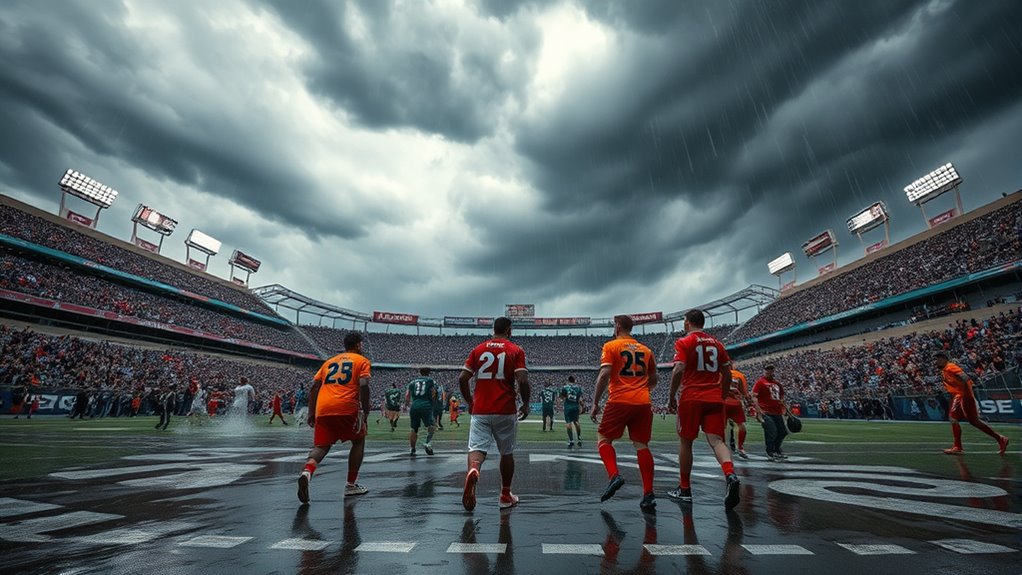
Climate change is increasingly impacting the world of sports, affecting everything from game schedules to athlete performance. As temperatures rise and weather patterns become more unpredictable, sports organizations are facing new challenges, especially in managing stadium sustainability and protecting athlete health. You might not realize it, but the way stadiums are built and maintained now plays a crucial role in addressing climate change. Many venues are adopting eco-friendly designs, such as solar panels, rainwater harvesting systems, and energy-efficient cooling, to reduce their carbon footprint. These efforts not only promote sustainability but also ensure that games can proceed even in extreme weather conditions. By prioritizing stadium sustainability, organizers aim to create safer environments for players and spectators, minimizing the risks associated with heatwaves, storms, and flooding. Additionally, incorporating track development techniques can help sports organizations monitor and improve their environmental impact over time.
Your health and safety, along with that of athletes, are directly impacted by these climate shifts. High temperatures and humidity levels can cause heat exhaustion, dehydration, and other heat-related illnesses, which are becoming more prevalent during outdoor events. Sports governing bodies are now implementing stricter guidelines for athlete health, including scheduled breaks, hydration protocols, and heat acclimatization programs. These measures are essential to prevent serious health issues and ensure fair competition. You should also be aware that extreme weather events can disrupt training schedules, delay tournaments, or even cancel matches altogether, affecting athletes’ performance and mental well-being.
Sports organizations are increasingly recognizing the importance of adapting to these climate realities. Some are relocating events to cooler venues or shifting schedules to cooler parts of the day to protect athletes and fans from heat stress. Additionally, there’s a push for more sustainable practices in event management, such as reducing waste, using eco-friendly materials, and promoting public transportation to decrease emissions from travel. These initiatives aim to foster resilience in the sports industry while minimizing environmental impact.

"Commercial Outdoor Mist Cooling Fan – Ideal for Stores, Carnivals, Stadiums, Yards – 55L Water Tank, 12-Hour Continuous Operation, Connects to Water Supply, Cools 1400 sq ft" (110V-550W-20inch)
Commercial outdoor misting fan: Ideal for enhancing customer comfort in outdoor shops, carnivals, sports stadiums, and patios
As an affiliate, we earn on qualifying purchases.
As an affiliate, we earn on qualifying purchases.
Frequently Asked Questions
How Can Athletes Adapt to Unpredictable Weather Conditions?
You can adapt to unpredictable weather by building your weather resilience through varied training routines. Incorporate training flexibility, such as indoor sessions or adjusting your schedule for better conditions. Stay informed about weather forecasts and prepare appropriate gear. By staying adaptable and resilient, you’ll reduce risks and maintain performance, ensuring you’re ready for any weather challenge that comes your way. This proactive approach helps you stay competitive despite climate uncertainties.
What Role Do Sports Organizations Play in Climate Change Mitigation?
You play a crucial role in climate change mitigation through sports organizations by advocating for eco-friendly venues and supporting carbon offsetting initiatives. Did you know that sports events generate over 14 million tons of CO2 annually? Your organizations can lead by implementing sustainable practices, reducing emissions, and promoting awareness. By prioritizing eco-friendly venues and offsetting carbon footprints, you help combat climate change and inspire fans to take action.
Are There Specific Sports More Vulnerable to Climate Impacts?
You’ll find winter sports and water-based sports are especially vulnerable to climate impacts. Warmer winters mean less snow for skiing and snowboarding, disrupting events and economies. Rising temperatures and changing precipitation also threaten water-based sports like sailing, surfing, and rowing by causing unpredictable conditions and water levels. As climate change accelerates, these sports face increased challenges, making it essential for you to support sustainable practices and advocate for climate action.
How Does Climate Change Affect Sports Event Scheduling and Planning?
Climate change forces you to consider climate resilience when scheduling sports events. You may need to adapt plans by incorporating flexible dates and contingency plans, as extreme weather can cause event rescheduling. By proactively addressing these issues, you help ensure athlete safety, spectator enjoyment, and event success despite unpredictable weather patterns. Staying aware of climate trends allows you to plan more effectively, reducing disruptions and promoting sustainable sports event management.
What Innovations Are Being Developed to Make Sports More Sustainable?
You can expect innovations like eco-friendly gear and the increased use of renewable energy to make sports more sustainable. Manufacturers are designing gear with recycled materials and low-impact production processes. Venues are adopting solar and wind power to reduce carbon footprints. These advancements help you enjoy sports while minimizing environmental impact, promoting a greener future for athletic events and encouraging more eco-conscious participation across all levels.

Liquid I.V.® Hydration Multiplier – Variety Pack – Lemon Lime, Passion Fruit, Strawberry, Tropical Punch | Electrolyte Powder Drink Mix | 1 Pack (16 Servings)
HYDRATION MIX: A great-tasting, non-GMO electrolyte drink mix that delivers hydration faster than water alone.
As an affiliate, we earn on qualifying purchases.
As an affiliate, we earn on qualifying purchases.
Conclusion
As you watch your favorite sports, remember they’re caught in a storm of climate change, like a boat battling rough seas. Extreme weather threatens events and your enjoyment, making it clear that action is needed now. By reducing your carbon footprint, you’re helping steer this ship back on course. Together, we can turn the tide against climate change, ensuring future generations can still cheer under clear skies, instead of fighting through storms we could have prevented.

600W Solar Flood Street Lights Outdoor,Solar Security Lights 30000 Lumens Dusk to Dawn Solar Powered Led Lighting IP66 Waterproof Pole Light with Motion Sensor for Parking Lot,Stadium,Garden,Yard
✅Super Bright Daylight – Solar Flood street light use High quality 660pcs 6500k bright white LED bead,Solar Street…
As an affiliate, we earn on qualifying purchases.
As an affiliate, we earn on qualifying purchases.

Baobrava Pop Up Sports Tent – Thick PVC, Scratch-Resistant Bubble Clear Tent, Instant Weather Proof Pod with Extra Top Cover for Soccer, Football Games, Outdoor Events, 1-2 Person
【𝟓𝟒𝟎° 𝐂𝐥𝐞𝐚𝐫 𝐅𝐮𝐥𝐥 𝐕𝐢𝐞𝐰】Baobrava pop up pod, no assembly required, quick to deploy and store. The sports tent…
As an affiliate, we earn on qualifying purchases.
As an affiliate, we earn on qualifying purchases.