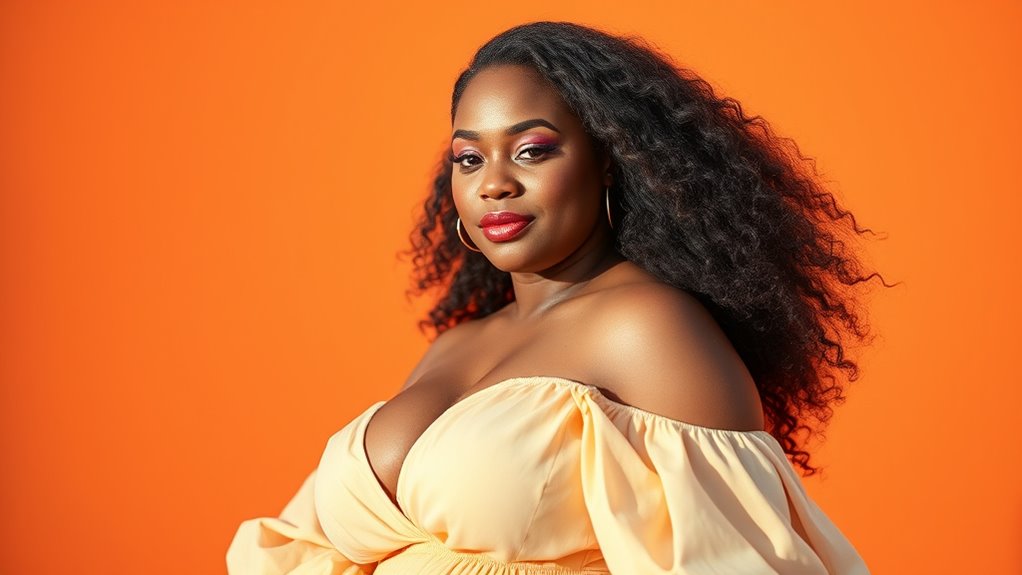

Body positivity is transforming beauty advertising by encouraging you to see real, diverse representations that challenge traditional standards. Brands now feature models of different ages, sizes, skin tones, and backgrounds to promote authenticity and inclusivity. This shift helps you feel more seen and valued while supporting a culture of self-acceptance. As more companies embrace these values, you can better understand how beauty is evolving—there’s more to discover beyond the surface.
Key Takeaways
- Body positivity in beauty advertising promotes acceptance of all body types, challenging traditional standards of beauty.
- Inclusive campaigns feature diverse models to reflect real-world society and foster authenticity.
- Brands embracing body positivity support self-love, self-acceptance, and challenge harmful stereotypes.
- Representation of different ages, sizes, and backgrounds helps normalize diversity and empower consumers.
- The movement aligns with broader cultural shifts toward embracing natural beauty and authentic self-expression.
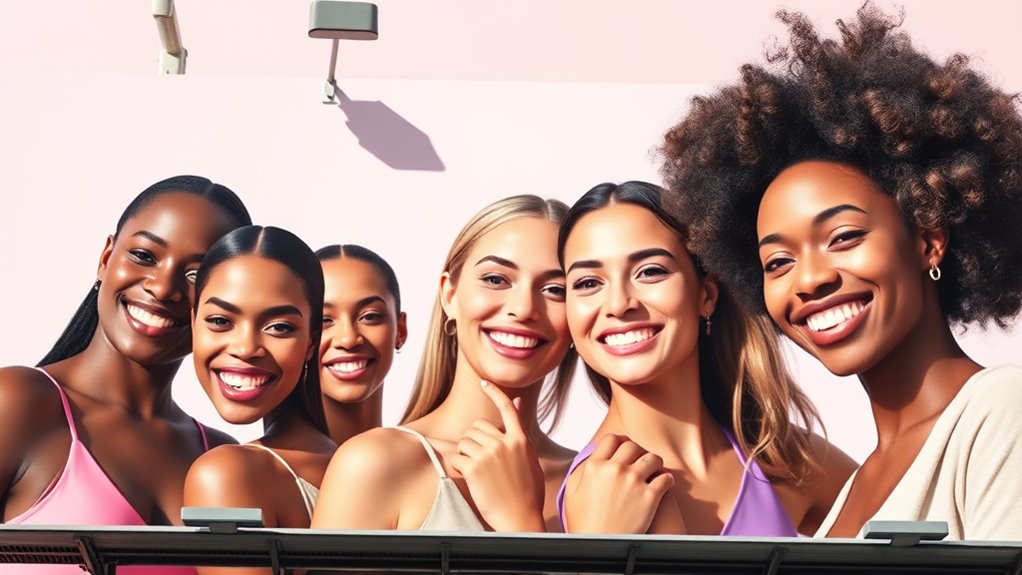
Have you ever wondered how beauty advertising is changing to embrace body positivity? It’s a shift that’s reshaping the way brands communicate with consumers, making it more authentic and inclusive. Instead of showcasing only a narrow standard of beauty, companies are now adopting inclusive marketing strategies that highlight diverse representation. This means featuring people of different ages, sizes, skin tones, genders, and backgrounds in their campaigns. By doing so, they send a clear message: beauty isn’t one-size-fits-all. This approach not only reflects society more accurately but also helps consumers feel seen and valued.
Beauty advertising is becoming more inclusive, celebrating diverse ages, sizes, skin tones, and backgrounds.
Inclusive marketing plays a *vital* role in this transformation. It involves intentionally designing campaigns that break away from stereotypical portrayals and celebrate individuality. When brands choose to showcase a wide array of body types, races, and expressions, they challenge long-standing beauty norms. This kind of representation is powerful because it normalizes differences and promotes self-acceptance. As a result, viewers are more likely to relate to the models they see and feel encouraged to embrace their own bodies. It’s about creating a space where everyone feels included and appreciated, regardless of societal expectations.
Diverse representation in advertising also helps dismantle harmful stereotypes. For years, beauty campaigns often featured models who fit a very specific mold, which left many feeling excluded or insecure about their looks. Today’s brands understand that authenticity resonates more deeply with audiences. By showcasing real people with real stories, they foster trust and loyalty. For example, campaigns that include models with visible scars, disabilities, or non-traditional features demonstrate that beauty exists in all forms. This not only broadens the definition of beauty but also empowers individuals to see their own worth beyond superficial standards.
The shift toward inclusive marketing and diverse representation is more than just a trend; it’s a necessary evolution in the beauty industry. It aligns with the broader movement toward body positivity, encouraging people to love and accept themselves as they are. As a consumer, you’re becoming more aware of these changes and how they influence your perception of beauty. Brands that prioritize authenticity and inclusivity stand out because they genuinely connect with their audience’s values. Ultimately, this movement fosters a culture where everyone can feel proud of their unique beauty, and that’s a change worth celebrating. Additionally, understanding the importance of diversity and representation can help consumers make more mindful choices and support brands committed to genuine inclusivity.
Frequently Asked Questions
How Do Brands Measure Success in Body Positivity Campaigns?
You measure success in body positivity campaigns through consumer engagement, like social media interactions, shares, and positive feedback, showing your audience resonates with your message. Additionally, tracking improvements in brand reputation, such as increased trust and loyalty, indicates your campaign’s impact. When you see higher engagement levels and a stronger reputation, you know your efforts are effectively promoting body positivity and aligning with your brand values.
What Are Common Challenges Faced When Promoting Body Diversity?
Like walking a tightrope, promoting body diversity often faces hurdles such as image censorship and cultural sensitivity. You might struggle with brands hesitant to showcase diverse bodies due to societal norms or fear of backlash. Maneuvering different cultural standards can be tricky, risking misinterpretation or offense. Overcoming these challenges requires understanding varied perspectives, advocating for authentic representation, and pushing for open conversations that challenge stereotypes and promote genuine inclusivity.
How Has Consumer Perception of Body Positivity Evolved Over Time?
You’ve likely noticed that consumer perception of body positivity has shifted markedly due to media influence and cultural shifts. Today, people increasingly value authenticity and diversity, rejecting unrealistic beauty standards. You may see more brands embracing inclusive campaigns that celebrate all body types. This evolution reflects a broader societal move toward acceptance and self-love, making consumers more supportive of genuine representation and challenging traditional notions of beauty.
Are There Legal Considerations in Representing Diverse Body Types?
You need to be aware that legal compliance and ethical marketing are essential when representing diverse body types. Regulations may vary, but you should avoid false advertising or misleading claims about body images. Ensuring authenticity and transparency helps prevent legal issues and builds trust with your audience. By respecting diversity and adhering to advertising laws, you demonstrate your commitment to genuine inclusivity and responsible marketing practices.
How Can Smaller Brands Effectively Implement Body Positive Advertising?
You can effectively implement body positive advertising by focusing on inclusive messaging and authentic representation. Showcase diverse body types genuinely, avoiding stereotypes or filters that distort reality. Use real customers or models who reflect your audience, and share their stories to build trust. Guarantee your campaigns highlight confidence and self-love, fostering an inclusive environment. This approach resonates authentically, helping smaller brands stand out and connect deeply with consumers.
Conclusion
So, by embracing body positivity in beauty advertising, you’re not just changing a trend—you’re transforming the entire universe! Imagine a world where every ad shouts, “You’re perfect just as you are!” No more impossible standards or unrealistic images. If you stand for authenticity now, you could spark a revolution so huge it ripples across generations. This isn’t just about beauty; it’s about rewriting the very fabric of self-love and acceptance—so go ahead, be the change!