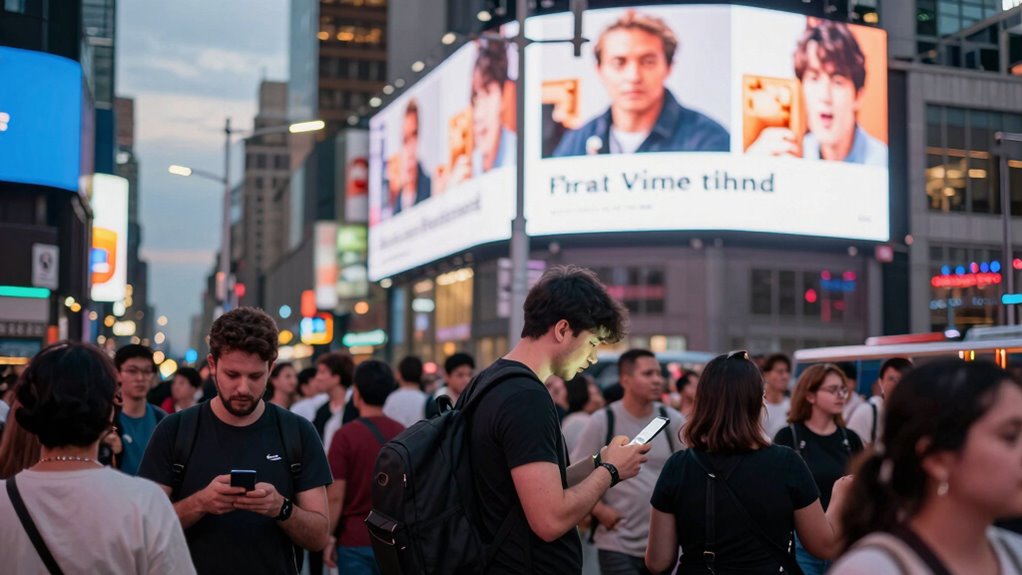

Stories go viral before verification because they tap into your emotions—fear, hope, anger, or joy—that make you react quickly and share instinctively. When content aligns with your existing beliefs or fears, you’re more likely to pass it along without checking facts. Social media’s speed amplifies this effect, spreading stories before they’re verified. If you want to understand how to spot fake stories early on, there’s more to uncover below.
Key Takeaways
- Emotional triggers like fear, hope, or anger prompt rapid sharing before verification.
- Social media’s speed amplifies stories quickly, often outpacing fact-checking processes.
- Content designed to resonate with existing beliefs increases acceptance and spread.
- Stories confirming biases or fears are more likely to be shared impulsively.
- Awareness of emotional influence encourages critical thinking, reducing unverified story dissemination.

Have you ever wondered why some stories spread like wildfire even before they’re verified? It’s a question that taps into human nature and our innate reactions to compelling content. When a story captures your attention quickly, it’s often because it taps into emotions—fear, hope, anger, or joy. This emotional appeal makes you want to share it instantly, feeling that you’re part of something urgent or important. In the rush to share, misinformation spread becomes almost inevitable. People tend to pass along stories that evoke strong feelings without stopping to question their accuracy. That’s how false information gains momentum, often before fact-checkers can intervene.
You might notice that stories with emotional appeal are particularly effective at going viral. When a piece of news touches on something personal or controversial, it triggers your instinct to react. You might feel anger or sympathy, which compels you to share it with friends, family, or social networks. This emotional response overrides critical thinking, making you less likely to pause and verify the details. Instead, you quickly pass along the story, driven by the desire to inform or influence others. This cycle feeds misinformation spread, allowing unverified stories to reach millions in mere hours. The speed of social media platforms accelerates this process, enabling stories to go viral almost instantaneously. The rapid dissemination also amplifies the emotional impact, making it even more compelling to share without verification.
The human tendency to respond emotionally is a powerful tool for those who craft viral stories. Whether intentionally or not, they design narratives that hit emotional triggers. When a story aligns with your existing beliefs or fears, it reinforces your worldview and makes you more likely to accept and share it without skepticism. This creates a snowball effect, where the story’s emotional appeal overrides the need for verification. As a result, false claims or exaggerated reports can become widespread, gaining credibility in the minds of those who haven’t checked the facts. The role of sound vibrations and frequencies in influencing emotional states can also contribute to the effectiveness of certain stories or content. Additionally, the landscape design of social media feeds plays a role in amplifying stories that evoke strong emotions, further fueling their virality. Recognizing how emotional triggers interact with content virality can help users develop a more critical approach to the stories they encounter.
In essence, the combination of misinformation spread and emotional appeal explains why some stories go viral before they’re fully verified. You’re naturally drawn to content that stirs your feelings, and in the digital age, sharing that content is only a click away. The speed at which these stories travel is astonishing, often outpacing the fact-checking process. Recognizing this pattern can help you pause and question what you’re sharing, especially when a story provokes a strong emotional response. By doing so, you reduce the risk of becoming a conduit for misinformation, helping to slow the viral spread of unverified stories. Furthermore, understanding the role of content virality and emotional triggers can empower you to become a more responsible sharer of information.

As an affiliate, we earn on qualifying purchases.
Frequently Asked Questions
How Do Algorithms Influence the Spread of Unverified Stories?
Algorithms influence the spread of unverified stories by amplifying content that triggers engagement. You might notice algorithm bias favoring sensational or emotionally charged stories, regardless of accuracy. This creates confirmation loops where your feed shows similar unverified stories, reinforcing beliefs and spreading misinformation rapidly. These algorithms prioritize engagement metrics over verification, making it easier for unverified stories to go viral before fact-checkers can intervene.
What Role Do Influencers Play in Early Story Virality?
Influencers play a vital role in early story virality because their credibility and established relationship with their audience boost trust. When they share unverified stories, their followers are more likely to believe and spread the content quickly. Your perception of an influencer’s credibility directly impacts how fast a story gains traction, making their endorsement powerful in shaping early viral trends, even before verification processes catch up.
Can Emotional Content Alone Drive Viral Sharing Without Verification?
You might find that emotional triggers and sensational headlines can spark viral sharing, even without verification. Studies show content evoking strong feelings is 3 times more likely to be shared. If a story hits the right emotional notes, people share it to express feelings or seek validation. However, without verification, false information can spread rapidly, making emotional content alone a risky driver. Always verify before sharing.
How Does Misinformation Spread Faster Than Factual News?
Misinformation spreads faster than factual news because of fact-checking challenges and misinformation psychology. You might share sensational stories before verifying them, driven by emotional reactions and cognitive biases. When fact-checking lags or is overlooked, false information gains momentum quickly. Understanding these dynamics helps you recognize how misinformation exploits psychological tendencies, making it essential to verify information carefully and resist the urge to share impulsively.
What Are the Ethical Concerns of Sharing Unverified Stories?
Sharing unverified stories raises ethical dilemmas and challenges your moral responsibilities. You risk spreading false information, which can harm individuals or communities. It’s essential to verify facts before sharing, as doing so respects truth and helps maintain trust. Ignoring verification can contribute to misinformation, damaging your credibility. Ultimately, you must consider whether your actions uphold integrity and do no harm, balancing the impulse to share with the duty to be responsible.

Critical Thinking, Logic & Problem Solving: The Complete Guide to Superior Thinking, Systematic Problem Solving, Making Outstanding Decisions, and Uncover Logical Fallacies Like a Pro
As an affiliate, we earn on qualifying purchases.
As an affiliate, we earn on qualifying purchases.
Conclusion
So, next time you see a story spreading like wildfire before it’s verified, remember how coincidence often plays a sneaky role. Maybe it’s just timing, or perhaps the universe likes to keep us guessing. Sometimes, the most viral tales are stitched together by chance, not fact. Keep your eyes open and question what you see—because in this wild digital age, the line between truth and coincidence can blur in an instant.

Fighting Digital Misinformation with Code: Build tools for truth and digital literacy. A technologist's handbook on creating simple fact-checking apps … bot networks to protect communities
As an affiliate, we earn on qualifying purchases.
As an affiliate, we earn on qualifying purchases.

The Mega Emotions Workbook for Kids: 175-Page Emotional Regulation Workbook with Coping Skills & Anger Management for Kids, Social Emotional Learning (SEL) Activities for Ages 6–11
- Guides Kids Through SEL Missions: 10 step-by-step emotional regulation activities
- Includes 175 Colorful, Engaging Pages: Fun, evidence-based activities for emotional growth
- Durable Spiral-Bound Design: Lies flat for easy writing and drawing
As an affiliate, we earn on qualifying purchases.
As an affiliate, we earn on qualifying purchases.