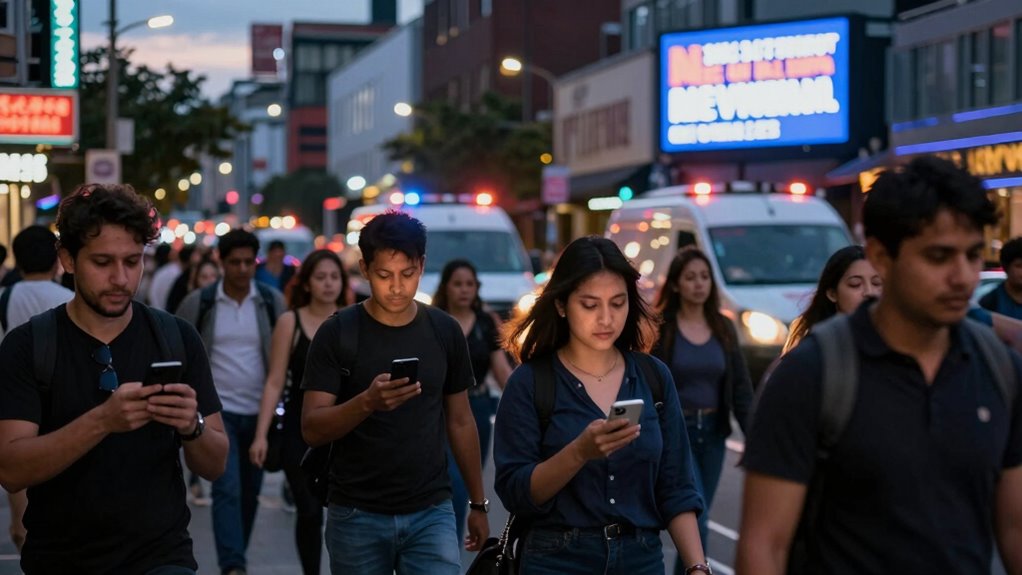

During crises, rumors spread faster than facts because your mind craves quick answers and certainty. When chaos strikes, you seek explanations, and unverified stories often fill the information void. Emotional triggers like fear and anger make you more likely to share sensational stories that seem simple and immediate. Social media speeds up this process, encouraging impulsive sharing. If you want to understand how to better navigate this flood of information, keep exploring these factors.
Key Takeaways
- Rumors satisfy the need for quick, simple answers during uncertainty, often overriding the slower process of verifying facts.
- Emotional triggers like fear and anger make people more receptive to sensationalized, unverified information.
- Social media accelerates rumor spread through instant sharing and reactions without proper fact-checking.
- The overload of conflicting information leads to confusion, increasing reliance on quick, unverified stories.
- People tend to share rumors impulsively to regain a sense of control amidst chaos, bypassing rational judgment.

During crises, rumors often spread faster than facts because they tap into our natural desire for quick answers and certainty. When chaos erupts, your mind seeks immediate explanations, even if those explanations are unverified or false. The flood of information overload makes it difficult to separate what’s true from what’s not, and in this confusion, rumors fill the void. Instead of waiting for official reports, you might find yourself sharing or believing information that seems urgent or alarming. The human tendency to fill gaps in knowledge with assumptions accelerates the spread of falsehoods, especially when you’re overwhelmed by conflicting messages.
During crises, our desire for quick answers fuels the rapid spread of rumors and false information.
Emotional triggers play a significant role in why rumors thrive during crises. When you feel fear, anxiety, or anger, your brain becomes more receptive to information that confirms your feelings. Rumors often cater to these emotions, offering sensational or simplistic explanations that seem to make sense of a complicated situation. For example, if fear about safety is high, you might believe or propagate stories that suggest a threat is imminent, even if those stories lack credible evidence. These emotional responses override your rational judgment, making it easier for rumors to gain traction. You’re more likely to share stories that evoke strong feelings because they provide a sense of control or understanding amid chaos. Additionally, the psychological tendency to seek reassurance during uncertain times intensifies this effect, further amplifying rumor spread.
The speed at which rumors spread is also fueled by social media and instant messaging platforms. When you see a shocking post or hear a piece of hearsay, the desire to react quickly and be part of the conversation pushes you to share it without verifying. This rapid dissemination creates a domino effect, where misinformation reaches many people in a matter of minutes. Because you’re often caught up in the moment, you might not pause to question the source or accuracy of the information. Instead, the emotional impact of the message compels you to pass it along, further fueling the cycle.
In essence, during crises, your craving for certainty, combined with the overload of conflicting information and strong emotional triggers, makes you more susceptible to believing and sharing rumors. These false stories provide quick, simple answers that temporarily soothe your anxiety but ultimately distort the reality. Recognizing these tendencies can help you pause before passing along unverified information, helping to curb the rapid spread of rumors during critical moments. Being aware of information overload and how it influences your reactions can empower you to seek verified sources and think critically before sharing.

unSpun: Finding Facts in a World of Disinformation
As an affiliate, we earn on qualifying purchases.
As an affiliate, we earn on qualifying purchases.
Frequently Asked Questions
How Do Social Media Algorithms Influence Rumor Dissemination?
Social media algorithms influence rumor dissemination through viral amplification, making false information spread rapidly. They prioritize content that engages users, often favoring sensational or emotional posts, which can lead to algorithm bias. As a result, rumors gain visibility faster than verified facts, encouraging you to share or believe them without scrutiny. This cycle fuels misinformation, emphasizing the importance of critically evaluating what you see online.
What Psychological Traits Make People Believe Rumors More Easily?
You’re drawn to rumors like moths to a flickering flame, because cognitive biases, such as confirmation bias, make you accept information that fits your beliefs. Emotional triggers, like fear or hope, intensify this effect, making you more receptive to sensational stories. These psychological traits create a vivid mental landscape where rumors seem real and urgent, convincing you to believe and share before facts can catch up.
Can Fact-Checking Efforts Effectively Slow Down Rumor Spread?
Fact-checking efforts can slow down rumor spread if you actively engage in information verification and develop healthy skepticism. When you question the source and seek credible evidence, you reduce the likelihood of believing and sharing false information. Promptly correcting misinformation helps others see the importance of verifying facts. By staying vigilant and encouraging skepticism development, you create an environment where rumors are less likely to proliferate rapidly during crises.
How Do Cultural Differences Impact Rumor Propagation During Crises?
You might find it surprising, but cultural differences deeply influence rumor spread during crises. Cultural narratives shape how information is perceived, while communication norms determine how quickly messages circulate. In some societies, tight-knit communities share rumors rapidly to maintain social cohesion, whereas others prioritize accuracy, slowing the spread. Understanding these differences helps you see why rumors gain momentum faster in certain cultures, emphasizing the need for culturally sensitive communication strategies during emergencies.
What Role Do Authority Figures Play in Either Spreading or Stopping Rumors?
Authority influence markedly impacts rumor spread during crises. When authority figures share or endorse misinformation, you’re more likely to believe and spread it, unintentionally fueling false narratives. Conversely, if they actively engage in misinformation control by providing accurate, timely information, they help slow the spread of rumors. Your trust in authority figures can either accelerate misinformation or promote clarity, emphasizing their vital role in managing information flow during emergencies.
rumor verification apps
As an affiliate, we earn on qualifying purchases.
As an affiliate, we earn on qualifying purchases.
Conclusion
During crises, rumors spread like wildfire, fueled by uncertainty and fear. They’re the spark that ignites quick reactions, often outpacing the slow burn of facts. Remember, your mind is like a garden — if you don’t tend it with critical thinking, rumors can grow wild and choke out the truth. Stay vigilant, question what you hear, and help keep the flame of accurate information burning bright. Your awareness is the strongest shield against misinformation.

Fighting Digital Misinformation with Code: Build tools for truth and digital literacy. A technologist's handbook on creating simple fact-checking apps … bot networks to protect communities
As an affiliate, we earn on qualifying purchases.
As an affiliate, we earn on qualifying purchases.
crisis communication verification tools
As an affiliate, we earn on qualifying purchases.
As an affiliate, we earn on qualifying purchases.