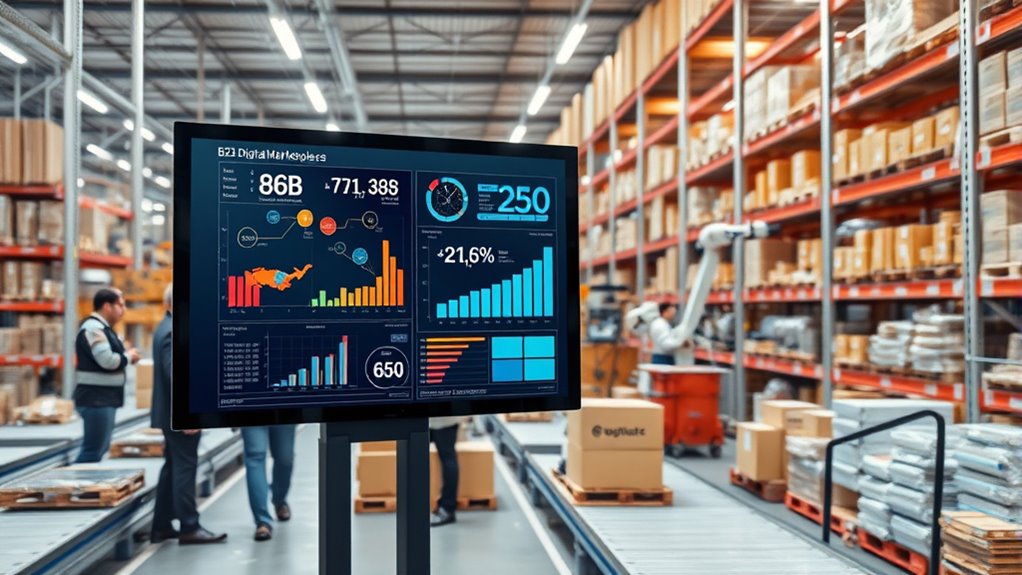

B2B marketplaces are transforming traditional supply chains by connecting you directly with a global network of suppliers, streamlining procurement and reducing reliance on middlemen. You can compare prices instantly, verify suppliers easily, and access a wider range of products. This increase in transparency and competition helps you save costs and respond faster to market changes. Staying informed about these shifts can give you a competitive edge as these digital platforms continue to evolve.
Key Takeaways
- B2B marketplaces connect buyers and suppliers directly, eliminating intermediaries and streamlining procurement processes.
- They expand supplier options globally, reducing dependency on regional vendors and increasing sourcing diversity.
- Real-time data and integration with enterprise systems enhance supply chain agility and responsiveness.
- Competitive bidding on platforms drives better pricing, quality, and service from multiple suppliers.
- Digital platforms promote transparency, faster transactions, and resilient procurement strategies, transforming traditional supply chains.

B2B marketplaces are rapidly transforming supply chains by connecting buyers and suppliers directly, eliminating many traditional intermediaries. This shift is driven by digital integration, which streamlines communication, transaction processes, and data sharing between trading partners. As a result, you can now access a broader range of suppliers without the need for middlemen, reducing costs and increasing transparency. With digital platforms, you’re empowered to compare prices, verify supplier credentials instantly, and place orders seamlessly, making the procurement process more efficient and responsive to market changes.
One of the most significant impacts is supplier diversification. Historically, your sourcing options might have been limited to a few trusted vendors, often concentrated geographically or within specific industries. Now, B2B marketplaces enable you to tap into a global pool of suppliers, expanding your options and reducing dependency on single sources. This diversification not only mitigates risks associated with regional disruptions or supplier failures but also opens opportunities to find better quality products at competitive prices. You can quickly identify new suppliers that meet your specific needs, whether it’s a niche product or bulk procurement, and vet them through reviews, certifications, and transaction histories—all within the platform.
B2B marketplaces expand your supplier options, reduce risks, and enable better pricing through global diversification and vetting tools.
Digital integration within B2B marketplaces also enhances supply chain resilience. By connecting your enterprise systems—such as ERP or inventory management tools—with these platforms, you enjoy real-time updates on stock levels, order statuses, and delivery timelines. This seamless integration minimizes errors, accelerates order fulfillment, and provides valuable insights for demand forecasting and planning. You become more agile, able to respond rapidly to market fluctuations or supply disruptions, keeping your operations running smoothly.
Furthermore, the increased supplier diversification facilitated by these marketplaces fosters competition, which can lead to better pricing and terms. You’re no longer limited to longstanding relationships but can explore multiple vendors to find the best fit for your current needs. This competitive environment encourages suppliers to improve quality and service, benefiting your overall supply chain performance.
In essence, B2B marketplaces are revolutionizing supply chains by integrating digital solutions that promote supplier diversification and operational agility. You gain access to a wider network of trusted vendors, enjoy faster, more transparent transactions, and build a more resilient and cost-effective supply chain. As these platforms continue to evolve, they will further empower you to optimize procurement strategies, reduce risks, and stay ahead in an increasingly competitive marketplace. Incorporating high refresh rates and low input lag technology in projectors can significantly enhance the gaming experience, making this an important consideration for gaming enthusiasts.
Frequently Asked Questions
How Do B2B Marketplaces Ensure Product Quality?
You can guarantee product quality on B2B marketplaces through thorough product verification processes and promoting supplier transparency. By verifying products before listing and encouraging suppliers to share detailed information, you reduce risks of subpar goods. Transparency builds trust, making it easier for you to assess quality standards. This proactive approach helps you select reliable suppliers, ensuring consistent product quality and strengthening your supply chain integrity.
What Are the Cybersecurity Risks Involved?
Did you know that 60% of small businesses face cybersecurity threats annually? When using B2B marketplaces, you’re exposed to risks like data breaches and hacking. Protecting your data is essential, but these platforms can sometimes lack robust security measures. Always guarantee strong data protection protocols, use secure connections, and stay vigilant to avoid cybersecurity threats that could compromise sensitive business information.
How Do They Impact Small Suppliers?
You’ll find that B2B marketplaces impact small suppliers by introducing new challenges, especially around marketplace integration. They often face hurdles like tech adaptation and meeting platform standards, which can strain resources. This shift demands you to upgrade systems and streamline operations. While these platforms expand your reach, they also require careful navigation of small supplier challenges to make certain of smooth participation and maximize benefits in the evolving supply chain landscape.
What Are the Costs for Businesses to Join?
You might think joining a B2B marketplace is costly, but often, the benefits outweigh the expenses. The costs for businesses typically include a straightforward cost structure with onboarding fees and sometimes transaction fees. While onboarding fees vary, they’re designed to cover platform setup and integration. Remember, these initial costs can lead to increased visibility, new clients, and streamlined sales channels, ultimately boosting your growth and competitiveness in the market.
How Do B2B Platforms Handle International Regulations?
You should know that B2B platforms handle international regulations by prioritizing export compliance and streamlining customs procedures. They often provide tools and guidance to help you navigate diverse legal requirements, ensuring your transactions meet local standards. By integrating these features, they reduce delays and risks, making cross-border trade smoother. This proactive approach helps you stay compliant with regulations, ultimately expanding your global reach efficiently.
Conclusion
As you embrace the rise of B2B marketplaces, think of traditional supply chains as old, winding roads giving way to a sleek, high-speed highway. These digital platforms are your new compass, guiding you swiftly through a landscape of endless opportunities. With innovation fueling the journey, you’re not just riding the wave—you’re steering it. So, gear up and navigate this transformation; the future of supply chains is yours to shape, vibrant and full of promise.