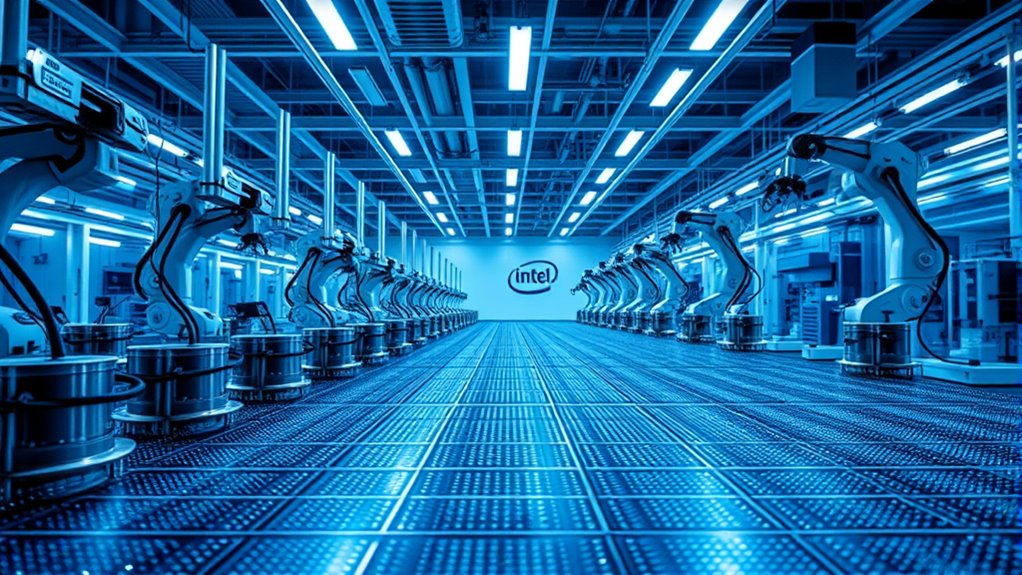

Intel returned to profit by focusing on semiconductor innovation and strategic diversification. They invested heavily in advanced manufacturing processes, new chip designs, and cutting-edge architectures to boost performance and efficiency. By expanding into markets like AI, data centers, autonomous vehicles, and 5G, they reduced reliance on traditional PC chips. This aggressive approach helped them regain competitiveness. To discover the full story behind Intel’s impressive comeback, keep exploring how they are reshaping the industry.
Key Takeaways
- Intel revitalized its business through heavy investment in advanced manufacturing processes like 7nm technology.
- The company shifted focus to innovative architectures that boost performance, efficiency, and security.
- Strategic diversification into sectors such as AI, data centers, autonomous vehicles, and 5G reduced reliance on PC chips.
- Intel adopted AI-powered manufacturing to improve yield, reduce costs, and accelerate product development.
- The company’s renewed emphasis on semiconductor innovation and market expansion restored profitability and competitiveness.
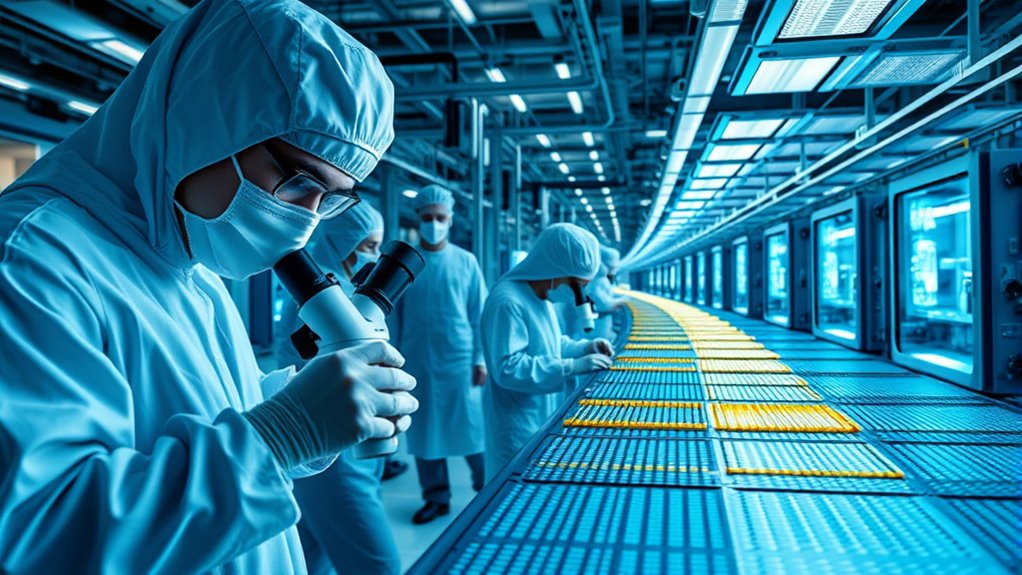
After a challenging period marked by missed deadlines and falling behind competitors, Intel is making a bold comeback. You might have thought that the tech giant’s best days were behind it, but recent strategies show otherwise. Central to this revival is Intel’s focus on semiconductor innovation, which allows the company to stay ahead in an increasingly competitive landscape. By investing heavily in new manufacturing processes and advanced chip designs, Intel is pushing the boundaries of what’s possible in chip performance and power efficiency. This commitment to innovation ensures that Intel’s products remain relevant in high-performance computing, AI, and data centers, giving you reliable hardware that meets modern demands.
At the same time, Intel recognizes that market diversification is essential for sustained growth. Instead of relying solely on traditional PC chips, the company is branching out into new sectors like autonomous vehicles, 5G infrastructure, and edge computing. This diversification strategy spreads risk and opens up multiple revenue streams, making Intel less vulnerable to sector-specific downturns. It’s this broad approach that helps stabilize the company’s financial health and provides a foundation for future expansion. You can see Intel’s efforts in building partnerships with automotive and telecommunications firms, which positions the company at the forefront of next-generation technology markets.
Your understanding of Intel’s turnaround begins with their renewed emphasis on semiconductor innovation. They’re not just upgrading existing designs; they’re pioneering entirely new architectures that improve efficiency and security. The company’s investments in cutting-edge fabrication technology, like 7nm and beyond, allow them to produce chips that outperform competitors and meet the growing demand for high-speed, energy-efficient processors. This technological leap is essential for maintaining their competitive edge and delivering products that you rely on daily, from personal computers to data centers. Additionally, embracing AI-powered innovation in manufacturing processes helps Intel improve yield and reduce costs, further strengthening their position in the industry.
Market diversification also plays an indispensable role in Intel’s comeback. As the company broadens its reach into emerging markets, it’s reducing dependence on traditional PC chip sales. This shift enables Intel to tap into new customer bases and adapt to changing industry needs. You may notice Intel’s increased presence in sectors like cloud computing and IoT devices, where their innovative chips power critical infrastructure. By diversifying, Intel not only stabilizes its revenue but also positions itself as a comprehensive provider of advanced semiconductor solutions.
Frequently Asked Questions
What Specific Strategies Did Intel Implement to Regain Profitability?
You should focus on Intel’s strategies like market diversification and cost optimization to regain profitability. They expanded into new markets, such as data centers and AI, reducing reliance on traditional PC chips. Simultaneously, they implemented cost-cutting measures, improved manufacturing efficiency, and streamlined operations. These efforts allowed Intel to boost revenue, improve margins, and restore investor confidence, positioning the company for sustainable growth moving forward.
How Did Intel’s Leadership Changes Impact Its Turnaround?
You might notice that Intel’s leadership transformation coincided with a strategic shift that fueled its turnaround. When new leaders took charge, they prioritized corporate restructuring, streamlining operations and fostering innovation. This coincidence of leadership changes and restructuring efforts directly impacted the company’s focus, enabling faster decision-making and renewed confidence. As a result, Intel’s leadership transformation played a pivotal role in guiding the company back to profitability and future growth.
What Role Did Innovation and R&D Play in Intel’s Recovery?
You should recognize that innovation and R&D played a crucial role in Intel’s recovery. Your company made strategic innovation investments, leading to technological breakthroughs that set it apart from competitors. These advancements improved product performance, boosted market confidence, and helped regain industry leadership. By prioritizing R&D, you fostered a culture of continuous innovation, which was vital in driving Intel’s comeback and positioning it for long-term success.
How Does Intel Plan to Sustain Its Growth Long-Term?
You can expect Intel to sustain its growth long-term through market diversification and workforce development. By expanding into new markets like AI, data centers, and autonomous vehicles, they reduce reliance on traditional segments. Additionally, investing in workforce development guarantees they stay innovative and competitive, attracting top talent. This strategic focus helps Intel adapt to industry shifts and maintain steady growth, securing their position as a leading technology company for years to come.
What Challenges Does Intel Still Face Moving Forward?
Like Icarus flying too close to the sun, you face challenges from fierce market competition and a fragile supply chain. To stay ahead, you must innovate rapidly and manage supply disruptions meticulously. Falling behind rivals or supply issues could hinder growth, so you need to remain agile and resilient. Staying vigilant against these threats ensures your long-term success in a competitive landscape, much like steering through treacherous skies with steady wings.
Conclusion
You can see Intel’s turnaround isn’t just a story—it’s a proof to resilience. With a 30% jump in profits last quarter, you can imagine the company’s gears turning faster than ever. As they innovate and adapt, you’re reminded that even giants can bounce back from setbacks. Keep an eye on Intel; their recent success shows that with the right strategies, recovery is possible, and the future looks brighter than ever.