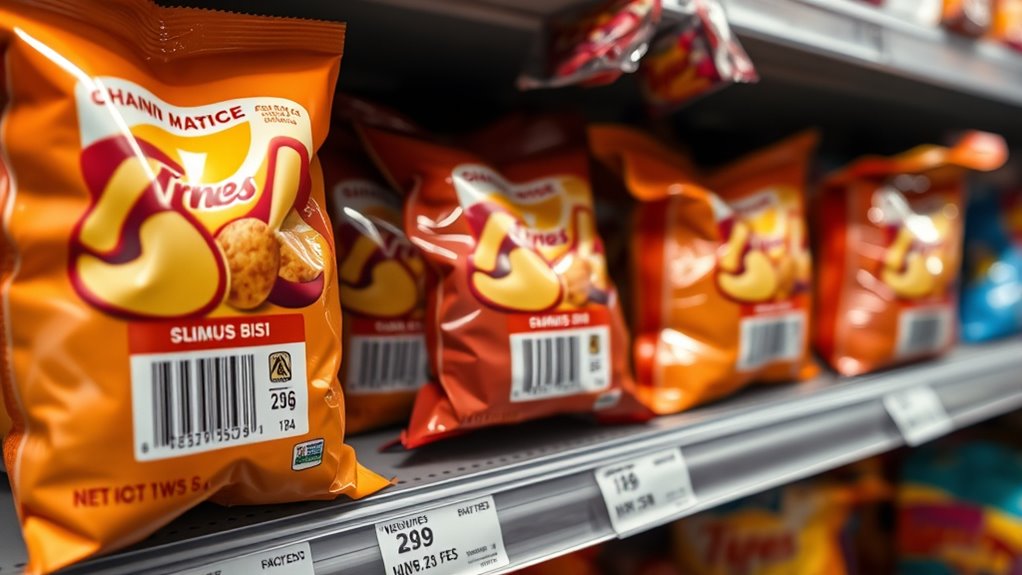

Shadow inflation happens when companies hide price hikes through tactics like shrinkflation—offering smaller products for the same price—and fee creep, where service charges slowly increase or become optional. These practices make it harder to notice how much you’re actually paying over time, gradually eroding your purchasing power without obvious inflation signals. Staying aware of these tactics can help you spot hidden costs—there’s more to uncover about how this sneaky inflation impacts your finances.
Key Takeaways
- Shadow inflation involves hidden price hikes not reflected in official inflation, often through tactics like shrinkflation and fee creep.
- Shrinkflation reduces product sizes or quality while maintaining stable prices, subtly increasing consumer costs over time.
- Fee creep gradually raises service or convenience charges, making expenses less transparent and more difficult to track.
- Consumers are becoming more aware of these tactics, leading to more vigilant spending and recognition of hidden inflation.
- Overall, shadow inflation erodes purchasing power without obvious price increases, impacting consumer financial well-being.

Have you noticed that prices seem to be rising even when official inflation rates remain low? That’s because companies are engaging in what’s called shadow inflation—hidden price increases that don’t show up in government statistics. They use tactics like cost concealment and price stealth to quietly push prices upward without drawing much attention. Instead of overtly raising prices, businesses often shrink product sizes or add small fees, making it harder for consumers to see the true cost increase. This strategy allows them to avoid the negative perception that comes with outright price hikes, but it still hits your wallet just the same.
One common way companies execute shadow inflation is through shrinkflation. You might notice a snack bar that used to be 3 ounces now weighs only 2.75 ounces, or a cereal box that’s a little shorter or less full. These subtle changes hide the actual price increase, because you’re paying roughly the same amount but receiving less. It’s a form of cost concealment designed to keep profit margins steady without alarming consumers. Over time, these small adjustments add up, and your overall purchasing power diminishes even if the sticker prices look familiar. This kind of price stealth gives companies a way to maintain revenue without triggering the backlash that might come with a visible price hike.
Similarly, fee creep is another tactic used to mask inflation. Instead of raising the base price, businesses introduce or gradually increase service charges, convenience fees, or other hidden costs. You might see a hotel adding a resort fee, a bank charging for basic account features, or a subscription service increasing its monthly fee incrementally. These small fee increases often go unnoticed until they significantly impact your expenses. Because they’re framed as optional or ancillary, they don’t always register as inflation, even though they effectively raise your total costs.
In addition, the rise of consumer awareness about these tactics is slowly changing how people respond to price changes, encouraging more vigilant spending habits. All of this creates a form of price stealth that makes it difficult to gauge how much prices are really climbing. When you’re not aware of shrinkflation or fee creep, it feels like your money isn’t stretching as far. You might not realize that you’re paying more for less or that hidden charges are boosting your expenses. This shadow inflation erodes your purchasing power gradually, and since it’s less visible than standard inflation, it’s easier for companies to implement while consumers remain unaware. Recognizing these tactics helps you stay alert and make more informed decisions about where and how you spend your money.
shrinkflation detection tools
As an affiliate, we earn on qualifying purchases.
As an affiliate, we earn on qualifying purchases.
Frequently Asked Questions
How Can Consumers Detect Shadow Inflation Early?
To detect shadow inflation early, you need to enhance your price transparency and boost consumer awareness. Regularly compare product sizes and prices over time, paying attention to subtle changes. Keep receipts and track costs for common items. By staying informed and cautious about packaging and pricing trends, you can spot hidden increases before they impact your budget markedly, empowering you to make smarter shopping choices.
Which Industries Are Most Vulnerable to Shrinkflation Tactics?
You should watch industries where pricing transparency is limited, like food, personal care, and household products. Companies often use marketing strategies that hide true costs, making shrinkflation harder to spot. When prices stay the same but product sizes shrink, it’s a sign of tactics designed to subtly increase costs. Stay alert to these signs, and compare unit prices to better detect hidden price increases.
What Long-Term Economic Effects Does Shadow Inflation Cause?
Shadow inflation is like a wolf in sheep’s clothing, quietly eroding your purchasing power. It skews consumer behavior, making you less confident in prices and savings. Over time, this leads to unpredictable inflation, complicating monetary policy efforts. As shadow inflation persists, it can trigger a loss of trust in the economy, causing long-term instability and reducing investments. You might find your financial plans unraveling as prices become increasingly unpredictable.
Are There Legal Regulations Addressing Hidden Price Increases?
You might wonder if laws fight hidden price hikes. Currently, many regulatory loopholes allow companies to obscure true costs, making it tough for consumers to see the full picture. Some transparency mandates aim to address this, but enforcement varies. While regulations exist, they often fall short of preventing all hidden price increases, leaving you vulnerable to subtle inflation tactics. Staying informed helps you spot and challenge these practices.
How Does Shadow Inflation Impact Low-Income Households Differently?
They say “a rising tide lifts all boats,” but shadow inflation hits low-income households hardest. You might notice smaller package sizes or added fees, yet prices stay the same, stretching your budget thin. Income disparity worsens, and nutritional impact becomes severe as affordable food options shrink. This hidden inflation makes it tougher for you to access essentials, deepening financial strain and compromising your well-being over time.

GPS Tracker for Vehicles Work with Built-in APP (Compatible with Android Device),Mini Car Tracker Tag With Magnet Global Coverage,Hidden Car Locator Device, No Monthly Fee or Subscription, No SIM Card
Difference from Traditional GPS Device: Traditional GPS locators require data or connection to the car's wiring, require monthly…
As an affiliate, we earn on qualifying purchases.
As an affiliate, we earn on qualifying purchases.
Conclusion
As you navigate your daily purchases, shadow inflation quietly weaves itself into your life, like a fog settling over familiar prices. Shrinkflation and fee creep become unseen shadows, subtly eroding your wallet’s strength. But now, you’re aware of these hidden tricks, the silent price hikes lurking behind your favorite products. Stay vigilant—by shining a light on these covert tactics, you can better protect your hard-earned money from slipping away unnoticed.

On Inequality
As an affiliate, we earn on qualifying purchases.
As an affiliate, we earn on qualifying purchases.
Mastering Small Business Taxes for LLC: Unlock Hidden Tax Deductions/Credits, Avoid Costly Mistakes, and Keep More Profits – Visuals Included
As an affiliate, we earn on qualifying purchases.
As an affiliate, we earn on qualifying purchases.