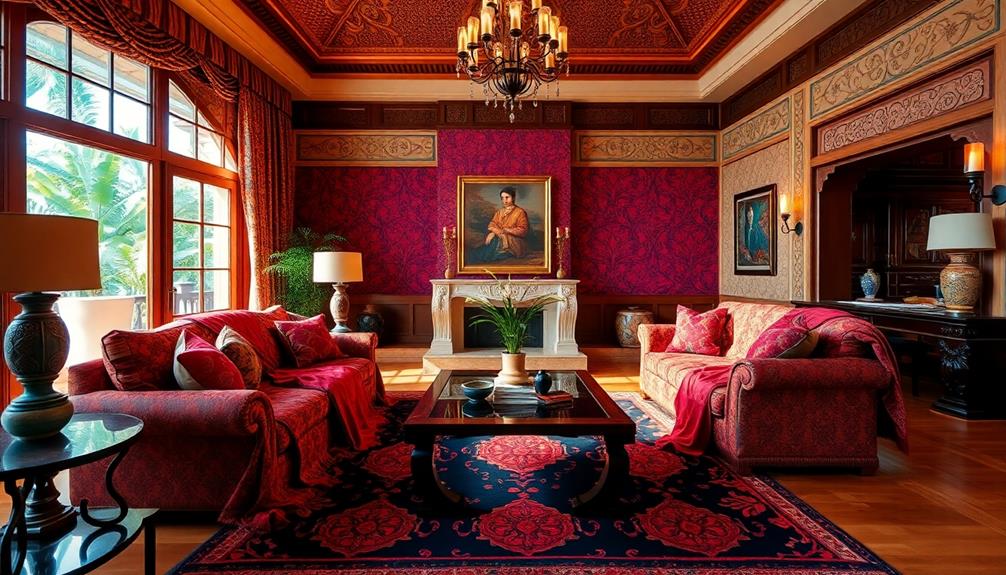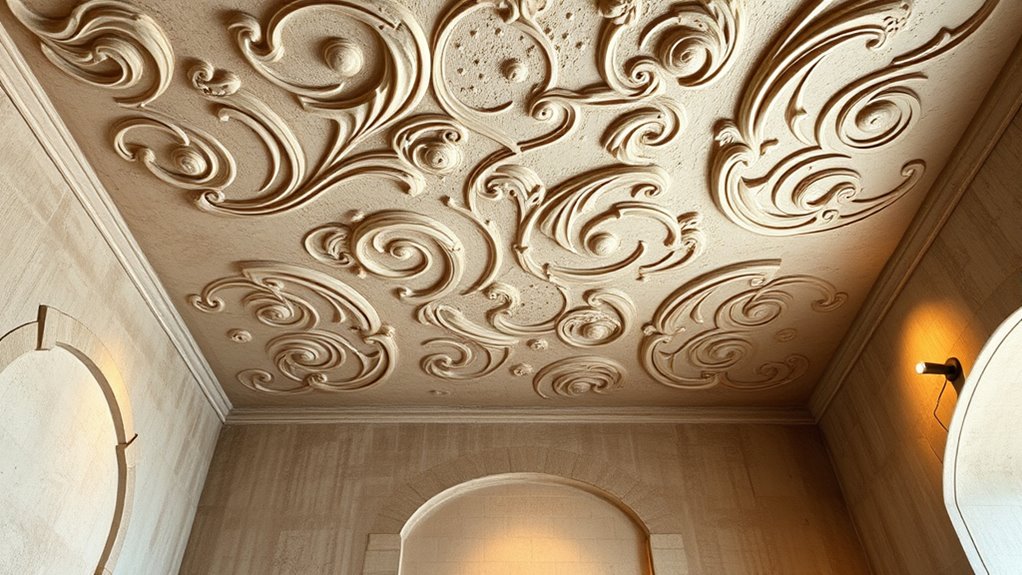
Adding textured walls and ceilings instantly brings depth and character to your interiors. You can choose from subtle, refined finishes or bold patterns to match your style, creating focal points that make spaces feel warm and inviting. Textures help hide imperfections and improve acoustics, enhancing overall comfort. Whether you prefer smooth, sleek surfaces or more tactile designs, incorporating these elements elevates your decor. Keep exploring to discover how you can transform your space with thoughtful textures.
Key Takeaways
- Textured walls and ceilings add visual depth and character, transforming plain spaces into stylish, engaging interiors.
- They offer a tactile, warm feel that enhances comfort and invites touch, making rooms more inviting.
- Different textures can hide imperfections and create visual focal points, elevating overall aesthetic appeal.
- Ceiling textures like popcorn or smooth finishes influence room ambiance, from cozy to modern elegance.
- Incorporating seasonal or personalized textures enhances the room’s atmosphere and reflects individual style.
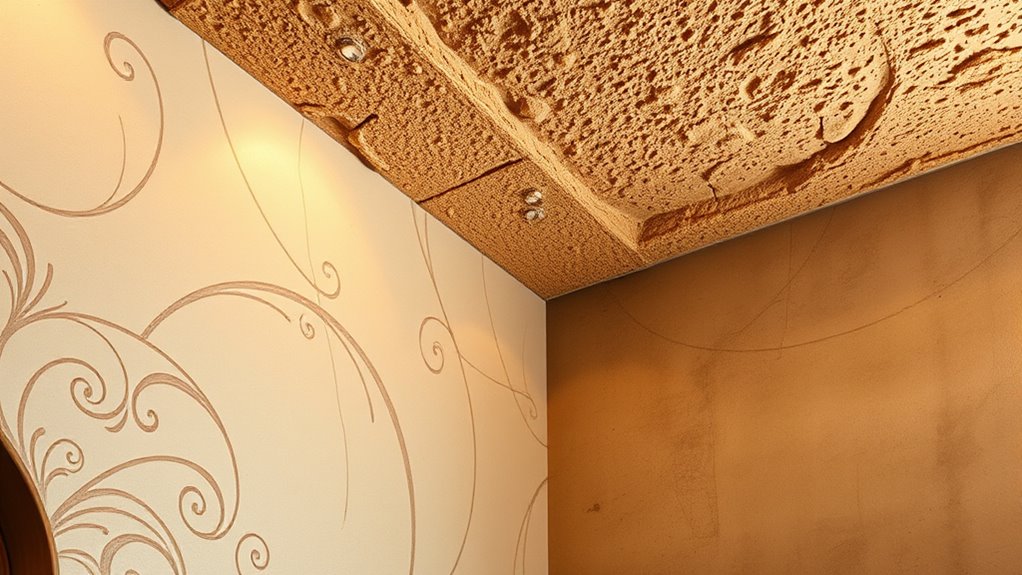
Have you ever wondered how textured walls and ceilings can transform a room’s look? It’s all about adding depth, character, and a unique sense of style that flat, smooth surfaces often lack. When you choose wall textures and ceiling finishes, you’re not just covering up imperfections; you’re creating a focal point that enhances the overall aesthetic. Textured walls can bring a tactile quality to your space, making it feel warmer and more inviting, while ceiling finishes can elevate the room’s vibe, giving it a finished, sophisticated appearance.
The beauty of wall textures lies in their variety. From subtle, almost whisper-thin patterns to bold, dramatic designs, textures give you endless options. You might opt for a light stucco or knockdown finish if you want a refined look that adds just a touch of interest without overwhelming the space. If you prefer something more striking, bold textures like popcorn or swirl finishes can make a statement. These textures not only hide wall imperfections but also add a layer of visual intrigue that draws the eye around the room. When selecting your wall textures, consider the overall style of your space—modern, rustic, or eclectic—and choose a finish that complements your decor.
Ceiling finishes are equally important in setting the tone of a room. Traditional popcorn ceilings, for example, can give a cozy, vintage feel, while sleek, smooth finishes communicate modern elegance. Acoustic ceiling textures are practical too; they absorb sound and reduce echo, making your room more comfortable. If you want to be creative, you might explore plaster finishes or even textured paint, which can mimic the look of more elaborate finishes without the cost. The right ceiling finish can make your room feel more finished and polished, while also hiding imperfections that are harder to repair in ceilings. Additionally, incorporating seasonal influences into your ceiling choices, like textured finishes that evoke warmth during winter months, can enhance the cozy atmosphere of your home.
Incorporating textured walls and ceiling finishes isn’t just about aesthetics; it’s about creating an environment that feels complete and thoughtfully designed. When you choose textures that match your personal style, you give your space depth and personality. Whether you’re going for subtle sophistication or bold statements, textured walls and ceilings can elevate your interior design game, making your rooms more visually engaging. Remember, the right textures can turn a plain room into a stylish retreat, reflecting your taste while adding practical benefits like hiding flaws and controlling acoustics.
Frequently Asked Questions
What Are the Best Paint Types for Textured Surfaces?
You should choose latex or acrylic paints with a matte or eggshell sheen for textured surfaces, as they provide good coverage and hide imperfections. Look for eco-friendly options that are low in VOCs to keep your space healthy. These paints adhere well to textured walls and ceilings, highlighting the depth without glare. Always opt for high-quality paints designed for textured surfaces to guarantee durability and a beautiful finish.
How Do I Repair Damaged Textured Walls or Ceilings?
To repair damaged textured walls or ceilings, start by cleaning the area thoroughly. Use a textured patching compound suitable for your wall type to blend the damage with the existing texture. Apply the compound carefully, then use a brush or sponge to match the texture pattern for damage concealment. Once it dries, sand lightly if needed, and repaint to restore the seamless look and depth of your interior.
Can Textured Finishes Be Removed Easily if Desired?
Sure, textured finishes can be removed, but don’t expect a walk in the park. The removal process often involves scraping, sanding, or even applying special solutions—definitely not the easiest DIY techniques. You might find it tempting to peel away the texture, but it’s messy and time-consuming. If you’re aiming for a quick fix, consider professional help, or be prepared for a bit of a drywall adventure.
What Are the Cost Differences Between Various Texturing Techniques?
You’ll find that the cost comparison between textured wall techniques varies widely. Techniques like spray-on textures tend to be more affordable, while hand-applied or intricate patterns cost more due to labor and skill. Technique variations markedly impact your budget—simple textures are cheaper, but elaborate designs require extra time and expense. Consider your style preferences and budget constraints to choose the best technique that balances cost and visual appeal.
Are Textured Walls Suitable for All Interior Styles?
Think of textured walls as a chameleon—some styles embrace their bold personality, while others prefer sleek simplicity. You’ll find textured walls work best with decor style compatibility that celebrates visual interest. However, consider maintenance considerations, as they can trap dust and require gentle cleaning. If you love adding depth and character, textured walls suit many styles; if you prefer minimalism, they might be less ideal.
Conclusion
Now that you’ve explored the captivating world of textured walls and ceilings, imagine the stunning transformation they can bring to your space. But what if the next design choice could elevate your interiors even further? The possibilities are endless, and the secret to truly unique decor might be closer than you think. Are you ready to take the next step and reveal the full potential of your home’s design? The future of your interiors awaits—dare to discover it.