TL;DR

Get everyday essentials delivered free — and shop member deals
- Fast, free delivery on millions of items
- Access to Prime Big Deal Days deals on October 6–7
- Prime Video, Amazon Music and more included
Halloween themed party supplies include decorations, tableware, lighting, and activity materials that help your party feel tied together. Start with a theme, guest count, and venue, then coordinate a few visible details, keep paths and food areas safe, and choose reusable items where they make sense.
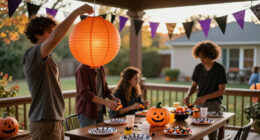
A few orange lights and a crooked paper banner can turn an ordinary dining room into a Halloween party before the first guest rings the bell. The trick is choosing supplies that make the space feel festive while still leaving room for people, food, and a clear path to the door.
This guide walks you through choosing a theme, estimating what to buy, decorating on a budget, and keeping the party comfortable and safe. You’ll also find ways to cut down on cleanup without relying on vague labels like “eco-friendly.”
Choose one theme and repeat two or three colors across the tableware, décor, and lighting.
Check pack quantities and contents against your guest count before buying a coordinated kit.
Concentrate decorations at the entrance, food table, and photo spot to make a strong impression without crowding the room.
Keep exits, stairs, food areas, and walkways clear; use lights according to their instructions.
Check local disposal rules and product materials before treating disposable décor or tableware as recyclable or compostable.
Choose a Halloween theme that fits your guests and space
Halloween themed party supplies work best when they follow a clear theme, match the setting, and suit the people coming. A pumpkin patch, friendly ghost party, or classic haunted house can guide your choices for tableware, banners, lighting, and activities without requiring every item to match exactly.
Start by thinking about the room and the age range of your guests. A small apartment living room may suit a “cute spooky” look with smiling ghosts and paper bats; a backyard gathering can handle larger outdoor props, as long as you secure them against wind. The room matters because decorations compete with the space guests need to sit, move, and serve themselves. A compact theme also makes it easier to decide what to leave out.
Choose two or three main colors, then repeat them in visible places. Traditional orange and black feel instantly familiar, while purple, green, white, or metallic accents can make the same setup feel more playful or gothic. Repeating a limited palette creates a sense of coordination even when the pieces come from different sets, so you can reuse what you own instead of buying a complete matching collection.
For a child’s party, friendly monsters and pumpkin faces offer Halloween flavor without jump scares. If you’re hosting adults, a vintage horror theme might call for dim lighting, old-fashioned labels, and a black lace table runner instead. Think through how guests will experience the theme: a look that works in photos may be uncomfortable if it depends on darkness, loud effects, or narrow paths. Choosing a mood that suits your guests helps the decorations add to the gathering rather than become something people have to work around.
Build a supply list before you fill your cart
Halloween themed party supplies usually fall into five useful groups: invitations, decorations, tableware, lighting, and activity or favor materials. Write down your guest count and food plan first, then check the pack size and included items for any set you’re considering. Those details determine whether a kit saves time or leaves you scrambling for extra cups and serving pieces.
A coordinated kit might include plates, cups, and napkins, while a separate décor set may contain a banner and hanging decorations. The contents differ between listings, so don’t assume one pack covers every guest or part of the room. Matching items can make decisions faster, but buying a large set can also mean paying for pieces you don’t need. Compare the useful contents and quantities with your plan, not just the product photo.
Use this quick sequence to avoid buying duplicates:
- Count your guests and decide whether you’ll serve a meal, snacks, or both.
- List the essentials: tableware, serving pieces, decorations, lighting, and supplies for planned activities.
- Check each pack for item counts, dimensions, setup needs, and food-contact labeling where relevant.
- Add a small buffer of plates, cups, and napkins for spills or seconds, based on what you’ll serve.
- Choose your focal areas, such as the entrance, food table, and photo spot, before adding extra décor.
For example, if twelve guests are coming for pizza and cupcakes, you might need more than twelve plates but only one banner and a handful of table decorations. A little planning keeps the food table ready for serving instead of crowded with props. It also helps you spend on items guests will use or notice rather than duplicates that add storage and cleanup without improving the party.
Make a few decorations do the heavy lifting
Three well-decorated spots can make a Halloween party feel complete: the entrance, the food table, and a place for photos. Focus your themed party supplies there, and the decorations will show up in the moments guests notice most instead of disappearing into clutter. Concentrating décor also makes setup simpler: each area has a clear purpose, and the rest of the room stays available for conversation and movement.
At the front door, try a banner, a paper garland, or a small cluster of pumpkins. On the food table, use a colored cloth and a centerpiece that sits below eye level so guests can still see one another across the room. Keeping the centerpiece low is a small tradeoff: it may be less dramatic on its own, but it protects sightlines and leaves room for dishes.
A photo backdrop gives guests a reason to gather in one decorated spot. A plain dark sheet, a few paper bats, and warm string lights can work as a backdrop without taking up much floor space; keep the route around it open. Since guests may line up or step back to take pictures, leave enough space for that activity instead of letting the backdrop spill into the main walkway.
For a budget party, reuse decorations you already own and add simple paper shapes cut from cardstock. A family hosting six children in a living room, for instance, could make a friendly ghost photo corner and use the same paper ghosts as table decorations. Reusing pieces cuts the number of purchases and can make the theme feel more consistent, though handmade paper décor may take more preparation and care to store than a ready-made set.
Related items may include banners to lighting, but buy according to your plan. A small number of matching pieces can tie a room together more effectively than a box of unrelated décor. Before adding another item, ask whether it gives a focal area a useful detail or simply adds another thing to set up and pack away.
Match the mood to the ages and comfort levels in the room
A Halloween party should feel spooky at the level your guests enjoy, with comfortable places to sit and quieter options when needed. Soft lighting, friendly characters, and autumn colors can set the mood without startling young children or guests who dislike loud sounds and intense effects. Comfort affects how long people want to stay and whether they can take part, so it deserves as much thought as the theme itself.
Ask yourself what a guest might encounter from the moment they arrive: a flashing light at the door, a sudden sound, or a narrow path past a large prop. If you’re planning a family gathering, skip jump scares and give children a clear, well-lit route between the entrance and the food. Surprises may feel exciting to some guests, but they can make others hesitant to enter or move around; a predictable, welcoming entrance helps everyone settle in.
At an adult party, dim corners and eerie music can add atmosphere, but keep enough light around stairs, snacks, and shared walkways. Think of lighting like stage makeup: it sets the scene, but it shouldn’t make basic movement harder. If the room is too dark to identify food or see a step, the atmosphere is costing guests ease and safety.
A simple adjustment can make a big difference. Put the fog machine or loud playlist in one area, then leave a quieter seating spot where guests can chat without competing with effects. This gives guests a choice about how much stimulation they want, while preserving the dramatic corner for those who enjoy it.
Good atmosphere leaves room for comfort. Guests should be able to find the food, see the steps, and take a break from sound or scares.
Buy supplies that make serving and cleanup easier
Practical party supplies make serving food easier and help you manage the mess at the end of the night. Check that plates, cups, and other food-contact items are labeled for that use, and keep décor materials such as artificial cobwebs and loose glitter away from the food. Separating serving areas from decorations reduces the chance that small decorative materials end up in dishes and gives guests a clear place to set food down.
Disposable tableware and matching napkins can save washing time, especially if you’re feeding a crowd. But a paper plate with a plastic coating, metallic finish, or glitter may not belong in standard recycling, and local rules vary [1]. Convenience at the party can shift work to disposal afterward, so the material and local collection rules matter when deciding whether disposables actually simplify cleanup.
Reusable serving trays, washable fabric banners, and durable decorations can come out year after year if you store them clean and dry. Give yourself a small routine: collect reusable pieces after the party, let them dry fully, and label a storage box by theme. These items take more effort to wash and store now, but repeated use can make that effort worthwhile and reduce the need to replace them for each celebration.
Terms such as “biodegradable,” “compostable,” and “recyclable” describe different things. Check the product material and your local disposal guidance before assuming a Halloween plate or decoration can go in a particular bin [1]. A label alone does not tell you whether your local service accepts the item, so checking first avoids contamination and makes the cleanup choice more reliable.
Set up lighting and decorations without blocking the party
Safe Halloween decorating keeps exits open, walkways clear, and lights away from things that could catch fire. Place decorations away from heaters and open flames, secure hanging pieces, and keep electrical cords out of paths where guests might trip [1]. These choices matter especially once the room is dim or busy: a cord or loose prop that seems obvious during setup can be harder to spot when guests are carrying food.
LED candles and string lights can create a warm glow around paper décor without adding an open flame. Follow the product instructions, and use outdoor lights only in locations their manufacturer permits. Battery-powered lighting can simplify placement by avoiding a cord across the room, while plug-in lighting may suit a fixed display; whichever you use, arrange it so the effect does not come at the cost of a clear route.
For a backyard party, stake lightweight decorations securely and plan what you’ll do if rain or strong wind arrives. Protect electrical connections from moisture as directed by the manufacturer, and avoid placing decorations where guests have to step over cords. Outdoor conditions can change after setup, so a fallback plan—such as bringing decorations inside or switching off affected lights—keeps the gathering manageable if the weather turns.
A quick walk-through before guests arrive catches small problems: a banner hanging too low, a cord across the doorway, or a paper pumpkin beside a space heater. Fixing those details takes moments and makes the room easier to enjoy. Walk the route guests will use, including the way to the food and the exit, to check the setup from their point of view.
Use this comparison to pick a party look that works
The best Halloween theme depends on your venue, guests, and how much setup you want to do. Use this comparison to choose a style that suits the party you’re actually hosting, then buy only the supplies needed to create that mood. A theme is useful when it helps you make tradeoffs: a small room may favor compact decorations, while a backyard needs items that can withstand the conditions.
| Party style | Supplies to prioritize | Best fit |
|---|---|---|
| Friendly pumpkin patch | Pumpkin decorations, warm lights, orange tableware | Young children and family gatherings |
| Cute spooky | Smiling ghost décor, pastel accents, simple photo backdrop | Mixed-age groups and small rooms |
| Vintage haunted house | Dark fabric, old-fashioned signs, battery-powered candles | Adults and indoor evening parties |
| Outdoor monster bash | Weather-suited lighting, secured decorations, sturdy serving pieces | Backyards and larger groups |
For example, a host with a small living room and several young cousins could choose cute spooky décor, then save a dramatic haunted-house look for another year. The theme helps set the mood, and the room still has space for snacks and a game. Comparing styles this way makes it easier to notice the practical costs too: darker lighting may need extra path lighting, while outdoor decorations can require more securing and weather planning.
Get better results by buying the right supplies at the right time
Buying Halloween party supplies early gives you more time to compare styles, check pack contents, and find a backup if an item sells out. Popular themes and matching sets can be less predictable close to October 31, so look at delivery estimates and return policies if you shop online [1]. Early planning is most useful for items that define the look or have specific dimensions; everyday tableware is often easier to substitute if your first choice is unavailable.
Social media has helped spread specific looks such as gothic elegance, nostalgic Halloween, cute spooky décor, and cinematic horror settings. These are broad style patterns, not live sales figures, and availability varies by retailer and location [1]. Treating a trend as inspiration rather than a checklist lets you adapt the parts you like to your room and budget instead of buying a whole look just because it appears popular.
Personalized decorations and coordinated kits can help a party feel tailored without needing dozens of separate purchases. A custom sign with your family name, paired with a simple black-and-orange table setting, may give guests a stronger sense of occasion than extra items scattered around the room. Personalization can make a focal point feel special, though it may be less reusable than a neutral banner, so reserve it for details that matter to you.
Set your budget by choosing the details that matter most to you. If the photo backdrop is the focal point, spend there and keep the rest simple with reusable fabric, paper decorations, and lights you can use next year. This approach directs money toward the part guests are most likely to notice while limiting the cost and storage burden of decorations that add little to the experience.
Frequently Asked Questions
What supplies do I need for a Halloween party?
Start with invitations, tableware, decorations, lighting, and anything needed for your planned activities or favors. Your guest count, food plan, theme, and venue determine how much to buy; check pack quantities before ordering.
How many plates, cups, and napkins should I buy?
Use your guest count as a starting point, then allow extra plates, cups, and napkins for spills, seconds, or more than one course. Check the number of each item in a party pack, since sets can contain different quantities.
How can I decorate on a budget?
Decorate a few visible areas, such as the entrance, food table, and photo spot, instead of covering every wall. Reuse decorations, make simple paper shapes, and use lighting to add atmosphere.
What Halloween party themes work well for kids?
Pumpkin patches, friendly ghosts, playful monsters, and not-too-scary haunted houses are easy to adapt for children. Choose decorations and activities that suit their ages, and keep paths well lit.
Can I recycle disposable Halloween plates and decorations?
It depends on the product materials and your local recycling rules. Coatings, glitter, and mixed materials can make an item unsuitable for standard recycling, so check the package and local guidance.
Conclusion
Choose a theme your guests will enjoy, count what you need, and decorate the places people will actually gather. When the lights glow, the snacks are easy to reach, and the walkway stays clear, your party is ready for a night of rustling leaves, sweet treats, and friendly scares.
Fall Picks
fall essentials
As an affiliate, we earn on qualifying purchases.