
New vaccine developments focus on creating more effective and stable options, with thermostable vaccines easing storage and distribution challenges. These innovations help reach remote and underserved areas, reducing wastage and costs. Alongside technological advances, public health efforts work to improve trust and acceptance through education and community engagement. Together, these strategies are shaping a future with broader, more reliable immunization coverage—if you want to explore how these changes could impact global health, there’s more to discover.
Key Takeaways
- Innovative thermostable vaccines are being developed to improve storage, distribution, and global access.
- New vaccine formulations aim for higher efficacy with easier administration methods.
- Advances include mRNA vaccines for diseases beyond COVID-19, expanding preventative options.
- Ongoing research focuses on vaccines for emerging pathogens and resistant strains.
- Enhanced public engagement strategies are supporting acceptance of upcoming vaccine innovations.
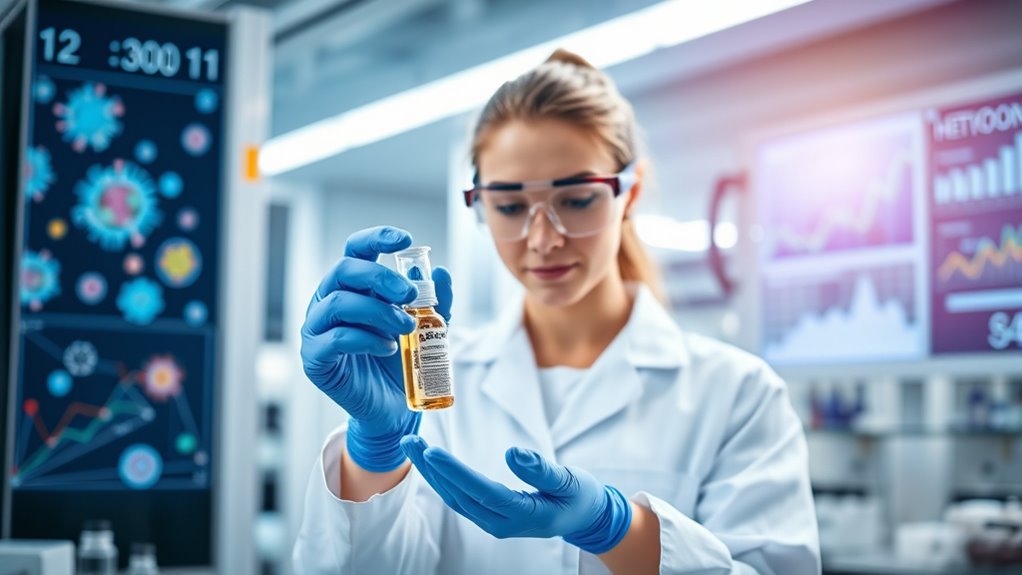
Vaccine storage is a key component in maintaining the efficacy of new vaccines. Traditionally, vaccines required strict refrigeration, which posed challenges in remote or resource-limited areas. But now, researchers are developing thermostable vaccines that can withstand higher temperatures. This breakthrough reduces the dependence on cold chain logistics, making it easier to distribute vaccines in underserved regions. With better storage options, health organizations can expand immunization efforts without fearing that vaccines will lose potency during transit or storage. This not only streamlines distribution but also cuts costs and minimizes wastage. Additionally, ongoing research into vaccine stability aims to further improve how vaccines are preserved and transported worldwide.
Public acceptance remains another major hurdle and opportunity in vaccination efforts. Despite the scientific progress, some communities remain hesitant or skeptical about new vaccines. Misinformation, cultural beliefs, and mistrust in healthcare systems can hinder vaccination campaigns. To combat this, public health officials are focusing on transparent communication and community engagement. By involving local leaders and providing clear, evidence-based information, they aim to build trust and dispel fears. The more you understand the safety and benefits of emerging vaccines, the more likely you are to accept them. As new vaccines become available, addressing concerns about side effects, efficacy, and accessibility is essential to increase uptake and ensure herd immunity.
The integration of innovative vaccine storage solutions and strategies to improve public acceptance is transforming how we approach disease prevention. Manufacturers are now designing vaccines that are not only more effective but also easier to distribute globally. Meanwhile, public health campaigns are working to foster confidence and dispel myths surrounding vaccination. As a result, more people are willing to get vaccinated, especially as new vaccines target diseases that have long plagued communities.
In the end, these advancements work together to create a more efficient, inclusive, and effective vaccination landscape. You benefit from these improvements by gaining access to safer vaccines that arrive in better condition and are more readily accepted by your community. This synergy between technological innovation and social engagement is paving the way for a healthier future where preventable diseases become increasingly rare.
Frequently Asked Questions
How Do New Vaccines Differ From Existing Ones?
New vaccines differ from existing ones by often offering higher vaccine efficacy, meaning they provide better protection against diseases. They may also target variants more effectively. However, you might face manufacturing challenges, such as scaling up production quickly or ensuring stability. These advancements aim to improve overall health outcomes, but developing and distributing them can be complex. You should stay informed about how these innovations could impact your immunity and access.
What Challenges Are Faced in Vaccine Development?
You face several challenges in vaccine development, including overcoming vaccine hesitancy, which can delay widespread acceptance. Regulatory hurdles also slow progress, as agencies require rigorous testing to guarantee safety and efficacy. Did you know it takes an average of 10-15 years to develop a new vaccine? These obstacles demand extensive research, funding, and public trust—making the path to new vaccines both complex and vital for global health.
Will New Vaccines Be Affordable Globally?
Yes, new vaccines could be affordable globally, but it depends on vaccine pricing and how manufacturers and governments collaborate. When prices stay low, more people gain access, especially in low-income regions. You can help by supporting policies that promote equitable distribution and reduce costs. Ensuring affordable vaccines worldwide is essential to improve global access and prevent disease outbreaks, making health care more inclusive for everyone.
How Long Does It Take to Develop a New Vaccine?
Developing a new vaccine is like planting a seed and waiting for it to blossom; it usually takes about 10 to 15 years. You face hurdles like ensuring vaccine efficacy and steering regulatory approval, which can stretch this timeline. Sometimes, rapid advancements shorten development to just a few years, but safety and efficacy remain the guiding stars. Patience and rigorous testing are key to bringing a safe, effective vaccine to you.
What Are the Potential Side Effects of Upcoming Vaccines?
You might experience mild side effects like soreness, fatigue, or headaches with upcoming vaccines, but vaccine safety protocols aim to minimize serious reactions. Developers focus on side effect management to guarantee your comfort and safety. Always stay informed about potential side effects, and discuss any concerns with your healthcare provider. Remember, the benefits of vaccination generally outweigh the risks, helping protect you and your community.
Conclusion
As you stay informed about these vaccination developments, remember that over 70% of the global population has received at least one dose of a COVID-19 vaccine. This progress shows how close we are to achieving widespread immunity. With new vaccines on the horizon, you’re part of a rapidly evolving effort to protect communities worldwide. Keep following updates—your awareness helps support ongoing public health advancements and a safer future for everyone.