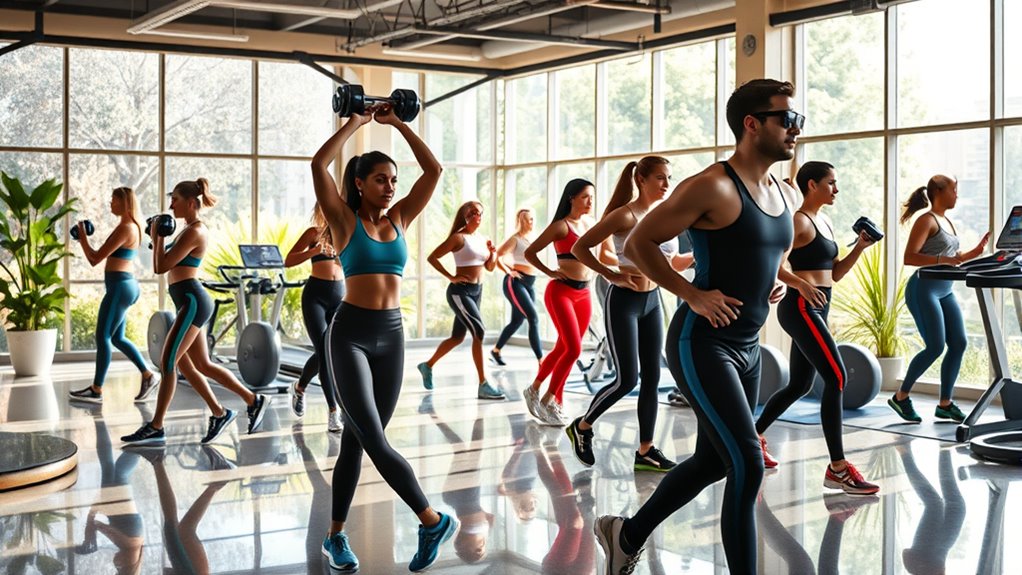

By 2025, you’ll notice virtual workouts becoming even more popular, offering flexibility and variety that fit your busy life. Wearable tech will provide deeper health insights, guiding your fitness journey with personalized feedback. AI-driven coaching and immersive VR experiences will make exercising engaging and motivating. These innovations help you stay consistent and connected, making fitness more accessible and enjoyable. Keep exploring to see how these trends will shape your health and activity habits moving forward.
Key Takeaways
- Wearable devices will feature advanced biometric sensors offering deeper health insights and personalized data analysis.
- AI-driven virtual coaching will tailor workouts dynamically based on individual progress and goals.
- Immersive VR and AR environments will create realistic, engaging training experiences at home.
- Virtual social challenges and gamified platforms will boost motivation and community engagement.
- Data-driven feedback will integrate psychological strategies to enhance motivation and long-term adherence.

Have you noticed how your fitness routine has shifted since the pandemic? Chances are, you’ve become more accustomed to virtual workouts and leveraging wearable technology to stay active. During those early months of lockdown, online classes and streaming sessions became your go-to. Whether it was yoga, HIIT, or strength training, you found that working out from home offered convenience and variety that traditional gyms sometimes lacked. This shift wasn’t just a temporary fix; it transformed how you approach fitness, making virtual workouts a staple in your routine. You now have access to a vast array of trainers and programs, often at a fraction of the cost of gym memberships. Plus, the ability to tailor your sessions to your schedule means you’re more likely to stay consistent.
The pandemic transformed fitness with virtual workouts and wearable tech, making staying active more flexible and personalized.
Wearable technology has played an essential role in this evolution. Devices like smartwatches and fitness trackers now do more than just count steps. They monitor your heart rate, track your sleep patterns, and even provide insights into your overall health. With real-time feedback, you can see how your body responds to different workouts and adjust accordingly. These gadgets make it easier to set goals, stay motivated, and hold yourself accountable. You might find yourself reaching for your smartwatch before every workout, enthusiastic to see your progress and stay on track. Wearable tech also integrates seamlessly with virtual workout platforms, syncing data and offering personalized recommendations. This synergy helps you optimize your routines, ensuring you’re training smarter, not just harder.
The combination of virtual workouts and wearable technology has removed many barriers to fitness. No longer do you need to fight for equipment or juggle schedules around gym hours. Instead, you can workout whenever it suits you, knowing your device is tracking your efforts and progress. This flexibility is especially beneficial if you’re balancing work, family, or other commitments. It also creates a more engaging experience—many virtual platforms now incorporate gamification and social features, making workouts feel more interactive and fun. With wearable tech, you can challenge friends, compete for milestones, or simply keep yourself motivated by seeing tangible results.
In 2025, this trend will only deepen. Expect more advanced wearables with added features like advanced biometric sensors and AI-driven coaching. This development is rooted in psychological theories suggesting that personalized feedback enhances motivation and adherence. Virtual workouts will continue to evolve, offering immersive experiences through VR and AR. The integration of these technologies will make your fitness journey more personalized, engaging, and effective. If you’ve already embraced virtual workouts and wearable tech, you’re ahead of the curve. If not, it’s never too late to tap into these innovations and redefine your post-pandemic fitness routine. They’re shaping the future of how you stay healthy, active, and motivated every day.

Ajblg Health Activity Fitness Trackers, 2025 Wearable Smart Bracelet, 120+ Sport Modes Smart Band, All-Day Continuous Heart Rate Blood Pressure Stress HRV Monitor, 24H Sleep Tracker with Free App
【Ajblg Fitness Tracker】Experience 24/7 continuous health tracking with AJBLG fitness tracker. Advanced sensors and AI algorithms continuously monitor…
As an affiliate, we earn on qualifying purchases.
As an affiliate, we earn on qualifying purchases.
Frequently Asked Questions
How Will Virtual Fitness Evolve Post-Pandemic?
Virtual fitness will evolve by integrating virtual reality to create immersive workout experiences, making exercises more engaging and lifelike. You’ll also see AI coaching become more personalized, offering real-time feedback and tailored routines. This combination will make workouts more accessible and effective, allowing you to train from anywhere with advanced technology that adapts to your progress. Expect seamless, interactive fitness that keeps you motivated and connected to your goals.
What New Fitness Tracking Technologies Will Emerge by 2025?
Think of the future like Sherlock Holmes decoding clues—wearable sensors and AI analytics will lead the way. By 2025, expect advanced fitness trackers that monitor your health in real time, adapting to your needs. These devices will use smarter sensors and AI to give personalized insights, helping you optimize workouts and recovery effortlessly. You’ll have tools that not only track progress but also predict your next move, making fitness more intuitive than ever.
Will Gym Memberships Become More Flexible or Subscription-Based?
You’ll find gym memberships becoming more flexible and embracing subscription models by 2025. Many gyms will offer customizable plans, allowing you to choose the days, hours, or even types of workouts that fit your schedule. Subscription-based options will give you more control, letting you pause, upgrade, or downgrade your membership easily. This shift aims to make fitness more accessible and convenient, helping you stay committed without long-term commitments.
How Will Mental Health Integration Influence Fitness Routines?
Think of your fitness routine as a garden where mindfulness practices and emotional resilience are the nourishing soil. As mental health becomes central, you’ll incorporate meditation and breathing exercises, strengthening your mind alongside your body. This integration helps you cultivate balance, reduce stress, and build emotional resilience. By tending to both, your workouts become more than physical; they transform into holistic rituals fostering mental clarity and inner strength.
Are There Upcoming Fitness Trends Tailored for Remote Workers?
Yes, upcoming fitness trends for remote workers include more personalized home workouts and the integration of wearable tech. You’ll likely see smarter fitness devices that track your progress and motivate you throughout the day. Home workouts will become more interactive, with virtual trainers and on-demand classes tailored to your schedule. These innovations help you stay active and healthy, even when working remotely, making fitness more accessible and engaging.
AI virtual coaching workout devices
As an affiliate, we earn on qualifying purchases.
As an affiliate, we earn on qualifying purchases.
Conclusion
As you embrace the post-pandemic fitness trends of 2025, remember that change is the only constant. By staying adaptable and open to new workouts and routines, you’ll keep your body energized and motivated. Think of it like riding a wave—you’ll learn to balance and flow with life’s ups and downs. Keep pushing forward, and you’ll find that every small step adds up to a healthier, happier you. After all, Rome wasn’t built in a day.

KAT Walk C2 VR Series | 360° Omnidirectional Walking Pad & Accessories for Immersive VR Gaming & Fitness | Compatible with SteamVR, Quest, Oculus | Plus E | US Size 13
Step Into the Next Level of VR Locomotion: No more motion sickness, limited movement, or bulky setups—Plus Enhance…
As an affiliate, we earn on qualifying purchases.
As an affiliate, we earn on qualifying purchases.
gamified fitness platforms
As an affiliate, we earn on qualifying purchases.
As an affiliate, we earn on qualifying purchases.