In today’s digital landscape, AI is transforming cybersecurity by helping you detect, prevent, and respond to advanced threats. While AI tools analyze large data patterns to catch cyberattacks early, cybercriminals also use AI to craft convincing phishing messages and smarter attacks. Staying ahead requires combining AI-driven solutions with user awareness and continuous adaptation. If you want to understand how AI can protect your assets and combat evolving threats, there’s more to explore.
Key Takeaways
- AI enhances cybersecurity by enabling proactive threat detection, real-time response, and automation of security processes.
- Cybercriminals utilize AI to craft sophisticated, personalized phishing attacks that challenge traditional defenses.
- Continuous machine learning allows security systems to adapt to evolving threats and identify anomalies early.
- The use of AI introduces challenges like the AI arms race, requiring ongoing updates and human oversight.
- Combining AI tools with user training and awareness is essential to strengthen overall cybersecurity resilience.
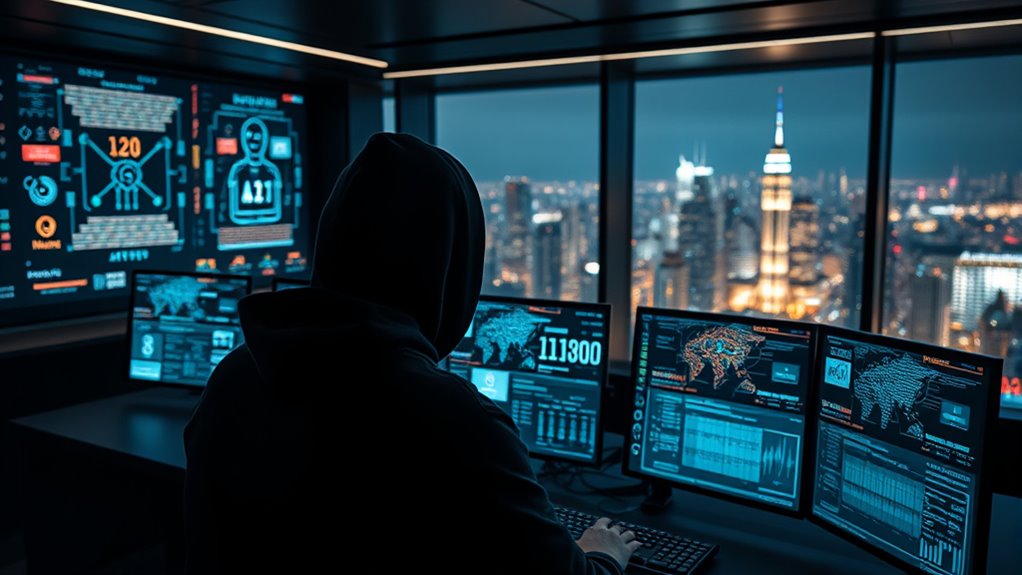
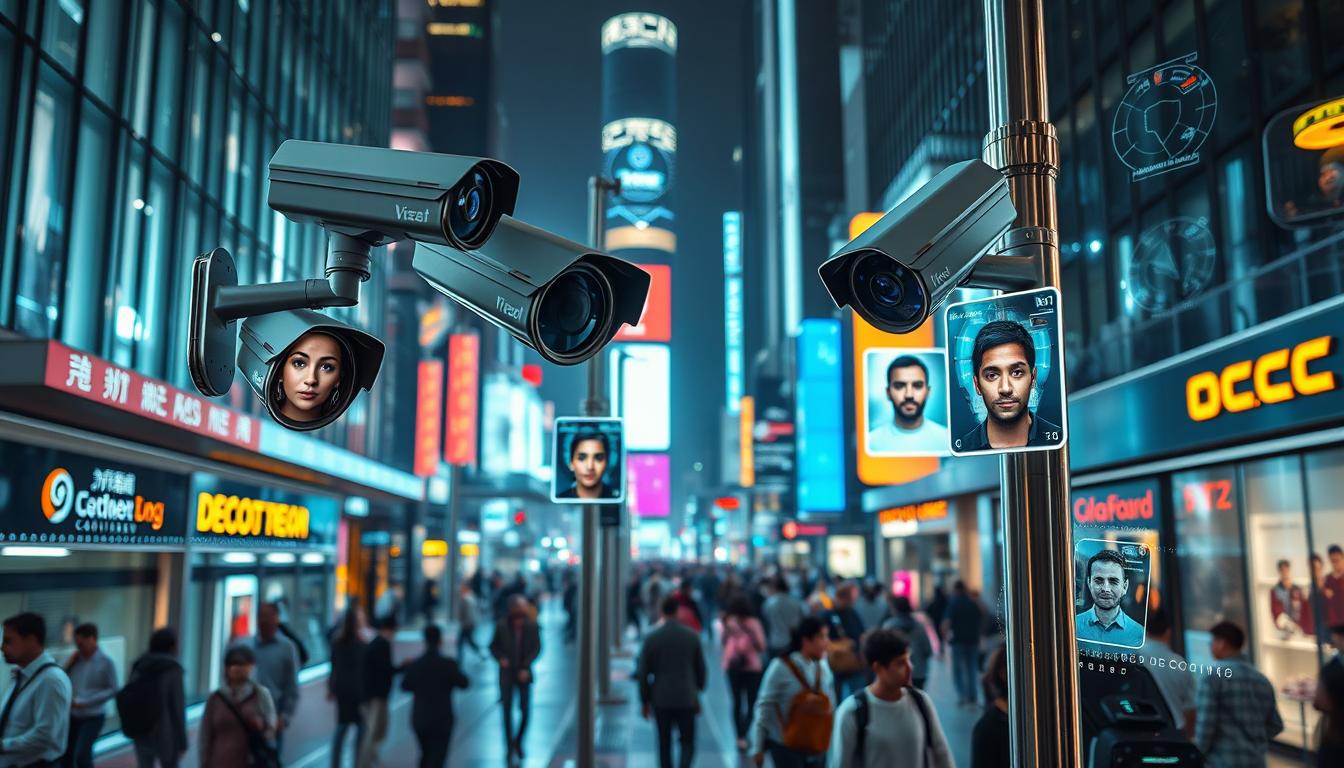
Have you ever wondered how artificial intelligence is transforming cybersecurity? As technology advances, cyber threats become more sophisticated, making it indispensable for defenses to evolve rapidly. AI-driven solutions are at the forefront of this shift, offering powerful tools to detect, prevent, and respond to cyberattacks. One notable area where AI makes a significant impact is in combating AI-driven phishing. Cybercriminals now leverage AI to craft highly convincing, personalized phishing messages that are difficult to distinguish from legitimate communications. These attacks target individuals and organizations, tricking users into revealing sensitive information or installing malware. Traditional security measures struggle to keep up with such dynamic tactics, but machine learning defense systems are designed to adapt in real-time. By analyzing vast amounts of data, these systems identify subtle patterns and anomalies indicative of phishing attempts. They can flag suspicious emails, websites, or links before they cause harm, effectively reducing successful attacks. Furthermore, machine learning algorithms continuously learn from new threats, refining their detection capabilities and staying ahead of cybercriminals’ evolving techniques. This proactive approach shifts the security paradigm from reactive to predictive, providing a critical advantage in the fight against cybercrime. As you navigate the digital landscape, understanding how AI-driven phishing works and recognizing the significance of machine learning defense becomes essential. These technologies don’t just automate security processes; they enhance your ability to prevent breaches before they occur. For example, AI can analyze user behaviors to spot unusual activity that might indicate a breach, or it can scan network traffic for signs of intrusion, stopping threats before they escalate. The integration of AI in cybersecurity also means fewer false positives, allowing security teams to focus on genuine threats rather than chasing false alarms. However, it’s important to remember that attackers also use AI to develop more effective attacks, creating a continuous arms race. Your best defense is staying informed about these technological advances and leveraging AI-driven tools designed to adapt swiftly. Understanding the role of the human element remains crucial, as cyber defenses are most effective when combined with user awareness and training. By doing so, you bolster your organization’s defenses against increasingly complex cyber threats. In essence, AI-powered defenses, especially machine learning, are revolutionizing how we protect digital assets. They provide smarter, faster, and more adaptable security measures, making it harder for cybercriminals to succeed. As cyber threats continue to evolve, embracing these AI-driven solutions isn’t just a good idea—it’s essential for staying protected in the age of digital innovation.
Frequently Asked Questions
How Can Small Businesses Protect Themselves From Ai-Driven Cyber Threats?
To protect your small business from AI-driven cyber threats, you should recognize AI vulnerability and stay proactive. Implement strong, updated cybersecurity measures, including AI-powered threat detection tools, and educate your team about potential risks. Regularly back up data and develop a response plan. These steps boost your small business resilience, helping you detect and respond swiftly to AI-enabled attacks, minimizing damage and ensuring ongoing security.
What Role Do Governments Play in Regulating AI Cybersecurity?
Governments play a vital role by setting strict regulations that safeguard your digital environment. They develop policies aimed at controlling AI’s impact on cybersecurity, preventing chaos like a digital tsunami. Through regulation, they guarantee organizations follow best practices and invest in secure AI systems. Your safety depends on proactive government policies that adapt swiftly to evolving threats, making the digital world safer for everyone.
Can AI Be Used Ethically to Enhance Cybersecurity Defenses?
Yes, AI can be used ethically to enhance cybersecurity defenses by employing ethical hacking techniques that identify vulnerabilities without causing harm. You should also address AI bias to guarantee fair and accurate threat detection. By integrating transparent algorithms and rigorous testing, you can build trust and improve defenses responsibly, making cybersecurity stronger while respecting privacy and ethical standards.
How Does AI Impact the Privacy of User Data in Cybersecurity?
Your data privacy is at risk like never before, as AI deeply analyzes every digital move you make. While AI can boost cybersecurity, it often raises concerns about data privacy and AI transparency. You need to be cautious because AI’s ability to access and process your data can lead to unintended breaches or misuse. Ensuring AI transparency and strict data privacy measures is vital to protect your personal information in this high-tech landscape.
What Are the Key Skills Needed for Cybersecurity Professionals in AI Era?
To thrive in the AI era, you need strong AI literacy and threat analysis skills. You should understand AI algorithms, how they work, and their vulnerabilities. Developing threat analysis skills helps you identify and respond to AI-driven cyber threats quickly. Staying updated on emerging AI technologies and cybersecurity trends is essential. These skills enable you to protect systems effectively and anticipate future cyber risks in an increasingly AI-powered world.
Conclusion
As you navigate this digital battlefield, remember that AI is both your shield and your sword. Picture a fortress, constantly evolving to defend against unseen enemies lurking in shadows. While AI can fortify your defenses, it also opens new doors for threats. Stay vigilant, adapt swiftly, and harness AI’s power wisely—because in this ever-changing landscape, your cybersecurity is the lighthouse guiding you safely through the storm.