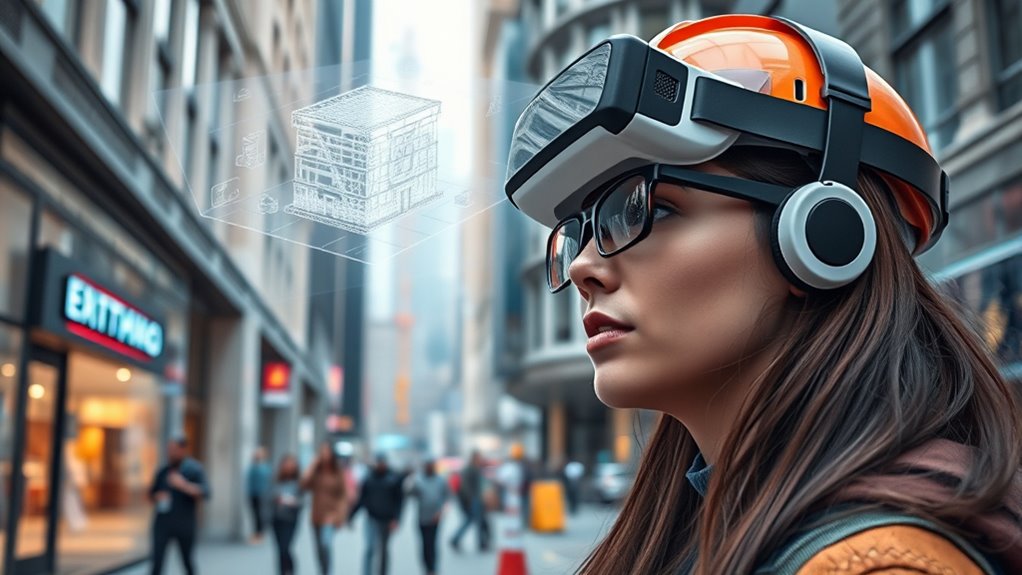

Augmented and mixed reality are transforming industries by blending digital content with the physical world. You’ll find these technologies enhancing training with realistic simulations, improving medical education by visualizing complex anatomy, and making museum exhibits interactive and engaging. They even create immersive environments for relaxation and sensory experiences. As these tools evolve, they break down barriers of distance and complexity, offering personalized learning and collaboration opportunities. Keep exploring to discover more exciting ways these innovations are shaping our world.
Key Takeaways
- Virtual training simulations enhance learning efficiency, reduce costs, and provide realistic practice across industries like medicine and manufacturing.
- Museums and educational institutions use AR/MR to create interactive exhibits, 3D reconstructions, and immersive storytelling experiences.
- AR/MR applications support sensory and well-being experiences by integrating natural elements with digital environments for relaxation and engagement.
- Medical professionals visualize complex anatomy layers and perform virtual surgeries, improving diagnosis, planning, and training outcomes.
- Collaborative workspaces in virtual environments enable remote teamwork, design review, and real-time problem-solving across geographical locations.

Have you ever wondered how digital elements blend seamlessly with the real world? That’s the magic of augmented and mixed reality—technologies that overlay virtual content onto your physical environment, creating immersive experiences. One of the most impactful ways these innovations are transforming our daily lives is through virtual training. Instead of traditional, often costly, and sometimes limited methods, you can now engage in realistic simulations right from your location. For example, in medical training, augmented reality allows you to visualize complex anatomy layers over a mannequin or even your own body, providing hands-on experience without risk. Similarly, in manufacturing or technical fields, virtual training modules can guide you through machinery repairs or safety procedures, offering real-time feedback and reducing errors. This interactive approach accelerates learning curves and boosts confidence, all while saving resources.
Another compelling use case is in museum exhibits, where augmented and mixed reality turn static displays into dynamic, interactive stories. Imagine walking through a museum and pointing your device at an ancient artifact, instantly seeing a 3D reconstruction of its original form, complete with animations and contextual information. This not only enriches your understanding but also makes history feel alive, engaging multiple senses and sparking curiosity. Museums leverage AR to create scavenger hunts, where you uncover hidden clues or access exclusive content, making visits more engaging for visitors of all ages. With mixed reality, you might even virtually step inside historical scenes or explore distant landmarks, all within the walls of your local museum. These experiences deepen your connection to the exhibits and foster a more memorable learning environment. Incorporating carrier oils into the preparation of aromatic environments is an example of how blending natural elements with technology can enhance sensory experiences, promoting relaxation and well-being.
Both virtual training and museum exhibits demonstrate how augmented and mixed reality break down traditional barriers of distance and complexity. They make learning more engaging, personalized, and accessible. You no longer need to rely solely on textbooks or 2D images; instead, you’re immersed in a 3D world that responds to your movements and interactions. These technologies also open up new possibilities for collaboration, where you and others can share a virtual space, working together regardless of physical location. As AR and MR continue to evolve, expect even more innovative applications that will seamlessly blend digital content with your real-world experiences, enriching education, entertainment, and professional training alike. So, whether you’re enhancing your knowledge or exploring the past, augmented and mixed reality are transforming the way you see and interact with the world around you.
Frequently Asked Questions
How Affordable Are Augmented and Mixed Reality Devices for Consumers?
Augmented and mixed reality devices are becoming more affordable for consumers, thanks to cost reduction efforts by manufacturers. You can find options at various price points, making device affordability more accessible than ever. While high-end models still carry a higher price tag, entry-level devices and smartphone-based AR solutions offer budget-friendly ways to experience AR and mixed reality, helping you enjoy these technologies without breaking the bank.
What ARe the Privacy Concerns Related to AR and MR Applications?
Did you know 81% of consumers worry about data collection with AR and MR apps? Privacy concerns are significant, as these applications often involve extensive user surveillance and data gathering. You might unknowingly share sensitive information, risking misuse or breaches. To protect yourself, stay aware of permissions, review privacy policies, and limit data sharing. Being cautious helps prevent potential privacy invasions and keeps your personal information secure.
How Do AR and MR Impact User Safety During Use?
You impact your safety when using AR and MR by ensuring ergonomic design is prioritized, reducing strain on your eyes and neck. These technologies can cause distractions or misjudgments, so stay aware of your surroundings. Proper device fit and taking breaks help maintain your safety. Always follow manufacturer guidelines and use AR/MR in safe environments to prevent accidents and minimize fatigue during extended use.
What Industries ARe Expected to Adopt AR and MR Most Rapidly?
You’ll see industries like manufacturing, healthcare, and entertainment racing to adopt AR and MR. Imagine industrial training transforming in seconds, making complex tasks feel like a game, or entertainment experiences exploding with immersive worlds you can step into. These technologies offer rapid, revolutionary change, making them a top priority for sectors craving innovation. You’ll find these industries embracing AR and MR faster than you can blink, reshaping how we work and play.
How Is Data Security Managed in AR and MR Environments?
You manage data security in AR and MR environments by implementing strong data encryption to safeguard sensitive information during transmission and storage. Additionally, you use user authentication methods, like multi-factor authentication, to ensure only authorized users access the system. Regular security updates and monitoring help you identify and address vulnerabilities, keeping user data safe while maintaining seamless AR and MR experiences.
Conclusion
As you explore augmented and mixed reality, you’ll discover they’re quietly shaping a future where digital and physical worlds blend seamlessly. While some may see challenges, these technologies gently pave the way for innovation, making everyday tasks more intuitive and engaging. Embrace this evolving landscape, knowing that with careful guidance, you’ll enjoy their benefits while steering through the subtle shifts they bring. Ultimately, these tools gently open doors to possibilities you might not have imagined.