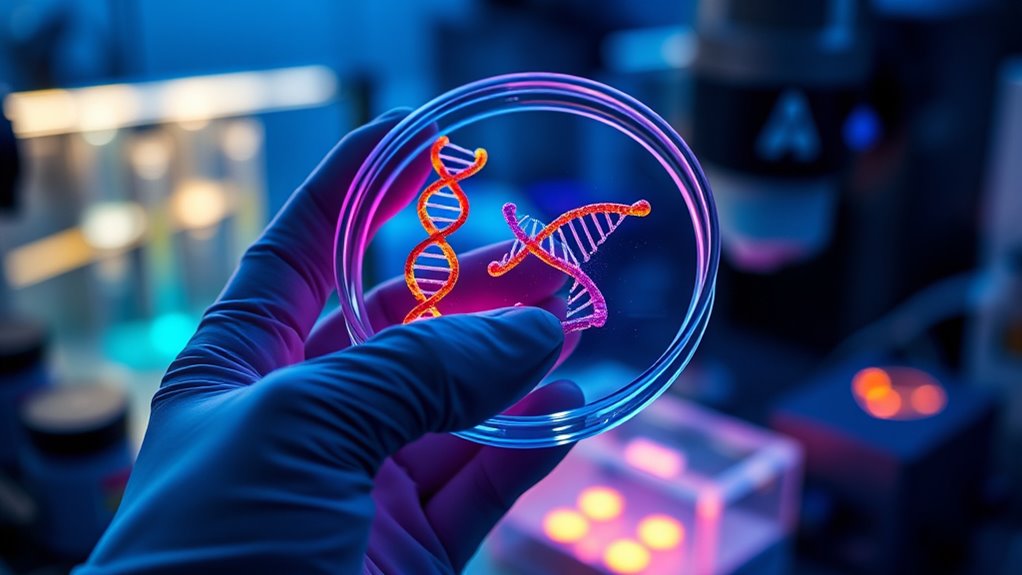

Biotech breakthroughs like CRISPR and gene editing are revolutionizing medicine by allowing precise changes to DNA, opening doors to curing genetic disorders, cancers, and infectious diseases. These tools give you the power to modify genes with incredible accuracy, but they also raise ethical questions about safety and long-term effects. As scientists work to develop responsible regulations, you’ll discover how these innovations are shaping the future—and what challenges still lie ahead. Keep exploring to find out more.
Key Takeaways
- CRISPR allows precise editing of DNA, enabling targeted modifications in genes.
- These breakthroughs hold promise for curing genetic disorders, cancers, and infectious diseases.
- Ethical concerns include potential misuse for enhancement and long-term effects on future generations.
- Regulatory standards vary globally, impacting safety, efficacy, and research progress.
- Responsible innovation requires collaboration among scientists, ethicists, policymakers, and the public.
Have recent advances in biotechnology truly transformed the way we comprehend and treat diseases? The answer is a resounding yes, especially with breakthroughs like CRISPR and gene editing. These technologies allow you to modify DNA sequences with remarkable precision, opening doors to potential cures for genetic disorders, cancers, and even infectious diseases. But as exciting as these innovations are, they also bring complex ethical implications that demand careful consideration. You might wonder, who gets to decide which genes are edited and for what purpose? There’s a risk that gene editing could be misused for enhancement rather than treatment, leading to societal divides or even eugenics. These concerns put pressure on regulatory bodies worldwide to establish clear guidelines that prevent misuse while encouraging innovation. Steering through these regulatory challenges is no small feat, as different countries have varying standards and levels of oversight. In some regions, the lack of strict regulations might enable rapid scientific progress, but it also raises fears about safety and ethical breaches. Conversely, overly restrictive policies could slow down critical research, delaying potential benefits to patients. As you explore gene editing, you realize that balancing innovation with responsibility is paramount. The scientific community is actively engaging with ethicists, policymakers, and the public to create frameworks that address these concerns. Ethical implications are not just theoretical; they impact real lives, shaping how technologies are developed and applied. You might also consider the long-term effects — could edited genes be passed to future generations, and what unforeseen consequences might arise? The debate extends to consent, privacy, and the potential for unintended genetic changes. Regulatory challenges also involve ensuring that gene editing is safe, effective, and accessible. Countries are working to develop standards for clinical trials, quality control, and post-treatment monitoring. International cooperation becomes crucial because genetic research often crosses borders, and harmonizing regulations can prevent unsafe practices. Additionally, a thorough understanding of software quality assurance can help ensure that the tools and platforms used in gene editing are reliable and secure. Ultimately, these advances have the power to revolutionize medicine, but only if the ethical and regulatory hurdles are addressed responsibly. You’re at a pivotal moment where scientific innovation intersects with moral responsibility. The choices made today regarding regulation and ethics will shape the future of biotechnology and its role in medicine. In this rapidly evolving landscape, staying informed and engaged helps assure that breakthroughs like CRISPR serve humanity’s best interests, balancing the promise of cures with the necessity of safeguarding ethical standards.
Frequently Asked Questions
What Are the Ethical Considerations of Gene Editing in Humans?
You need to take into account ethical issues like informed consent and genetic inequality when gene editing humans. You must guarantee individuals or their guardians understand the risks and benefits before proceeding. You should also be aware that gene editing could widen social disparities if only the wealthy access these technologies, creating genetic inequality. Balancing innovation with responsibility helps prevent misuse and promotes fairness in this powerful field.
How Expensive Is CRISPR Technology for Research and Medical Use?
They say “you get what you pay for,” and CRISPR technology can be costly for research and medical use. The price varies depending on cost factors like reagents, equipment, and expertise. Funding challenges also play a big role, making it expensive for some labs and institutions to access. While prices are coming down, it still remains a significant investment for many, limiting widespread applications.
Can CRISPR Be Used to Edit Genes in Ancient or Extinct Species?
Yes, you can use CRISPR for de-extinction efforts and ancient DNA editing. Scientists are exploring how to edit genes in ancient or extinct species by extracting and modifying ancient DNA sequences. Although challenging due to DNA degradation over time, advances in CRISPR technology make it possible to potentially bring back some extinct species or study their genetics, opening exciting possibilities for understanding evolutionary history and conservation.
What Are the Potential Risks of Off-Target Gene Modifications?
You risk unintended mutations that can cause unforeseen consequences, like affecting other genes or creating harmful traits. These off-target gene modifications may lead to ecological impacts if edited organisms interact unpredictably within ecosystems. It’s essential to carefully assess and minimize these risks, as even small errors could disrupt biodiversity or introduce new challenges. Always weigh the benefits against potential dangers before proceeding with gene editing technologies.
How Soon Will Gene Editing Therapies Become Widely Available?
Gene editing therapies could become widely available within the next 5 to 10 years, but your access depends on overcoming regulatory hurdles and gaining public acceptance. As scientists demonstrate safety and efficacy, regulatory agencies will approve treatments, and public trust will grow. Stay informed, as advancements continue rapidly, and these therapies could soon become standard options for various genetic conditions.
Conclusion
As you explore the world of biotech breakthroughs, remember that CRISPR and gene editing are like a skilled sculptor’s chisel, shaping the future of medicine and agriculture. These innovations are opening doors to cures once thought impossible, transforming science into a powerful tool for good. Embrace this exciting era where technology paints a brighter tomorrow, offering hope and healing. The future is a canvas, and gene editing is your brush—ready to create wonders.