Robotics is moving closer to your daily life because rapid technological advances and falling costs make robots more accessible for homes, workplaces, and public spaces. They’re shifting from factories to tasks like healthcare, education, and transportation, with autonomous vehicles showcasing real-time decision-making. As society adapts to these changes, ethical and employment concerns grow, but responsible development aims to guarantee robots enhance our lives without replacing human touch. Explore further to see how this evolving tech impacts you.

Get everyday essentials delivered free with Prime
- Fast, free delivery on millions of items
- Prime Video, Amazon Music and more included
- Member-only deals all year
Key Takeaways
- Advances in technology and cost reduction facilitate widespread adoption of robots in everyday environments.
- Increasing demand for automation in homes, streets, and workplaces drives robotics integration.
- Autonomous vehicles exemplify real-time decision-making capabilities, bringing robots closer to daily mobility.
- Robotics enhance efficiency in sectors like healthcare and education, integrating seamlessly into daily routines.
- Society’s push for responsible development ensures robots serve human needs ethically and safely.
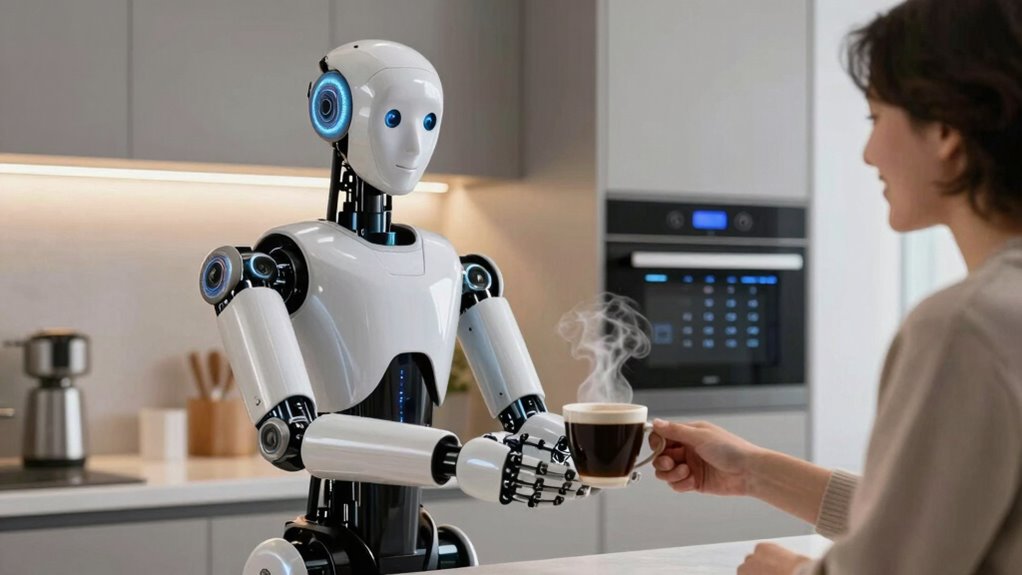
Robotics are increasingly becoming part of our everyday routines, transforming the way we live, work, and interact. This rapid integration isn’t happening by accident; advancements in technology, decreasing costs, and rising demand are pushing robots from factories into our homes, streets, and workplaces. As robots become more prevalent, it’s essential to consider the robotics ethical implications. Questions about privacy, decision-making, and the potential for bias are at the forefront. For example, when autonomous vehicles make split-second choices, who’s responsible if something goes wrong? These concerns highlight the need for clear guidelines and responsible development to guarantee robotics serve society positively without infringing on individual rights.
As robots become more integrated into daily life, addressing ethical concerns like privacy, bias, and responsibility is crucial for responsible innovation.
At the same time, the push toward automation is profoundly impacting the workforce. You might notice that many jobs traditionally performed by humans are now handled by robots—especially in manufacturing, logistics, and even customer service. While automation boosts efficiency and reduces costs for companies, it also raises fears about job displacement. You may worry about your own job security, especially if you work in industries vulnerable to automation. However, it’s also worth to consider that new roles are emerging, requiring different skills, like robot maintenance, programming, and oversight. The challenge is making sure that workers are prepared for these shifts through retraining and education, so the transition doesn’t leave anyone behind. Additionally, understanding the role of regulations** can help ensure that automation develops in a way that benefits everyone. Embracing technological literacy can empower workers to adapt and thrive in this evolving landscape. Incorporating ethical standards** into development processes can further help mitigate potential biases and misuse.
The closer integration of robotics into daily life isn’t just about technological convenience; it’s about balancing benefits with ethical responsibilities. As you encounter robots in healthcare, education, or household settings, it’s vital to think about how their presence affects human relationships and social dynamics. Are these machines enhancing your quality of life, or are they replacing meaningful human interactions? Furthermore, developers and policymakers need to work together to establish standards that address robotics ethical implications, such as transparency in decision-making processes and safeguarding against misuse. Additionally, ensuring color accuracy and appropriate contrast ratios in robotic interfaces can improve user experience and safety.
Ultimately, the move toward more robotic integration is unavoidable, but it’s up to society—including you—to shape that future responsibly. You play a role in advocating for regulations that prioritize human well-being and make sure that automation benefits everyone, not just a select few. As robots become more embedded in daily routines, understanding their impact on the workforce and the ethical considerations involved will help you navigate this evolving landscape confidently. The goal should be a future where robotics complement human efforts, foster innovation, and improve lives without compromising essential values.
Popular right now

Bose QuietComfort True Wireless Earbuds with Active Noise Cancellation, Bluetooth 5.3, USB-C Charging, IPX4, Black

Dyson V9 Motorbar Cordless Vacuum

Vitamix VX1 Professional-Grade Blender, 64 oz, Black
As an affiliate, we earn on qualifying purchases.
Frequently Asked Questions
How Affordable Will Household Robots Become in the Next Decade?
Household robots will become more affordable in the next decade as technology advances and production costs decrease. You’ll see more options offering easy robot maintenance, making it simple to keep your robot running smoothly. Additionally, user customization options will expand, allowing you to tailor your robot to your specific needs without high costs. Overall, expect household robots to become accessible and budget-friendly, fitting seamlessly into your daily life.
What Are the Ethical Concerns With Daily Robotics Integration?
Imagine a robot in your home that’s always listening—privacy concerns quickly arise, making you wonder who’s watching. Ethical issues like data security and moral dilemmas around decision-making also surface. As robots become more integrated, you must consider how they handle sensitive info and make choices. These concerns challenge us to develop guidelines to guarantee technology benefits without compromising personal rights or ethical standards.
How Will Robotics Impact Employment in Various Industries?
Robotics will likely lead to significant robot job displacement across industries, especially in roles involving repetitive tasks. As automation advances, the workforce may shrink in certain sectors, prompting you to adapt by acquiring new skills. While some jobs may vanish, new opportunities will emerge in robot maintenance, programming, and oversight. Preparing for this shift can help you stay competitive and benefit from the evolving automation landscape.
What Safety Measures Are in Place for Home Robotics?
You can trust that home robotics come with safety measures like sensor integration and privacy safeguards. Sensors help detect obstacles and prevent accidents, ensuring safe operation around your home. Privacy safeguards protect your data, making sure personal information stays secure. Manufacturers continually update security features to address new threats. By focusing on these safety measures, home robotics aim to create a safer, more reliable experience that seamlessly integrates into your daily life.
How Do Robots Adapt to Different Household Environments?
You see, robots adapt to different household environments through advanced sensors and machine learning. They tackle personalization challenges by analyzing your routines, preferences, and the unique layout of your home. This allows them to navigate obstacles, optimize cleaning paths, or adjust settings automatically. As a result, they become more efficient and helpful, seamlessly fitting into your daily life despite the diverse and changing environments they encounter.
Conclusion
As robotics continue to advance, you’ll find them seamlessly weaving into your daily routine, transforming everyday tasks into effortless moments. Before long, robots will be as common as your morning coffee, revolutionizing how you live, work, and connect. Imagine a world where machines handle chores faster than you can blink—your life will be so smooth, it’ll feel like floating on a cloud of innovation. Embrace the future; it’s closer than you think.