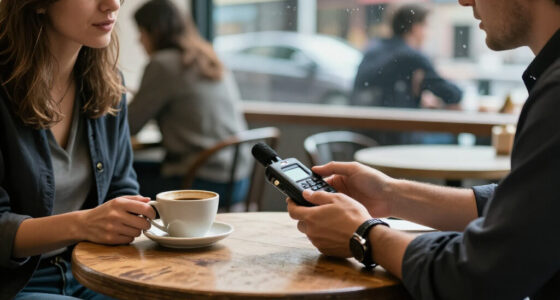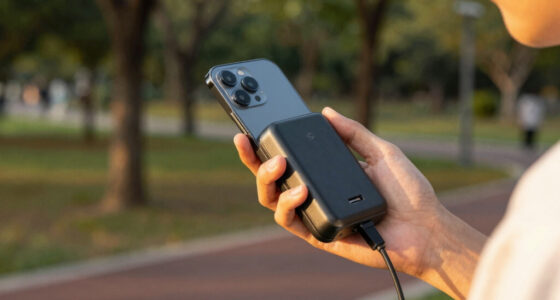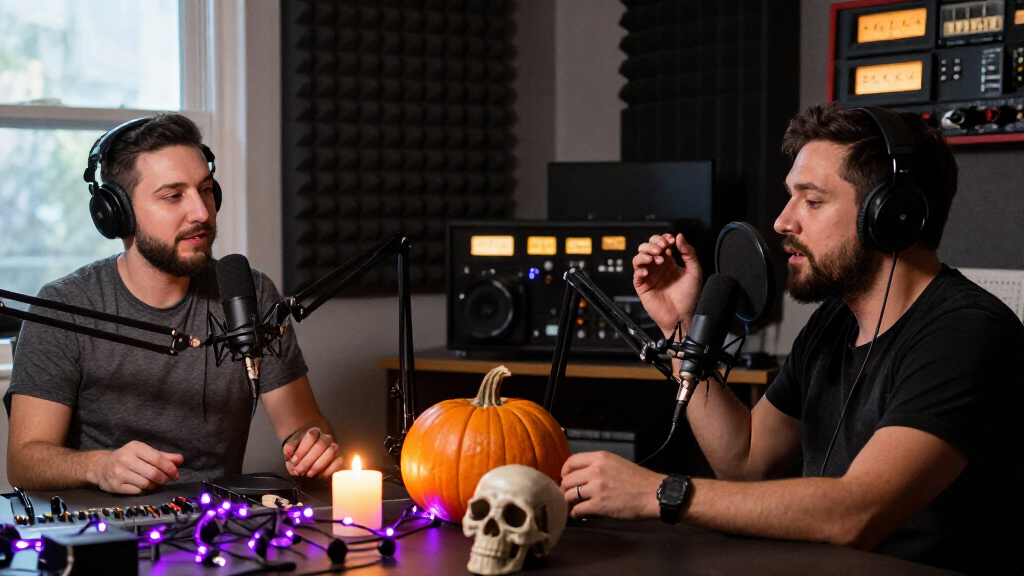

Halloween podcast microphones should capture eerie narration and lively conversations clearly, whether you record at a desk or on location. My best overall pick is the MAONO PD200W for its wireless, USB, and XLR flexibility; the FIFINE AmpliGame AM8 is a strong fit for a dynamic desk setup, while the Mini Mic Pro suits mobile interviews and field recordings. The main tradeoffs are setup simplicity versus recording control, and fixed desk convenience versus freedom to move. Wireless lavaliers are easier to carry, while USB/XLR microphones give a more anchored studio workflow. Read on for the full breakdown and a guide to choosing the right setup for your Halloween show.

Get everyday essentials delivered free with Prime
- Fast, free delivery on millions of items
- Prime Video, Amazon Music and more included
- Member-only deals all year
Complete the kit


Key Takeaways
- The MAONO PD200W offers the widest recording flexibility in this lineup, pairing wireless use with USB and XLR connections for hosts whose Halloween format may change from desk episodes to mobile segments.
- The FIFINE AM8 and AM8T favor a desk-based dynamic-mic workflow; the AM8T arrives as a set, while the AM8 gives buyers a simpler route to USB/XLR recording.
- Wireless lavaliers fill a different role from desk microphones. Labstandard, MAYBESTA, and Mini Mic Pro are aimed at mobile recording, but device compatibility and transmitter setup matter more than studio-style controls.
- USB condenser options focus on straightforward computer recording. TONOR and ZealSound add accessible desktop controls, while their fixed-position format is less suited to moving around a haunted location.
- The J.I.Y bundle is the group-recording outlier, with multiple condenser microphones and a sound card; it may suit a small cast, but asks more of buyers than a single-mic setup.
| USB Microphone for Gaming, Streaming, and Podcasting with RGB Lighting and One-Touch Mute |  | Best for Halloween Streaming Setups | Connectivity: USB | Pickup pattern: Hyper-cardioid | Form factor: Desktop/table | VIEW LATEST PRICE | See Our Full Breakdown |
| Labstandard Dual Wireless Lavalier Microphone for iPhone, iPad, and USB-C Devices |  | Best for Two-Person Phone Interviews | Connectivity: Bluetooth, 2.4 GHz wireless | Connectors: Lightning, USB Type-C | Microphone type: Omnidirectional lavalier condenser | VIEW LATEST PRICE | See Our Full Breakdown |
| FIFINE AmpliGame AM8T XLR/USB Gaming Microphone Set |  | Best for a Halloween Podcast Desk Setup | Connectivity: USB, XLR | Pickup pattern: Unidirectional | Microphone type: Dynamic microphone kit | VIEW LATEST PRICE | See Our Full Breakdown |
| MAYBESTA Wireless Mini Lavalier Microphone for iPhone and Android |  | Best Compact Pick for On-the-Go Recording | Connectivity: Wireless, 2.4 GHz | Connectors: Lightning, USB Type-C | Microphone type: Mini lavalier | VIEW LATEST PRICE | See Our Full Breakdown |
| MAONO PD200W Hybrid Wireless Podcast Microphone for PC, Dynamic XLR USB Mic |  | Best Premium-Feature Pick for Flexible Recording | Connectivity: Wireless, USB, XLR | Microphone type: Dynamic | Pickup pattern: Unidirectional cardioid | VIEW LATEST PRICE | See Our Full Breakdown |
| TONOR Podcast Microphone, USB Computer Mic, Cardioid Condenser PC Mic | 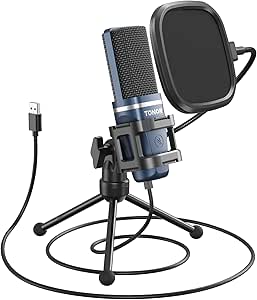 | Best for Beginners | Connectivity: USB 2.0, USB Type-A | Microphone type: Condenser | Pickup pattern: Cardioid, unidirectional | VIEW LATEST PRICE | See Our Full Breakdown |
| ZealSound K66 USB Podcast Microphone with Noise Reduction, Gain and Volume Controls, Mute Button, and Headphone Monitoring |  | Best for Flexible Controls | Microphone type: USB condenser | Pickup pattern: Cardioid | Frequency response: 40 Hz–18 kHz | VIEW LATEST PRICE | See Our Full Breakdown |
| FIFINE AmpliGame AM8 USB/XLR Dynamic Microphone |  | Best for a Growing Studio | Microphone type: Dynamic | Polar pattern: Unidirectional cardioid | Connectivity: USB, XLR | VIEW LATEST PRICE | See Our Full Breakdown |
| Mini Mic Pro Wireless Lavalier Microphone for iPhone and Android | 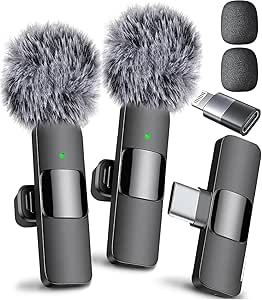 | Best for On-Location Episodes | Connectivity: Wireless | Connectors: Lightning, USB Type-C | Microphone form factor: Mini lavalier | VIEW LATEST PRICE | See Our Full Breakdown |
| J.I.Y Podcast Recording Bundle with Condenser Microphones and Bluetooth Sound Card |  | Best for Two-Person Effects Sessions | Microphone type: Studio condenser | Connectivity: AUX, Bluetooth, USB | Connector: USB Type-A | VIEW LATEST PRICE | See Our Full Breakdown |
| Halloween podcast microphone | Connectivity | Microphone type | Signal-to-noise ratio | Pickup pattern |
|---|---|---|---|---|
| USB Microphone for Gaming | USB | — | 96 dB | Hyper-cardioid |
| Labstandard Dual Wireless Lava | Bluetooth, 2.4 GHz wireless | Omnidirectional lavalier condenser | — | — |
| FIFINE AmpliGame AM8T XLR/USB | USB, XLR | Dynamic microphone kit | 80 dB | Unidirectional |
| MAYBESTA Wireless Mini Lavalie | Wireless, 2.4 GHz | Mini lavalier | 80 dB | Omnidirectional |
| MAONO PD200W Hybrid Wireless P | Wireless, USB, XLR | Dynamic | 82 dB | Unidirectional cardioid |
| TONOR Podcast Microphone | USB 2.0, USB Type-A | Condenser | 80 dB | Cardioid, unidirectional |
| ZealSound K66 USB Podcast Micr | USB with USB-C and Lightning adapters | USB condenser | — | Cardioid |
| FIFINE AmpliGame AM8 USB/XLR D | USB, XLR | Dynamic | 80 dB | — |
| Mini Mic Pro Wireless Lavalier | Wireless | — | — | — |
| J.I.Y Podcast Recording Bundle | AUX, Bluetooth, USB | Studio condenser | 45 dB | — |
More Details on Our Top Picks
USB Microphone for Gaming, Streaming, and Podcasting with RGB Lighting and One-Touch Mute
For a Halloween podcast recorded at a gaming desk, this USB mic puts practical controls and seasonal-looking lighting in easy reach. Seven RGB modes add visual atmosphere on camera, while the touch mute control has a status indicator that helps prevent an accidental hot mic during spooky sound effects or off-air chatter. The hyper-cardioid pickup, gain knob, and zero-latency monitoring also give a solo host useful control without adding an interface. Compared with the FIFINE AmpliGame AM8T, this model is simpler to connect but lacks XLR for a future studio setup. Its included pop filter and stand make it a ready-to-use desktop choice; the tradeoff is that its compatibility excludes Xbox, and phone use may require the right adapter. I’d pick it for a computer-based show where lighting and quick operation matter more than expandability.
Pros:- Plug-and-play USB setup works without driver installation
- Touch mute control includes a visible status indicator
- Zero-latency monitoring and a rotary gain knob support on-the-fly adjustments
- Includes a metal pop filter, stand, USB-C cable, and OTG adapter
Cons:- Not compatible with Xbox consoles
- Android phone use may require a separate Type-C adapter
- USB-only connectivity offers less upgrade flexibility than the FIFINE AmpliGame AM8T
Best for: Solo podcasters recording at a Windows or Mac desk who want visible mute status, monitoring, and RGB accents for Halloween livestreams.
Not ideal for: Xbox users or hosts planning to add an XLR interface, since this microphone is USB-only and does not support Xbox.
- Connectivity:USB
- Pickup pattern:Hyper-cardioid
- Form factor:Desktop/table
- Special features:One-touch mute, noise reduction, zero-latency monitoring, rotary gain control, 7 RGB modes
- Compatible devices:Laptop, PC, smartphone, tablet, PS4, PS5
- Signal-to-noise ratio:96 dB
- Cable length:1.8 m
- Included accessories:Metal pop filter, stand, OTG adapter
Our verdict“Choose this for a solo Halloween show at a PC desk when easy controls and RGB atmosphere matter more than XLR expansion.”
Labstandard Dual Wireless Lavalier Microphone for iPhone, iPad, and USB-C Devices
When a Halloween episode means interviewing a guest away from the desk, this set’s two wireless lavaliers let both speakers record without sharing one microphone. Its Lightning and USB-C support gives it broader phone reach than the MAYBESTA Wireless Mini Lavalier, which is also aimed at mobile recording but does not list a two-channel specification. The listed 0.008-second latency and real-time synchronization are useful for keeping dialogue aligned during video interviews, while noise reduction may help tame everyday surroundings. The tradeoffs are less reassuring: battery life is listed as about six hours, and the product data conflicts about whether 3.5 mm devices work. The specification also calls for two C batteries, an unusual detail that buyers should verify before a field session. I’d choose it for phone-first, two-person recording—not a fixed studio podcast.
Pros:- Two lavalier microphones support recording two speakers
- Lightning and USB-C connectors cover many compatible Apple and Android devices
- Noise reduction and real-time audio synchronization are listed
- About six hours of stated battery life suits shorter interview sessions
Cons:- Product details conflict about compatibility with 3.5 mm devices
- The listed requirement for two C batteries may complicate preparation
- Omnidirectional lavaliers can pick up surrounding sounds in noisy locations
Best for: Mobile podcasters who record two-person Halloween interviews on compatible iPhone, iPad, or USB-C devices and need separate wireless mics.
Not ideal for: Creators who need confirmed 3.5 mm compatibility, long recording days, or a clearly documented battery setup.
- Connectivity:Bluetooth, 2.4 GHz wireless
- Connectors:Lightning, USB Type-C
- Microphone type:Omnidirectional lavalier condenser
- Channels:2
- Latency:0.008 seconds
- Battery life:About 6 hours
- Weight:0.05 kg
- Included accessories:Receiver, rechargeable Lightning adapter, USB-C charging cable, user manual
Our verdict“Pick this for two-person mobile interviews when your device connection and battery requirements are confirmed before recording.”
FIFINE AmpliGame AM8T XLR/USB Gaming Microphone Set
The AM8T suits a host who wants a more permanent desk arrangement than a clip-on lavalier, with a boom arm, cardioid pickup, mute control, and headphone monitoring in the kit. USB keeps computer recording straightforward, while XLR gives the setup a path to an audio interface later. That makes it more expandable than the USB-only Halloween USB microphone with RGB lighting, though the latter lists a higher signal-to-noise figure and a more tightly described hyper-cardioid pattern. The AM8T’s customizable RGB can support a themed set, but advanced lighting control is not available through dedicated software. Its dynamic design and unidirectional pickup are aimed at focusing on a nearby voice; proper mic placement still matters in a room with sound effects or guests. Buyers should also check desk thickness and source an XLR cable separately if they plan to use that connection.
Pros:- USB and XLR connectivity support both simple computer recording and interface-based setups
- Included boom arm keeps the microphone positioned near the host
- Cardioid-style unidirectional pickup focuses on the speaker
- Mute, gain, and headphone controls are built into the setup
Cons:- XLR cable is not included
- Desk clamp fits desktops only up to 2 inches thick
- Advanced RGB control software is not provided
Best for: PC podcasters and streamers building a desk-based Halloween show who want a boom arm now and the option to move to XLR recording.
Not ideal for: Creators with desks thicker than the clamp’s 2-inch limit, or anyone expecting an XLR cable and advanced RGB software in the box.
- Connectivity:USB, XLR
- Pickup pattern:Unidirectional
- Microphone type:Dynamic microphone kit
- Frequency range:50 Hz–16 kHz
- Signal-to-noise ratio:80 dB
- Controls and monitoring:Mute function, gain control, headphone jack and volume control
- Weight:2.6 pounds
- Included stand:Boom arm stand
Our verdict“Choose the AM8T for a desk-mounted Halloween podcast that needs a boom arm and a future XLR upgrade path.”
MAYBESTA Wireless Mini Lavalier Microphone for iPhone and Android
For a Halloween podcast built around quick interviews, location reports, or a host moving through an event, the MAYBESTA’s small wireless lavalier format is easier to carry than a desktop mic such as the FIFINE AmpliGame AM8T. Automatic pairing and Lightning/USB-C receivers are intended to keep setup simple on compatible phones, and the kit lists two microphones, clips, sponge tips, and a windscreen for adapting to different recording situations. Its omnidirectional pickup can capture a natural voice even when the mic placement shifts, but it may also gather crowd noise that a close, directional desktop microphone would reject more effectively. The key unknowns are battery life and wireless range, neither of which is specified. I’d favor it for short mobile segments, not a long live recording where power and signal distance need to be predictable.
Pros:- Compact wireless lavalier design is suited to mobile recording
- Lightning and USB-C connectors support compatible phones and tablets
- Automatic pairing and plug-and-play operation simplify setup
- Includes two microphones, clips, sponge tips, and a USB charging cable
Cons:- Battery life is not specified
- Wireless range is not specified
- Omnidirectional pickup may capture more ambient noise than the FIFINE AM8T’s directional design
Best for: Mobile Halloween podcasters who record short interviews or walk-and-talk segments on compatible Lightning or USB-C phones.
Not ideal for: Hosts recording long sessions, working far from the receiver, or needing reliable rejection of crowd and room noise.
- Connectivity:Wireless, 2.4 GHz
- Connectors:Lightning, USB Type-C
- Microphone type:Mini lavalier
- Pickup pattern:Omnidirectional
- Signal-to-noise ratio:80 dB
- Audio sensitivity:15 dB
- Included microphones:2
- Included accessories:Receiver, USB charging cable, 2 sponge tips, 3 clips
Our verdict“Choose this compact set for short, phone-based Halloween interviews, but skip it if session length or wireless distance must be predictable.”
MAONO PD200W Hybrid Wireless Podcast Microphone for PC, Dynamic XLR USB Mic
The PD200W is the most adaptable choice here for a Halloween podcast that may shift from a desk episode to a remote or camera-based recording. Wireless, USB, and XLR connections cover different workflows, while the dynamic cardioid capsule and three-stage noise cancellation are designed to keep attention on close speech rather than room ambience. Its listed 60 m wireless range and up to 60 hours of battery life with RGB off make it better suited to extended, untethered sessions than the compact MAYBESTA lavalier, whose range and runtime are not stated. It also supports two wireless desktop mics on one receiver with separate tracks, a useful option for a host and guest. The tradeoff is added setup complexity, and camera or Lightning accessories are sold separately. I’d choose it for creators who will use its multiple connection options, not someone seeking the simplest USB-only mic.
Pros:- Wireless, USB, and XLR connectivity suit several recording workflows
- Supports two wireless desktop microphones on one receiver with separate tracks
- Up to 60 hours of stated battery life with RGB off and a listed 60 m wireless range
- MaonoLink app provides preset modes and controls for audio adjustments
Cons:- Camera and Lightning accessories are sold separately
- Multiple connection modes and app controls add setup complexity compared with a basic USB microphone
- Wireless operation depends on battery power, unlike a corded desktop mic
Best for: Podcasters who record solo and two-person Halloween episodes across a computer, interface, or compatible camera and want wireless freedom with XLR available.
Not ideal for: First-time hosts who want a minimal plug-in setup, or buyers who need camera and Lightning accessories included.
- Connectivity:Wireless, USB, XLR
- Microphone type:Dynamic
- Pickup pattern:Unidirectional cardioid
- Signal-to-noise ratio:82 dB
- Maximum sound pressure level:128 dB SPL
- Wireless range:Up to 60 m
- Battery life:Up to 60 hours with RGB off
- App support:MaonoLink for Mac, Windows, and smartphones
Our verdict“Pick the PD200W if your Halloween show needs wireless movement, multi-connection flexibility, or separate tracks for two desktop mics.”
TONOR Podcast Microphone, USB Computer Mic, Cardioid Condenser PC Mic
For a Halloween podcast recorded at a desk, the TONOR TC-777 keeps setup simple: connect by USB and use the included tripod, shock mount, and pop filter to get started. Its cardioid pickup focuses on the voice in front of the mic, which suits solo spooky stories better than capturing a group around a table. A one-click mute and volume control also make it easier to handle coughs or interruptions mid-recording. Compared with the ZealSound K66, the TONOR has fewer listed monitoring and sound-shaping controls, but it includes a desktop stand and pop filter in the described kit. The tradeoff is a basic USB setup without the K66’s headphone monitoring or mobile adapters; its listed compatibility also excludes Xbox.
Pros:- USB plug-and-play setup avoids driver installation
- Cardioid pickup is suited to a single speaker positioned in front
- Includes a foldable tripod, shock mount, and pop filter
- One-click mute and volume control support quick adjustments while recording
Cons:- No headphone monitoring is listed
- Does not include the K66’s USB-C and Lightning adapters
- Not compatible with Xbox according to the product description
Best for: First-time podcasters recording solo episodes at a Windows or Mac desk who want a stand and pop filter included.
Not ideal for: Hosts who need headphone monitoring, phone connections, or a setup for recording multiple speakers around one microphone.
- Connectivity:USB 2.0, USB Type-A
- Microphone type:Condenser
- Pickup pattern:Cardioid, unidirectional
- Frequency response:20 kHz
- Signal-to-noise ratio:80 dB
- Cable length:1.9 m
- Included accessories:Foldable tripod, mini shock mount, pop filter
- Listed compatibility:Windows, Mac, PS4, PS5; not Xbox
Our verdict“Choose the TONOR if you want a straightforward desktop starter kit for solo Halloween narration and can do without headphone monitoring.”
ZealSound K66 USB Podcast Microphone with Noise Reduction, Gain and Volume Controls, Mute Button, and Headphone Monitoring
The ZealSound K66 suits a Halloween host who wants to monitor a whisper, sound effect, or dramatic pause while recording. Its zero-latency headphone monitoring and separate mic and monitoring volume controls make it more adjustable than the simpler TONOR TC-777, while noise reduction mode offers another tool for taming ordinary room sounds. The echo control may appeal to creators adding atmosphere, though it is not a substitute for editing or a dedicated effects setup. USB-C and Lightning adapters broaden its reach to compatible phones and tablets, unlike the TONOR’s more desktop-focused description. The tradeoff is that noise reduction is not described as removing all background noise, and mobile use depends on device compatibility. Its listed sampling rate is 46 kHz, so check recording workflow requirements before choosing it.
Pros:- Zero-latency monitoring through a 3.5 mm headphone jack
- Separate microphone and monitoring volume controls, plus echo adjustment
- USB-C and Lightning adapters support compatible mobile devices
- Plug-and-play setup requires no drivers or software
Cons:- Noise reduction mode may not eliminate room noise
- Phone and tablet compatibility depends on the specific device
- Listed sampling rate of 46 kHz may not fit every recording workflow
Best for: Solo podcasters who want live headphone monitoring and adjustable controls across a computer and compatible mobile devices.
Not ideal for: Creators who need guaranteed noise removal in a loud room or a microphone with a verified standard sampling rate for a specific production workflow.
- Microphone type:USB condenser
- Pickup pattern:Cardioid
- Frequency response:40 Hz–18 kHz
- Sampling rate:46 kHz
- Sensitivity:–45 dB ±3 dB
- Monitoring:Zero-latency via 3.5 mm headphone jack
- Controls:Microphone volume, monitoring volume, echo, mute
- Connectivity:USB with USB-C and Lightning adapters
- Compatibility:Windows PC, Mac, PS4, PS5, iPhone, iPad, compatible USB-C devices
Our verdict“Pick the K66 over the TONOR TC-777 if live monitoring and broader device connections matter more than a simpler desktop kit.”
FIFINE AmpliGame AM8 USB/XLR Dynamic Microphone
The FIFINE AmpliGame AM8 is the strongest fit here for a Halloween podcast that may grow from a simple USB recording setup into a more involved audio chain. Its USB and XLR connections let a beginner start with computer controls, then move to compatible XLR equipment later; unlike the TONOR TC-777, it is dynamic rather than condenser. That distinction can suit close-miked narration in a room where a host wants to focus on their voice, though placement still matters. USB mode adds tap-to-mute, gain adjustment, headphone monitoring, and RGB lighting. Those functions and the lighting are inactive over XLR, and an XLR cable is not included. Compared with the K66, the AM8 offers a route to XLR gear but does not list mobile adapters or noise reduction mode.
Pros:- USB and XLR connections support different recording setups
- Dynamic cardioid design suits close-miked voice recording
- USB mode includes tap-to-mute, gain control, and headphone monitoring
- Customizable RGB lighting is available over USB
Cons:- XLR cable is not included
- RGB and function controls are inactive when using XLR
- No mobile adapters are listed, unlike the ZealSound K66
Best for: Podcasters who want a dynamic mic that can start over USB and later connect to an XLR audio setup.
Not ideal for: Mobile-first creators or buyers who need an XLR cable included and want all controls and lighting active in XLR mode.
- Microphone type:Dynamic
- Polar pattern:Unidirectional cardioid
- Connectivity:USB, XLR
- Frequency response:50 Hz–16 kHz
- Signal-to-noise ratio:80 dB
- USB features:Tap-to-mute, headphone monitoring, gain control, RGB lighting
- XLR cable:Not included
- Stand threads:3/8 in and 5/8 in
Our verdict“Choose the AM8 if you want a USB mic now with an XLR upgrade path and are comfortable sourcing an XLR cable separately.”
Mini Mic Pro Wireless Lavalier Microphone for iPhone and Android
For Halloween episodes recorded away from a desk—at a pumpkin patch, on a neighborhood walk, or beside a spooky-looking set—the Mini Mic Pro trades studio-style positioning for hands-free mobility. It is a wireless lavalier with USB-C and Lightning adapters, and the product description says setup does not require an app or Bluetooth pairing. Included foam and deadcat tips give creators options for reducing wind interference outdoors. Unlike the FIFINE AM8, this is not a desktop mic with USB/XLR flexibility; it is better suited to a speaker who needs to move while talking. The omnidirectional pickup can capture sound from around the clip, which may also pick up more surrounding noise. Battery life is listed at up to six hours, limiting long recording days, and the listing’s battery details are described as inconsistent.
Pros:- Wireless lavalier form supports hands-free recording while moving
- Includes USB-C and Lightning adapters
- Foam and deadcat tips provide indoor and outdoor wind protection
- Plug-and-play setup does not require an app or Bluetooth pairing
Cons:- Up to six hours of battery life may limit long recording days
- Omnidirectional pickup can capture nearby ambient sound
- Product listing contains inconsistent battery details
Best for: Mobile Halloween hosts recording interviews, walking segments, or outdoor narration on a compatible phone, tablet, or laptop.
Not ideal for: Desk-based podcasters seeking a fixed microphone, longer recording sessions, or tighter control over surrounding sounds.
- Connectivity:Wireless
- Connectors:Lightning, USB Type-C
- Microphone form factor:Mini lavalier
- Polar pattern:Omnidirectional
- Wireless frequency:2.4 GHz
- Battery life:Up to 6 hours per charge
- Weight:80 g
- Dimensions:3 x 0.5 x 0.25 in
- Included items:2 lavalier microphones, receiver, USB charging cable, 2 clips, 2 foam tips, 2 deadcat tips
Our verdict“Choose the Mini Mic Pro over the FIFINE AM8 when portability and phone recording matter more than a stationary studio setup.”
J.I.Y Podcast Recording Bundle with Condenser Microphones and Bluetooth Sound Card
The J.I.Y recording bundle takes a different approach from the single-mic options: it packages condenser microphones, boom arms, and a Bluetooth sound card with DSP effects for a more elaborate Halloween recording or streaming setup. Its two-channel listing and real-time headphone monitoring suggest a possible fit for co-hosted episodes, while USB, AUX, and Bluetooth connections are described for use with computers and mobile devices. Compared with the TONOR TC-777, this bundle offers more production components and effects, but also brings more setup complexity and less clarity in the product description: it refers to both a dual-host setup and a single microphone. The listed 45 dB signal-to-noise ratio is lower than the 80 dB listed for the TONOR and FIFINE AM8. I would verify the included microphone count and connection workflow before relying on it for a two-person session.
Pros:- Bundle includes microphones, boom arms, and a Bluetooth sound card
- DSP effects and customizable presets support stylized audio
- Real-time headphone monitoring is listed
- USB and AUX connections are listed alongside Bluetooth
Cons:- Description is inconsistent about whether the bundle contains one microphone or supports two hosts
- Listed signal-to-noise ratio is 45 dB, below the 80 dB figures listed for the TONOR and FIFINE
- More bundled components and effects may mean a less straightforward setup than a basic USB mic
Best for: Creators building an effects-led Halloween stream or podcast who want bundled boom arms, monitoring, and a sound card.
Not ideal for: Buyers who need clear confirmation of microphone count, straightforward setup, or a simple single-mic recording workflow.
- Microphone type:Studio condenser
- Connectivity:AUX, Bluetooth, USB
- Connector:USB Type-A
- Number of channels:2
- Audio sensitivity:45 dB
- Impedance:10 ohm
- Signal-to-noise ratio:45 dB
- Battery life:Up to 8 hours
- Pack count:2
Our verdict“Consider the J.I.Y bundle for an effects-focused, multi-part setup only after confirming the microphone count and connection details with the seller.”
How We Picked
I ranked these Halloween podcast microphones by how well their recording format matches common seasonal shows: solo narration, co-host conversations, mobile interviews, and group episodes. I weighed connection options, ease of setup, useful monitoring or mute controls, portability, and how much extra equipment a buyer may need. For Halloween recording, practical flexibility matters: a mic must fit the setting, whether that means a quiet desk, a live room, or a phone-based field recording.
The ranking gives the lead to adaptable options that can serve more than one format, then distinguishes simpler desk mics, mobile lavaliers, and multi-person bundles by their intended use. A wireless mic does not outrank a USB/XLR model simply for being portable, and a feature-rich desktop mic is not the best choice for every host. I also considered meaningful tradeoffs, including device compatibility, the need for stands or interfaces, and whether a bundle’s extra pieces help the buyer’s actual show.
| Halloween podcast microphone | Pickup pattern |
|---|---|
| USB Microphone for Gaming | Hyper-cardioid |
| Labstandard Dual Wireless Lava | — |
| FIFINE AmpliGame AM8T XLR/USB | Unidirectional |
| MAYBESTA Wireless Mini Lavalie | Omnidirectional |
| MAONO PD200W Hybrid Wireless P | Unidirectional cardioid |
| TONOR Podcast Microphone | Cardioid, unidirectional |
| ZealSound K66 USB Podcast Micr | Cardioid |
| FIFINE AmpliGame AM8 USB/XLR D | — |
| Mini Mic Pro Wireless Lavalier | — |
| J.I.Y Podcast Recording Bundle | — |
Factors to Consider When Choosing Halloween Podcast Microphones
A Halloween show can involve hushed storytelling, several hosts reacting at once, or a walk-through recorded on a phone. Choose around the recording situation and number of voices first; a long feature list cannot compensate for a microphone that does not fit the episode format.
Match the microphone to the scene
For a fixed narration setup, a desktop USB mic keeps the chain simple and makes repeat recording sessions easier to manage. A walking tour, costume interview, or outdoor segment calls for a lavalier that can stay close to the speaker while the phone or camera moves. Before buying, list the locations you expect to record in and note whether you can bring a stand, cable, or computer. A portable mic is not automatically better for every episode: a desk mic may be easier to position consistently for scripted narration. Avoid choosing only by the Halloween theme; the recording environment has more effect on your setup than seasonal styling.
Choose for the number of voices
A solo host usually needs one microphone and a reliable way to monitor the recording. Two hosts sharing one mic can create uneven levels when one person leans back, while separate microphones need enough inputs and space to place them. A bundle with multiple mics can make a group setup more convenient, but check what connects the microphones and how the sound card handles each voice. For a rotating cast, plan for guest connections before recording day rather than assuming a single USB port will handle every source. Extra microphones only help when the recording chain can capture them cleanly.
Understand USB, XLR, and wireless tradeoffs
USB connects directly to a computer and is often the simplest path for a first podcast. XLR can fit a more expandable recording chain, but may require an audio interface or mixer that is not included with a microphone. Hybrid models offer room to change setups, yet buyers should check which accessories and connection modes are included. Wireless lavaliers avoid a cable between the speaker and recording device, but still need compatible ports and a charged transmitter or receiver. Decide whether flexibility will see regular use; otherwise, paying for unused connection options can add complexity without improving the episode.
Plan for room noise and sound effects
Quiet narration benefits from a close mic position and a room with soft furnishings, not just a microphone with noise-reduction controls. Sound effects, music beds, and spooky ambience are usually easier to balance during editing than by trying to capture everything live on one device. A dynamic mic can be a practical choice in a less controlled room, while a condenser may be convenient for a desktop setup; neither removes the need to manage background noise. Keep props and playback speakers away from the mic to reduce unwanted sound in dialogue. Record a short test with the actual costume, room, and effects before committing to a full episode.
Check compatibility and monitoring before buying
Phone-focused wireless mics can differ by connector, so confirm whether your device uses Lightning, USB-C, or another connection and whether an adapter is needed. Computer mics also depend on the recording app and operating system recognizing the selected input. Headphone monitoring helps catch clipping, handling noise, or a disconnected wireless link while there is still time to fix it. A mute button is useful during live chatter, but it does not replace checking recorded audio. Match the microphone’s ports and controls to the gear you already own before building the rest of your setup.
Spend on the bottleneck, not the feature list
Paying more makes sense when a feature solves a recurring problem, such as needing both phone and computer recording or capturing several regular hosts. If your episodes are solo and recorded at one desk, a simpler USB mic may leave more room in your setup for headphones, a stand, or basic room treatment. First-time hosts should favor a manageable connection path over a bundle of controls they have not learned to use. Mobile creators should prioritize a dependable device match and secure mic placement. Think through the complete recording chain, including cables, mounting, monitoring, and editing, before deciding which microphone offers useful value.
Frequently Asked Questions
Should I choose a wireless lavalier or a desktop microphone for Halloween episodes?
Choose a wireless lavalier if you expect to move between rooms, interview people away from your desk, or record short phone-based segments. A desktop microphone makes more sense for scripted narration and seated conversations where the mic can stay in a consistent position. Lavaliers reduce the burden of carrying a stand, but require you to verify the connector and manage wireless power and placement. Desk models can offer more direct controls and a stable setup, though they are less convenient for roaming. If your show includes both formats, a hybrid mic or separate purpose-built mics may be more practical than forcing one type to do everything.
Can I record two hosts with a single USB podcast microphone?
You can, but both speakers need to stay at a similar distance and angle from the mic, which can be awkward during a lively conversation. One mic may pick up more room sound and make each voice harder to balance separately in editing. For regular co-host episodes, separate microphones and an appropriate interface or mixer give each voice its own track and level control. A multi-mic bundle may suit a small cast, but check how its sound card routes and records each input. For an occasional guest, test the shared-mic arrangement before recording a full episode.
Do I need an XLR microphone for a new Halloween podcast?
No. A USB microphone can be a simpler starting point because it connects directly to a computer and avoids adding an interface to the setup. XLR becomes more useful if you plan to expand the recording chain, use a mixer, or manage multiple microphones with separate inputs. Hybrid USB/XLR models give you a choice, but that flexibility only helps if you are willing to set up and learn the additional gear. For a first solo show, prioritize a clear, repeatable workflow over a connection standard you may not use. Check what accessories are included before assuming an XLR mic can connect straight to your computer.
Will a noise-reduction feature make a microphone soundproof in a haunted location?
No microphone feature can remove every sound in a room, especially sudden voices, footsteps, or effects playing nearby. Noise-reduction controls may help with some unwanted background sound, but placement and the recording environment still shape the result. Keep the mic close to the speaker, move noisy props and playback devices away, and record a short test before the episode. For a location recording, listen back with headphones to catch wind, handling noise, or wireless dropouts. Plan to edit ambience and effects separately when you want precise control over the final mix.
What should I check before using a wireless mic with my phone?
Confirm the exact port on your phone and make sure the mic’s receiver is compatible, including any adapter the setup may require. Check that your recording app accepts the external microphone as its audio input rather than defaulting to the phone’s built-in mic. Test the transmitter and receiver together in the location where you plan to record, since distance and obstacles can affect the connection. Keep a charged phone and microphone, and monitor a short recording with headphones before an interview starts. This quick check can prevent a full session from being captured with the wrong input or a weak connection.
Conclusion
For the broadest mix of desk and mobile recording options, I recommend the MAONO PD200W as best overall. The FIFINE AM8 is my pick for value-minded buyers who want a USB/XLR dynamic desk mic, while the FIFINE AM8T suits someone who wants a set-based desktop setup. Beginners who prefer a direct computer connection should look at the TONOR or ZealSound K66 and keep their workflow simple. For phone-based field interviews, choose among the Mini Mic Pro, MAYBESTA, and Labstandard after checking device compatibility; for a small group recording, the J.I.Y bundle is the specialized option. Match the pick to your recording location and cast size, and the Halloween theme can come from the storytelling and sound design rather than the microphone itself.
Halloween Picks
halloween
As an affiliate, we earn on qualifying purchases.