The best wireless podcast headphones in this roundup are the Sony WH-CH720N, our best overall pick for combining wireless listening with active noise cancellation and a practical over-ear design. The Soundcore Q20i stands out as a value-focused alternative with noise cancellation, while the Beats Studio Pro suits listeners who want a more premium, feature-rich option. The main tradeoffs are comfort versus portability, noise control versus battery life, and wireless convenience versus a wired connection for monitoring. Not every Bluetooth headset is equally suited to recording: microphone performance and audio delay can matter more than long playback claims. Continue reading for the full breakdown and advice on choosing headphones for your podcast workflow.

Get everyday essentials delivered free with Prime
- Fast, free delivery on millions of items
- Prime Video, Amazon Music and more included
- Member-only deals all year
Complete the kit


Key Takeaways
- The Sony WH-CH720N ranks first because it balances noise cancellation and an over-ear format without leaning on extreme battery claims or a DJ-style wired-first design.
- The Soundcore Q20i is the value-oriented noise-cancelling choice; the black and white listings are the same model, so color—not performance—is the main distinction between them.
- The Beats Studio Pro is the premium pick for shoppers drawn to its active noise cancellation, stated 40-hour battery life, and Apple and Android compatibility.
- Long-playtime models such as the KVIDIO, BERIBES, and Picun B8 prioritize endurance, but their listed battery figures alone do not establish microphone quality or suitability for latency-sensitive recording.
- The OneOdio A70 and Sony WH-CH520 serve different needs: the A70 offers a wired listening option, while the on-ear CH520 is the more compact-style choice but gives up over-ear coverage.
| OneOdio A70 Bluetooth Over-Ear Headphones, Hi-Res Wired DJ Studio – Black |  | Best for Wired Podcast Workflows | Connectivity: Bluetooth, 3.5mm and 6.35mm wired jacks | Battery life: Up to 72 hours | Drivers: 40mm neodymium | VIEW LATEST PRICE | See Our Full Breakdown |
| Sony WH-CH720N Wireless Noise Cancelling Over-Ear Headphones, Black |  | Best for Lightweight Podcast Listening | Weight: 3.5 ounces | Battery life: Up to 35 hours | Charging: Quick charge: 3 minutes for 1 hour of playback | VIEW LATEST PRICE | See Our Full Breakdown |
| Hybrid Active Noise Cancelling Headphones with 120H Playtime, Bluetooth 6.0, Over-Ear, ENC HD Call Mic, Hi-Res 360° Spatial Audio, Black |  | Best for Long Trips Between Charges | Noise cancelling: 4-stage hybrid ANC | Playtime: Up to 120 hours | Bluetooth: Version 6.0 | VIEW LATEST PRICE | See Our Full Breakdown |
| Beats Studio Pro Premium Wireless Over-Ear Headphones – Up to 40-Hour Battery, Active Noise Cancelling, Lossless Audio, Apple & Android Compatible, Deep Brown | 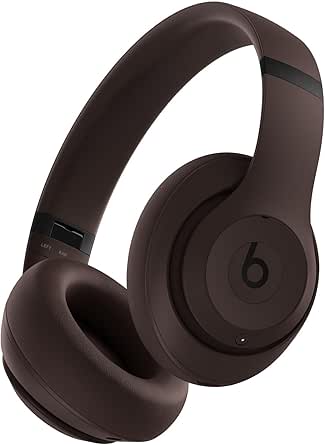 | Best Premium Pick for Multi-Device Listening | Battery life: Up to 40 hours | Active noise cancelling: Yes | Connectivity: Bluetooth, USB-C, 3.5mm audio | VIEW LATEST PRICE | See Our Full Breakdown |
| KVIDIO Bluetooth Headphones Wireless Over Ear Headsets 65H Playtime | 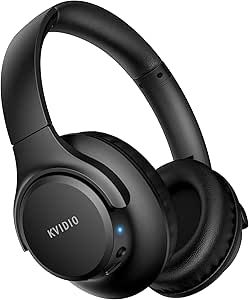 | Best Lightweight Long-Battery Pick | Drivers: 40mm | Battery life: Up to 65 hours | Charging time: 2.5 hours | VIEW LATEST PRICE | See Our Full Breakdown |
| BERIBES Bluetooth Headphones Over Ear Wireless HiFi Stereo Headsets 65H 6EQ | 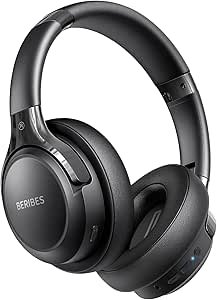 | Best Value for EQ Flexibility | Battery life: Up to 65 hours | Bluetooth version: 6.0 | Weight: 0.18 kg | VIEW LATEST PRICE | See Our Full Breakdown |
| Picun B8 Wireless Bluetooth Headphones, 120H Playtime, 3EQ Modes, Black |  | Best for Maximum Battery Life | Battery life: Over 120 hours | Battery capacity: 1000mAh | Bluetooth version: 5.3 | VIEW LATEST PRICE | See Our Full Breakdown |
| Soundcore by Anker Q20i Hybrid Active Noise Cancelling Headphones, White |  | Best for Commuting and Focus | Battery life: Up to 40 hours | Bluetooth version: Bluetooth 5 | Bluetooth range: 10 meters | VIEW LATEST PRICE | See Our Full Breakdown |
| Soundcore by Anker Q20i Hybrid Active Noise Cancelling Headphones, Black |  | Best for Multi-Device Listening | Battery life: 40 hours with ANC on; 60 hours in normal mode | Bluetooth version: 5.0 | Driver size: 40mm | VIEW LATEST PRICE | See Our Full Breakdown |
| Sony WH-CH520 Wireless On-Ear Bluetooth Headphones with Mic, Cappuccino | 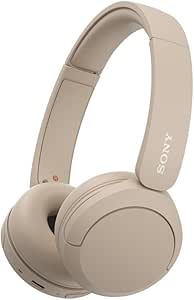 | Best Lightweight On-Ear Pick | Battery life: Up to 50 hours | Charging time: 3 hours | Quick charge: 3-minute charge provides up to 1.5 hours of playback | VIEW LATEST PRICE | See Our Full Breakdown |
| wireless podcast headphone | Battery life | Weight | Connectivity |
|---|---|---|---|
| OneOdio A70 Bluetooth Over-Ear | Up to 72 hours | 8.96 ounces | Bluetooth, 3.5mm and 6.35mm wired jacks |
| Sony WH-CH720N Wireless Noise | Up to 35 hours | 3.5 ounces | Multipoint connection |
| Hybrid Active Noise Cancelling | — | 270 g | — |
| Beats Studio Pro Premium Wirel | Up to 40 hours | 9.2 ounces | Bluetooth, USB-C, 3.5mm audio |
| KVIDIO Bluetooth Headphones Wi | Up to 65 hours | 7.04 ounces | — |
| BERIBES Bluetooth Headphones O | Up to 65 hours | 0.18 kg | — |
| Picun B8 Wireless Bluetooth He | Over 120 hours | 12.3 ounces | — |
| Soundcore by Anker Q20i Hybrid | Up to 40 hours | — | — |
| Soundcore by Anker Q20i Hybrid | 40 hours with ANC on; 60 hours in normal mode | 9.12 ounces | Bluetooth; dual-device connection |
| Sony WH-CH520 Wireless On-Ear | Up to 50 hours | — | Bluetooth with multipoint |
More Details on Our Top Picks
OneOdio A70 Bluetooth Over-Ear Headphones, Hi-Res Wired DJ Studio – Black
I’d choose the OneOdio A70 when a podcast setup needs wireless convenience without giving up useful wired connections. Its included 3.5mm and 6.35mm jacks make it easier to connect to different audio gear than the Bluetooth-focused KVIDIO, while the foldable design and sharing function suit shared listening or travel. Up to 72 hours of wireless playback also means fewer charging interruptions during long listening stretches. The tradeoff is that this is a relatively bulky over-ear pair, and its built-in noise-reduction mic is aimed at hands-free calls rather than giving you a dedicated podcast recording microphone. Unlike the Sony WH-CH720N, it does not list active noise cancellation, so it is a better fit for quiet recording spaces than noisy commutes.
Pros:- Bluetooth and included 3.5mm and 6.35mm connections support a wider range of audio gear
- Up to 72 hours of stated wireless playback reduces charging frequency
- Foldable over-ear design and sharing function support travel and shared listening
- 40mm neodymium drivers and stated high-resolution sound suit focused audio playback
Cons:- Bulkier than the lightweight Sony WH-CH720N for carrying and extended mobile use
- No active noise cancellation is listed, limiting isolation in busy spaces
- The built-in call microphone is not a substitute for a dedicated podcast recording mic
Best for: Podcast listeners and home-studio users who want Bluetooth plus 3.5mm and 6.35mm wired connections for flexible device compatibility.
Not ideal for: Commuters recording or monitoring in noisy surroundings who want active noise cancellation, or travelers prioritizing a compact, lightweight headset.
- Connectivity:Bluetooth, 3.5mm and 6.35mm wired jacks
- Battery life:Up to 72 hours
- Drivers:40mm neodymium
- Design:Over-ear, foldable, ergonomic
- Weight:8.96 ounces
- Microphone:Built-in noise-reduction microphone for hands-free calls
- Warranty:24 months
Our verdict“Choose the A70 if wired equipment compatibility matters as much as wireless listening and you can do without active noise cancellation.”
Sony WH-CH720N Wireless Noise Cancelling Over-Ear Headphones, Black
The Sony WH-CH720N is the strongest choice here for listeners who want to wear headphones for long sessions without carrying a heavier headset. At 3.5 ounces, it is substantially lighter than the Beats Studio Pro and OneOdio A70, and its dual noise sensors add a level of listening isolation those models do not list. That combination can help keep spoken audio clear in shared spaces, while multipoint connection makes it easier to switch between a computer and phone. Battery life reaches up to 35 hours, less than the A70’s 72 hours or KVIDIO’s 65, but quick charging helps bridge short breaks. I’d skip it if wired listening with noise cancellation is central: ANC is unavailable in wired mode, and its noise reduction is not presented as a premium-tier system.
Pros:- At 3.5 ounces, it is lighter than the other listed over-ear options
- Dual noise sensor technology provides active noise cancellation for distracting environments
- Multipoint connection supports switching between two connected devices
- Quick charge provides up to an hour of playback from a three-minute charge
Cons:- Up to 35 hours of battery life is shorter than the OneOdio A70 and KVIDIO
- Active noise cancellation is unavailable in wired mode
- Noise cancellation may not match more premium models in especially loud settings
Best for: Podcast listeners who wear headphones for extended work sessions and want a lightweight fit, noise cancellation, and connections to both phone and computer.
Not ideal for: Buyers who need active noise cancellation while wired, or who put maximum battery runtime ahead of low weight and quick charging.
- Weight:3.5 ounces
- Battery life:Up to 35 hours
- Charging:Quick charge: 3 minutes for 1 hour of playback
- Connectivity:Multipoint connection
- Noise cancellation:Dual noise sensor technology
- Microphones:Beamforming microphones for calls
- Included cables:USB Type-C cable and headphone cable
Our verdict“Pick the Sony WH-CH720N for lightweight, noise-cancelling podcast listening across phone and computer, but not for ANC during wired use.”
Hybrid Active Noise Cancelling Headphones with 120H Playtime, Bluetooth 6.0, Over-Ear, ENC HD Call Mic, Hi-Res 360° Spatial Audio, Black
For buyers who want long stretches away from a charger, this headset’s stated 120-hour playtime sets it apart from the OneOdio A70 and KVIDIO, while its four-stage hybrid ANC gives it a clearer travel role than those simpler wireless options. The six-microphone array with ENC is designed for calls, and Bluetooth 6.0 plus a 15-meter range offer modern wireless flexibility. That said, podcast listening does not require 360° spatial audio, so this feature may matter less than fit, voice clarity, or easy wired operation. At 270 grams, it is heavier than the Sony WH-CH720N, and wired AUX use requires Bluetooth to be off. The supplied description also notes some connectivity issues, making this a less reassuring pick for anyone who needs especially dependable switching between devices.
Pros:- Stated 120-hour playtime exceeds the listed battery runtimes of the other products in this batch
- Four-stage hybrid ANC is suited to listening in noisy travel environments
- Six-microphone array with ENC is designed for clearer calls
- Fast charge provides up to three hours of playback from a 10-minute charge
Cons:- At 270 grams, it is heavier than the Sony WH-CH720N for long wear
- Bluetooth must be turned off to use wired AUX mode
- The product description reports that some users experience connectivity issues
Best for: Frequent travelers and long-session listeners who value extended stated battery life and active noise cancellation more than minimum weight.
Not ideal for: Podcast hosts who need seamless Bluetooth-to-wired switching, buyers who prioritize a lightweight headset, or users unwilling to accept reported connectivity concerns.
- Noise cancelling:4-stage hybrid ANC
- Playtime:Up to 120 hours
- Bluetooth:Version 6.0
- Wireless range:15 meters
- Microphone:6-mic array with ENC
- Drivers:40mm dynamic
- Weight:270 g
- Wired mode:3.5mm AUX; Bluetooth must be off
- Fast charging:10 minutes for up to 3 hours of playback
Our verdict“Choose this model for extended travel listening and long battery life if its extra weight and wired-mode limitation are acceptable.”
Beats Studio Pro Premium Wireless Over-Ear Headphones – Up to 40-Hour Battery, Active Noise Cancelling, Lossless Audio, Apple & Android Compatible, Deep Brown
The Beats Studio Pro brings the most varied connection choices in this batch: Bluetooth for wireless listening, USB-C, and 3.5mm audio. That flexibility, paired with Apple and Android compatibility, makes it more adaptable across devices than the Bluetooth-first KVIDIO, while active noise cancellation and transparency mode give it options for both focused listening and awareness. Its up-to-40-hour battery life is shorter than the OneOdio A70’s 72 hours, but it remains a substantial runtime for regular podcast sessions. Spatial audio and lossless audio support add listening features, though they are less central for speech than comfort and a stable connection. At 9.2 ounces, it is not a lightweight pick like the Sony WH-CH720N, and the supplied product details do not specify a dedicated podcast recording microphone.
Pros:- Bluetooth, USB-C, and 3.5mm audio provide several ways to connect
- Active noise cancellation and transparency mode cover focused and aware listening
- Works with Apple and Android devices
- Up to 40 hours of battery life with fast fuel charging
Cons:- At 9.2 ounces, it is heavier than the Sony WH-CH720N
- Its stated battery life is shorter than the OneOdio A70 and KVIDIO
- The product details do not specify a dedicated podcast recording microphone
Best for: Apple and Android users who want a premium-feeling over-ear headset with Bluetooth, USB-C, 3.5mm audio, and active noise cancellation.
Not ideal for: Buyers seeking the lightest option, the longest listed battery life, or a headset with a clearly specified microphone for podcast recording.
- Battery life:Up to 40 hours
- Active noise cancelling:Yes
- Connectivity:Bluetooth, USB-C, 3.5mm audio
- Weight:9.2 ounces
- Compatibility:Apple and Android
- Additional audio features:Spatial audio and lossless audio support
- Color:Deep Brown
Our verdict“Choose the Beats Studio Pro for multi-device flexibility and ANC, rather than for the lightest fit or longest runtime.”
KVIDIO Bluetooth Headphones Wireless Over Ear Headsets 65H Playtime
The KVIDIO is a straightforward pick for listeners who want long wireless sessions without the heavier feel of the OneOdio A70 or Beats Studio Pro. At 7.04 ounces, it weighs less than both, folds for packing, and lists up to 65 hours of playback—short of the hybrid ANC model’s 120 hours, but longer than the Sony WH-CH720N’s 35. Its 40mm drivers and deep-bass tuning suit general listening, though podcast voices may not need that bass emphasis. Unlike the Sony and hybrid ANC option, the supplied details do not list active noise cancellation, so it is better for quiet rooms than noisy commutes. Bluetooth 5.3 and 3.5mm cable compatibility offer useful everyday flexibility, but there is no listed multipoint connection for moving between devices.
Pros:- Up to 65 hours of stated battery life supports extended listening between charges
- At 7.04 ounces, it is lighter than the OneOdio A70 and Beats Studio Pro
- Foldable design and 3.5mm cable compatibility support travel and wired listening
- Bluetooth 5.3 and 10-meter range provide wireless connection flexibility
Cons:- Active noise cancellation is not listed, unlike the Sony WH-CH720N and Beats Studio Pro
- No multipoint connection is specified for switching between phone and computer
- Deep-bass emphasis may be less suitable for listeners seeking a neutral sound for spoken audio
Best for: Podcast listeners who want a foldable, relatively lightweight headset for long listening sessions at home or while traveling in quieter settings.
Not ideal for: People who need active noise cancellation in busy spaces, multipoint device switching, or specifically balanced speech-focused tuning.
- Drivers:40mm
- Battery life:Up to 65 hours
- Charging time:2.5 hours
- Bluetooth:Version 5.3
- Bluetooth range:10 meters
- Weight:7.04 ounces
- Impedance:32 ohms
- Wired compatibility:3.5mm cable
Our verdict“Pick the KVIDIO for lightweight, long-lasting podcast listening in quieter settings, but choose an ANC model for noisy environments.”
BERIBES Bluetooth Headphones Over Ear Wireless HiFi Stereo Headsets 65H 6EQ
The BERIBES stands out for pairing up to 65 hours of playback with six EQ modes, giving podcast listeners room to tune music and spoken audio without stepping up to noise-cancelling models like the Soundcore Q20i. Its lightweight over-ear build and memory-protein cushions suit long listening sessions at a desk, while the included 3.5mm cable offers a wired fallback when Bluetooth is inconvenient. The tradeoff is that EQ flexibility does not replace noise cancellation: background chatter can still compete with a podcast, unlike on the Q20i. Sound also depends on choosing a mode that suits your preferences, and the product details give limited guidance on microphone performance for recording or calls. I’d pick it for everyday listening and battery life, not as a monitoring headset for critical podcast production.
Pros:- Up to 65 hours of playback reduces how often you need to recharge.
- Six EQ modes let you adjust the sound for voices, music, and other listening.
- Lightweight design and memory-protein cushions suit extended sessions.
- Included 3.5mm audio cable provides a wired listening option.
Cons:- No active noise cancellation is listed, so surrounding noise can distract from podcasts.
- Sound quality depends on selecting an EQ mode that suits your preferences.
- Over-ear design may feel bulky for active use.
Best for: Listeners who want long battery life, customizable sound, and comfortable over-ear headphones for podcasts at home or work.
Not ideal for: Podcast editors or frequent commuters who need noise cancellation, reliable recording-mic detail, or a compact fit for active use.
- Battery life:Up to 65 hours
- Bluetooth version:6.0
- Weight:0.18 kg
- Fit:Over-ear
- EQ modes:6
- Wireless range:33 ft
- Wired connection:3.5mm audio cable included
- Microphone:Yes
Our verdict“Choose the BERIBES for flexible EQ and long-lasting everyday listening, but choose the Soundcore Q20i if reducing ambient noise matters more.”
Picun B8 Wireless Bluetooth Headphones, 120H Playtime, 3EQ Modes, Black
The Picun B8 is the battery-life pick: its claimed 120 hours of playback far exceeds the BERIBES 65-hour figure and the Soundcore Q20i’s 40 hours with ANC on. That headroom suits travelers or shift workers who may go days between charging opportunities. Three EQ modes offer a simple way to change the sound, and the foldable design plus included 3.5mm cable add practical flexibility. The tradeoff is weight: at 12.3 ounces, it may be less comfortable for long podcast marathons than the lighter BERIBES. It also lacks listed active noise cancellation, so its large battery does not make it the better choice for noisy commutes. I’d favor it when charging intervals matter more than a lighter fit or quiet listening.
Pros:- Claimed 120-hour playback stretches time between charges.
- Foldable earcups make storage and packing easier.
- Three EQ modes provide straightforward sound options.
- Included 3.5mm cable allows wired listening.
Cons:- At 12.3 ounces, it is heavier than the BERIBES and may tire some listeners during extended wear.
- No active noise cancellation is listed for blocking commute or office noise.
- Only black is listed as a color option.
Best for: Frequent travelers and long-shift listeners who prioritize very long battery life and want foldable headphones with a wired option.
Not ideal for: Listeners who wear headphones for many consecutive hours, need active noise cancellation, or want a lighter headset for daily podcast sessions.
- Battery life:Over 120 hours
- Battery capacity:1000mAh
- Bluetooth version:5.3
- Weight:12.3 ounces
- Driver size:40mm
- EQ modes:Pop, Bass boost, and Rock
- Wireless range:33 feet
- Wired connection:3.5mm audio cable included
Our verdict“Pick the Picun B8 if exceptional battery endurance is your priority, but choose the lighter BERIBES for longer listening comfort.”
Soundcore by Anker Q20i Hybrid Active Noise Cancelling Headphones, White
For podcasts in shared offices, transit, or other noisy places, the white Soundcore Q20i makes a stronger case than the BERIBES or Picun B8 because it adds hybrid active noise cancellation and a transparency mode. Those features help listeners reduce ambient sound or stay more aware of their surroundings without relying only on louder playback. Its 40-hour battery life is shorter than both of those alternatives, but the quick-charge feature can provide four hours of playback after five minutes of charging. App-based sound customization is useful for tailoring audio, though it adds setup and relies on a phone for full control. This model does not list an AUX input, which limits wired-use flexibility compared with the BERIBES. I’d choose it for noisy listening environments, not for maximum battery or straightforward wired monitoring.
Pros:- Hybrid active noise cancellation helps reduce surrounding sound during podcasts.
- Transparency mode supports listening while staying aware of nearby activity.
- Five-minute charging provides up to four hours of playback.
- Soundcore app offers customizable sound settings.
Cons:- The 40-hour battery figure is lower than the BERIBES and Picun B8.
- Full sound customization and control rely on the app.
- No AUX-in mode is listed for wired listening.
Best for: Commuters and office listeners who want active noise cancellation and a transparency mode for switching between focus and awareness.
Not ideal for: Buyers who need a wired AUX connection, maximum battery life, or headphones they can fully customize without an app.
- Battery life:Up to 40 hours
- Bluetooth version:Bluetooth 5
- Bluetooth range:10 meters
- Noise control:Hybrid active noise cancellation and transparency mode
- Charging:2 hours; 5-minute charge provides 4 hours of playback
- Fit:Over-ear
- Microphones:Built-in
- Color:White
Our verdict“Choose the Q20i for podcast listening in noisy surroundings, but opt for the Picun B8 if longer battery life matters more than noise cancellation.”
Soundcore by Anker Q20i Hybrid Active Noise Cancelling Headphones, Black
The black Soundcore Q20i suits listeners who move between devices as well as environments: it supports dual-device connection, letting a user switch between two paired sources, and adds active noise cancellation and transparency mode for changing surroundings. Compared with the white Q20i in this roundup, the listed specs call out 40 hours with ANC on or 60 hours in normal mode, along with 40mm drivers and a stated weight of 9.12 ounces. Its battery endurance in normal mode is still below the Picun B8’s claimed 120 hours, but the Picun lacks listed noise cancellation. App-based EQ gives more sound control than the simpler EQ presets on the BERIBES, at the cost of depending on the app for customization. I’d choose this version for connected-device flexibility and quieter listening, while checking fit carefully for long sessions.
Pros:- Dual-device connection supports switching between two connected sources.
- Active noise cancellation and transparency mode suit changing listening environments.
- Battery life is listed as 40 hours with ANC on and 60 hours in normal mode.
- Customizable EQ provides sound adjustments through the app.
Cons:- Battery life is shorter than the Picun B8’s claimed 120 hours.
- Full customization requires the app.
- Some listeners may find the over-ear fit uncomfortable during extended sessions.
Best for: Podcast listeners who switch between a phone and computer and want noise cancellation, transparency, and app-based EQ.
Not ideal for: Listeners who want the longest possible battery life, a no-app setup, or a fit they can wear for extended periods without checking comfort.
- Battery life:40 hours with ANC on; 60 hours in normal mode
- Bluetooth version:5.0
- Driver size:40mm
- Weight:9.12 ounces
- Fit:Over-ear
- Features:Active noise cancellation, transparency mode, customizable EQ
- Connectivity:Bluetooth; dual-device connection
- Color:Black
Our verdict“Choose this Q20i for device switching and noise-control options, but pick the Picun B8 if fewer charging stops matter more.”
Sony WH-CH520 Wireless On-Ear Bluetooth Headphones with Mic, Cappuccino
The Sony WH-CH520 is the light, simple option for listeners who prefer an on-ear fit and want to move between devices: multipoint connection supports switching sources, while the built-in microphone handles hands-free calls. Its up-to-50-hour battery life outlasts the white Soundcore Q20i’s listed 40 hours, though it cannot match the Picun B8’s claimed 120 hours. Sony’s app offers sound customization, and a three-minute quick charge adds up to 1.5 hours of playback. The main tradeoff is the on-ear design: some people find pressure on the ears less comfortable during long podcast sessions than the over-ear BERIBES or Q20i. There is also no active noise cancellation, so this is better suited to quieter spaces than noisy commutes. I’d pick it for portability and device switching, not isolation.
Pros:- Up to 50 hours of battery life suits regular listening between charges.
- Multipoint connectivity supports switching between devices.
- Three-minute quick charge provides up to 1.5 hours of playback.
- Built-in microphone supports hands-free calls.
Cons:- On-ear fit may become uncomfortable during extended podcast sessions.
- No active noise cancellation is listed.
- Three-hour charging time is relatively long when not using quick charge.
Best for: Listeners who want lightweight, on-ear headphones for calls and podcasts at a desk, with multipoint switching between a phone and computer.
Not ideal for: Commuters who need active noise cancellation or listeners who find on-ear pressure uncomfortable during long sessions.
- Battery life:Up to 50 hours
- Charging time:3 hours
- Quick charge:3-minute charge provides up to 1.5 hours of playback
- Connectivity:Bluetooth with multipoint
- Fit:On-ear
- Microphone:Built-in for hands-free calls
- Controls:Touch and voice
- Color:Cappuccino
Our verdict“Choose the WH-CH520 for a lightweight on-ear fit and multipoint use in quieter settings, but pick the Soundcore Q20i for noise cancellation.”

How We Picked
I ranked these headphones around the needs that matter when listening to podcasts or monitoring spoken audio: comfortable wear, useful noise control, straightforward wireless use, battery practicality, and a wired option where the product listing identifies one. I also weighed format and intended use. Over-ear models can suit longer sessions, while an on-ear pair may be easier to carry; noise cancellation can help reduce distractions, but it does not replace a microphone or a reliable recording setup.
The order reflects how clearly each model fits the wireless podcast use case, not a claim that every listing has been independently tested. The Sony WH-CH720N takes the lead for its combination of active noise cancellation and over-ear design. The Q20i follows as a more value-minded noise-cancelling alternative, and the Beats Studio Pro earns the premium slot through its broader feature set. Models led chiefly by battery claims rank lower because endurance figures do not answer key podcast questions such as mic quality, comfort over a full session, or Bluetooth monitoring delay. The two Q20i color listings are treated as one model with two color options.
| wireless podcast headphone | Connectivity |
|---|---|
| OneOdio A70 Bluetooth Over-Ear | Bluetooth, 3.5mm and 6.35mm wired jacks |
| Sony WH-CH720N Wireless Noise | Multipoint connection |
| Hybrid Active Noise Cancelling | — |
| Beats Studio Pro Premium Wirel | Bluetooth, USB-C, 3.5mm audio |
| KVIDIO Bluetooth Headphones Wi | — |
| BERIBES Bluetooth Headphones O | — |
| Picun B8 Wireless Bluetooth He | — |
| Soundcore by Anker Q20i Hybrid | — |
| Soundcore by Anker Q20i Hybrid | Bluetooth; dual-device connection |
| Sony WH-CH520 Wireless On-Ear | Bluetooth with multipoint |
Factors to Consider When Choosing Wireless Podcast Headphones
Podcast headphones can mean two different things: a wireless pair for listening and editing, or headphones for hearing your own voice while recording. Those uses overlap, but the best choice depends on your setup. I would settle the connection and microphone questions before comparing feature lists, then weigh comfort, noise control, and battery around how and where you work.
Decide Whether You Need Wireless Monitoring or Just Wireless Listening
Bluetooth is convenient for listening to episodes, reviewing edits, and moving around during a workday. Recording while monitoring your voice is less straightforward because wireless audio can introduce delay, making speech feel out of sync with what you hear. That can distract a host or guest even when the sound is otherwise clear. If you plan to monitor live recording, check whether your interface or recorder supports a wired headphone connection and choose a pair with a suitable cable option. A common mistake is buying a wireless headset for live monitoring without checking how it connects to the recording device. If wireless is mainly for playback, latency is usually less of a concern.
Treat the Headphone Mic and a Podcast Mic as Different Tools
A built-in headset microphone is handy for calls and casual voice chats, but it is not automatically a substitute for a dedicated podcast microphone. A recording mic gives you more control over placement and often makes it easier to keep your voice consistent as you move. Before buying headphones for remote interviews, check whether the call or recording app will use the headset mic, a separate USB mic, or the computer’s built-in mic. Also confirm that the headphones and microphone can operate together in the way your device requires; Bluetooth behavior varies by device and app. If your priority is polished spoken audio, put the microphone budget and setup first, then select headphones for comfort and reliable monitoring.
Choose Fit for the Length of Your Sessions
Over-ear headphones cover the ears and may feel more suitable for long listening sessions, while on-ear designs are often less bulky but rest directly on the ears. Neither fit is automatically comfortable for everyone, since head shape, glasses, clamp force, and cushion materials all affect wear. For a long interview or editing block, comfort can matter more than a headline feature you rarely use. Consider whether you need to wear the headphones for an hour at a time or only for short commutes and calls. Folding hinges and compact storage can help with travel, but they do not make an uncomfortable fit more wearable. When fit details are unclear, prioritize a return policy that lets you check comfort at home.
Match Noise Control to Your Recording Space
Active noise cancellation is useful for reducing steady background sounds during listening, especially in shared spaces or while traveling. It does not silence every voice or turn a noisy room into a treated recording booth. For recording, a quiet room, good mic placement, and attention to echo usually matter more than headphone noise cancellation. Some listeners also prefer to hear more of their surroundings while speaking, so strong isolation may not suit every host. Avoid paying extra for noise control if you record in a quiet home office and rarely work on the move. Choose it for listening comfort and focus, not as a fix for room acoustics.
Read Battery Claims as a Convenience Measure
Long stated battery life can reduce charging interruptions, but it does not tell you how quickly a headset charges, how much runtime you get with noise cancellation enabled, or how the battery performs after extended ownership. Think about your routine: a daily commuter may value fewer charging sessions, while a desk-based podcaster can keep a cable or charger nearby. Also check whether the headphones can still play over a wired connection when the battery runs down, if that feature matters to you. Do not let the largest runtime number outweigh fit, controls, or the connection you need. For frequent travel, a charging habit and a backup connection can be more useful than choosing solely by the advertised maximum.
Check Device Compatibility Before Paying for Extra Features
Bluetooth compatibility is only the starting point: controls, microphone routing, and supported features can differ between phones, computers, tablets, and recording apps. A feature described for a phone may not work the same way on a laptop or audio interface. If you switch between Apple and Android devices, look for explicit cross-platform support rather than assuming every control behaves identically. For a fixed recording desk, confirm that your computer can pair reliably and that you have a wired fallback if Bluetooth is unavailable or introduces delay. Extra listening modes and EQ settings can be useful, but they matter less if the headphones are awkward to operate in your actual setup. Match the feature set to the devices you own, not to a hypothetical future workflow.
Frequently Asked Questions
Can I use Bluetooth headphones to monitor my voice while recording a podcast?
You can, but Bluetooth delay may make your voice sound slightly behind the moment you speak. That lag can be distracting during a live recording even if the headphones work well for listening to finished episodes. Check whether your recording interface or computer offers a wired headphone output, and use a cable when tight timing matters. If you record remotely, test the complete setup with your app before an interview rather than assuming the headset will route audio as expected. Wireless is usually the easier choice for playback and editing away from the desk.
Do I need active noise cancellation to record a podcast?
No. Active noise cancellation can make listening more comfortable around steady background noise, but it does not remove room echo or prevent a microphone from picking up nearby sounds. A quieter space and thoughtful microphone placement have a more direct effect on recording quality. Noise cancellation is most useful if you commute, work in shared spaces, or want fewer distractions while reviewing audio. If your recording area is already quiet, you may get more value from a comfortable fit or a dependable wired monitoring option.
Are headphones with a built-in microphone enough for a podcast?
They can work for casual calls, a quick remote chat, or a simple recording where convenience matters more than a polished sound. A headset mic may not offer the placement control or consistent voice capture that a dedicated podcast microphone provides. Check which microphone your recording app will use, since devices may switch between the headset mic and a built-in computer mic. For a regular show, consider headphones and microphone as separate choices: buy the headphones for listening and monitoring, then choose a mic for the voice recording itself. That separation also makes it easier to upgrade one part of the setup later.
Should I choose a very long battery life over noise cancellation?
Choose based on how you use the headphones rather than the largest advertised runtime. Long battery life is handy for travel or frequent listening without access to a charger, while noise cancellation is more useful when distracting surroundings affect your focus. The two benefits solve different problems, and battery claims may depend on settings such as noise cancellation. For desk use, charging access can make extra runtime less valuable than fit or a suitable connection. If both matter, check the specific operating modes and whether a wired backup is available.
What should I check before buying headphones for remote podcast interviews?
Confirm how the headphones connect to your computer or phone and which microphone your interview app will use. Ask whether you need the headphone microphone for speaking or a separate microphone for better voice control. Test the setup for delay, echo, and the ability to hear both your guest and your own voice at a comfortable level. Comfort matters for long interviews, and physical controls can be easier to use than software adjustments while you are talking. A short test call before a recorded session can reveal routing problems that product descriptions do not resolve.
Conclusion
For most listeners, I recommend the Sony WH-CH720N as the best overall because its over-ear format and active noise cancellation make a versatile pairing for podcast listening and focused work. The Soundcore Q20i is my best value pick if you want noise cancellation without moving to the premium tier; choose either color listing based on preference. The Beats Studio Pro is best for buyers seeking a premium feature set and broad Apple and Android compatibility. For beginners, the OneOdio A70 is a practical starting point if a wired listening option matters alongside Bluetooth, while the Sony WH-CH520 suits someone who prefers an on-ear, more compact-style design. If your main need is fewer charging interruptions, compare the KVIDIO, BERIBES, and Picun B8 on their stated long-playtime features, but do not treat battery life as proof of recording quality. For live podcast monitoring, prioritize a wired connection and test the full setup before choosing any wireless pair.