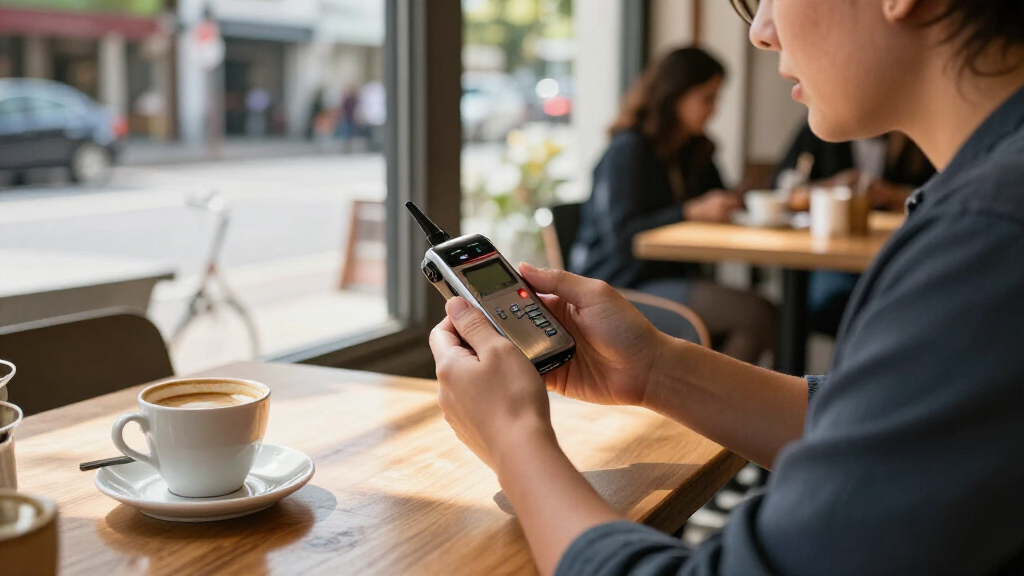
For journalists, the best digital voice recorder balances dependable interview capture, simple controls, enough storage, and a workflow that suits deadline pressure. I name the EVISTR L359 the best overall pick for its large storage capacity and included AI transcription, while the iFLYTEK Offline Voice Recorder stands out for transcription without relying on a network connection and the EVISTR L357 for a more straightforward playback-focused setup. The main tradeoff is between basic recorders that keep audio capture simple and AI models that may save transcription time but add workflow and privacy questions. Capacity, voice activation, noise handling, and ease of transferring files matter more than a long feature list. Read on for the full breakdown and guidance on choosing a recorder for your reporting.

Get everyday essentials delivered free with Prime
- Fast, free delivery on millions of items
- Prime Video, Amazon Music and more included
- Member-only deals all year
Key Takeaways
- The EVISTR L359 leads this lineup for all-around reporting flexibility: its 128GB capacity and AI transcription give it a broader role than the playback-focused EVISTR L357, though reporters should check how its transcription workflow handles sensitive material.
- Transcription features create the clearest divide: the L359, Plaud Note Pro, and iFLYTEK model target reporters who want help turning recordings into text, while models such as the Sunlan 16GB and Cappsu 32GB keep the emphasis on recording and playback.
- Large storage is common, but it does not settle the buying decision: several models advertise 64GB or more, so journalists should also check file transfer, recording format, battery behavior, and whether the memory can be managed easily.
- Voice activation can help with long sessions, but it is not a substitute for attentive recording: it may reduce silence in files, yet a quiet answer or soft-spoken source can be missed if the activation threshold is not suited to the setting.
- Simple recorders still have a place in a newsroom kit: the Sunlan, HoTiyan H-10003, and Cappsu options favor direct recording and playback, while the AI-focused options ask buyers to weigh convenience against added software and privacy considerations.
| EVISTR L359 Digital Voice Recorder with 128GB Storage and AI Transcription |  | Best for AI-Assisted Reporting | Storage: 128 GB | Maximum recording bitrate: 3072 Kbps | Continuous recording time: Up to 33 hours | VIEW LATEST PRICE | See Our Full Breakdown |
| EVIDA 128GB Digital Voice Recorder with Voice Activation and Playback |  | Best for Long Recording Sessions | Storage: 128 GB | Recording formats: WAV, MP3 | Maximum recording bitrate: 1536 kbps | VIEW LATEST PRICE | See Our Full Breakdown |
| Arungo ZD70 128GB Digital Voice Recorder |  | Best for Stereo Interview Capture | Storage: 128GB TF card included | Recording formats: MP3, WAV | Microphone: Built-in stereo | VIEW LATEST PRICE | See Our Full Breakdown |
| Sunlan 16GB Digital Voice Recorder with Playback |  | Best Compact, Simple Recorder | Storage capacity: 16 GB | Recording format: WAV | Microphone: Built-in, mono with noise cancellation | VIEW LATEST PRICE | See Our Full Breakdown |
| Aiworth E36 Digital Voice Recorder, 136GB, Voice Activated |  | Best for Detailed Playback Review | Storage: 136GB total: 8GB built-in and 128GB memory card | Recording quality: PCM up to 1536 Kbps | Microphones: Dual microphones | VIEW LATEST PRICE | See Our Full Breakdown |
| 16GB Voice-Activated Digital Voice Recorder |  | Best for Simple Interview Recording | Storage: 16 GB | Recording formats: MP3, WAV | Maximum recording quality: Up to 192 kbps | VIEW LATEST PRICE | See Our Full Breakdown |
| Plaud Note Pro AI Voice Recorder, Black |  | Best for AI-Assisted Reporting | Microphones: Four built-in microphones | Microphone range: Up to 5 m (16.4 ft) | Storage: 64 GB | VIEW LATEST PRICE | See Our Full Breakdown |
| HoTiyan 8GB Digital Voice Recorder with Voice Activation and MP3 Playback |  | Best for Basic Recorder Beginners | Model: H-10001 | Storage: 8 GB | Recording formats: MP3, WAV | VIEW LATEST PRICE | See Our Full Breakdown |
| Tonfarb 136GB Digital Voice Recorder with Playback |  | Best for Long Assignments and Large Archives | Total storage: 136 GB (8 GB built-in and included 128 GB TF card) | Recording formats: MP3, WAV | Audio quality: 1536 kbps PCM | VIEW LATEST PRICE | See Our Full Breakdown |
| EVISTR L357 64GB Digital Voice Recorder with Playback |  | Best for Adjustable Recording Control | Storage: 64 GB | Audio formats: MP3, WAV | Microphone: Built-in stereo | VIEW LATEST PRICE | See Our Full Breakdown |
| Xelarvex 72GB Digital Voice Recorder with Voice Activation and AI Noise Reduction |  | Best for Long, Gap-Prone Interviews | Storage: 72 GB | Claimed recording time: Up to 8,800 hours at 192 Kbps; product title also states 4,800 hours | Continuous recording: Up to 48 hours | VIEW LATEST PRICE | See Our Full Breakdown |
| HoTiyan H-10003 Digital Voice Recorder, 64GB |  | Best for Simple Playback and Review | Model: H-10003 | Storage: 64 GB | Listed recording time: 75 hours | VIEW LATEST PRICE | See Our Full Breakdown |
| iFLYTEK Offline Voice Recorder with AI Transcription |  | Best for On-Device Transcription | Transcription languages: English, Chinese, Japanese, Korean, Russian | Storage: 8 GB | Screen: 3 inches | VIEW LATEST PRICE | See Our Full Breakdown |
| Cappsu Digital Voice Recorder with Playback, 32GB Built-in Memory |  | Best for One-Click Field Recording | Model: V02 | Storage: 32 GB built-in | Maximum recording bitrate: 1536 Kbps | VIEW LATEST PRICE | See Our Full Breakdown |
| Tonfarb 64GB Digital Voice Recorder |  | Best for Flexible Audio Capture | Memory: 64 GB | Recording formats: WAV, MP3 | Maximum PCM bitrate: 1536 kbps | VIEW LATEST PRICE | See Our Full Breakdown |
| digital voice recorders for journalist | Storage | Microphone |
|---|---|---|
| EVISTR L359 Digital Voice Reco | 128 GB | Built-in, mono |
| EVIDA 128GB Digital Voice Reco | 128 GB | Built-in, mono with noise cancellation |
| Arungo ZD70 128GB Digital Voic | 128GB TF card included | Built-in stereo |
| Sunlan 16GB Digital Voice Reco | — | Built-in, mono with noise cancellation |
| Aiworth E36 Digital Voice Reco | 136GB total: 8GB built-in and 128GB memory card | — |
| 16GB Voice-Activated Digital V | 16 GB | Built-in stereo |
| Plaud Note Pro AI Voice Record | 64 GB | — |
| HoTiyan 8GB Digital Voice Reco | 8 GB | Built-in stereo |
| Tonfarb 136GB Digital Voice Re | — | — |
| EVISTR L357 64GB Digital Voice | 64 GB | Built-in stereo |
| Xelarvex 72GB Digital Voice Re | 72 GB | — |
| HoTiyan H-10003 Digital Voice | 64 GB | Built-in |
| iFLYTEK Offline Voice Recorder | 8 GB | — |
| Cappsu Digital Voice Recorder | 32 GB built-in | — |
| Tonfarb 64GB Digital Voice Rec | — | Built-in stereo |
More Details on Our Top Picks
EVISTR L359 Digital Voice Recorder with 128GB Storage and AI Transcription
The EVISTR L359 is the clearest fit here for journalists who want a recorder to do more than capture audio. Its app-based transcription in 113 languages, summaries, and other insights can speed up the first pass through an interview, while 128GB of storage and up to 33 hours of continuous recording give it room for extended assignments. Compared with the EVIDA VR01, it offers AI transcription rather than a longer stated recording run time; compared with the Aiworth E36, its standout is the software workflow, not dual microphones. The tradeoff is dependence on the AI DVR Link app for those features, plus wired OTG phone transfers. Its built-in mono microphone also makes mic placement more consequential when recording several speakers.
Pros:- AI transcription supports 113 languages and can generate summaries
- 128GB of storage accommodates substantial interview archives
- Noise reduction and voice activation offer useful recording controls
- One-touch operation and password protection support quick, private field use
Cons:- AI features depend on the AI DVR Link app
- Phone transfers use a wired OTG connection
- Built-in microphone is mono, limiting spatial separation between speakers
Best for: Journalists who conduct interviews in multiple languages and want app-based transcripts and summaries to accelerate note-taking.
Not ideal for: Reporters who need app-independent transcription, wireless phone transfers, or stereo capture of several speakers.
- Storage:128 GB
- Maximum recording bitrate:3072 Kbps
- Continuous recording time:Up to 33 hours
- Transcription languages:113
- Audio formats:MP3, WAV
- Connectivity:USB Type-C, wired OTG
- Microphone:Built-in, mono
- Weight:2.24 oz (65 g)
Our verdict“Choose the EVISTR L359 if app-based multilingual transcription matters more to your reporting workflow than stereo recording or longer battery runtime.”
EVIDA 128GB Digital Voice Recorder with Voice Activation and Playback
For reporters who need long stretches of recording without frequent charging breaks, the EVIDA VR01 stands out with up to 54 hours of continuous recording. Its six voice-activation sensitivity levels give more control over when recording starts, and four folders help keep assignments apart on the device. Compared with the EVISTR L359, EVIDA gives up app-based AI transcription but claims a longer continuous run time; unlike the Sunlan, it pairs that endurance with 128GB of storage. Its WAV and MP3 options suit different file-size needs, though the built-in microphone is mono and there is no headphone jack for direct monitoring. That makes it a practical meeting and interview recorder, but less suited to journalists who need to check audio through wired headphones while recording.
Pros:- Up to 54 hours of continuous recording supports long assignments
- 128GB capacity provides room for many recordings
- Six voice-activation sensitivity levels allow adjustment to different environments
- WAV and MP3 recording, playback, password protection, and four folders aid basic workflow
Cons:- No headphone jack for direct audio monitoring
- Built-in microphone records in mono
- USB 2.0 is the listed connection, with no faster transfer option specified
Best for: Beat reporters and field journalists who record long meetings or interview days and want adjustable voice activation with ample onboard storage.
Not ideal for: Journalists who need headphone monitoring, stereo capture, or transcription features built into an app-assisted workflow.
- Storage:128 GB
- Recording formats:WAV, MP3
- Maximum recording bitrate:1536 kbps
- Continuous recording time:Up to 54 hours
- Microphone:Built-in, mono with noise cancellation
- Voice activation:6 sensitivity levels
- Connectivity:USB 2.0
- Screen size:1.5 inches
Our verdict“Pick the EVIDA VR01 for long recording sessions and simple file organization, but skip it if headphone monitoring is part of your reporting routine.”
Arungo ZD70 128GB Digital Voice Recorder
The Arungo ZD70 is the strongest pick in this group for journalists who want stereo recording without moving to an app-centered device. Its included 128GB TF card, one-button recording, timestamped files, and USB-C connection make the basic field workflow straightforward. Compared with the mono-mic EVIDA VR01, stereo capture may better preserve the sense of where speakers are positioned in a room; compared with the Aiworth E36, Arungo specifies stereo microphones and includes an earphone, while Aiworth lists dual microphones and PCM recording. The ZD70 also offers playback tools such as A-B repeat and speed control for reviewing quotes. The tradeoff is that its listed recording time is shorter than EVIDA’s 54 hours, and the product details provide no stated maximum bitrate to help judge file quality against the EVISTR L359.
Pros:- Built-in stereo microphone offers more spatial detail than the mono-mic EVIDA VR01
- Includes a 128GB TF card
- Voice activation, timestamped files, and one-button recording support field use
- A-B repeat, speed control, headphone jack, and USB-C add useful review and transfer options
Cons:- Up to 50 hours of recording is less than the EVIDA VR01’s stated 54 hours
- No maximum recording bitrate is specified in the provided product data
- No AI transcription feature is listed
Best for: Journalists recording in-person interviews or small group discussions who want stereo capture, onboard playback controls, and an included memory card.
Not ideal for: Reporters who prioritize a stated high recording bitrate, app-based transcription, or the longest listed continuous runtime.
- Storage:128GB TF card included
- Recording formats:MP3, WAV
- Microphone:Built-in stereo
- Recording time:Up to 50 hours
- Screen size:1.44 inches
- Headphone jack:3.5 mm
- Charging and data interface:USB Type-C
- Warranty:1 year
Our verdict“Choose the Arungo ZD70 if stereo interview capture and practical playback controls matter more than AI tools or the longest runtime.”
Sunlan 16GB Digital Voice Recorder with Playback
The Sunlan 16GB favors a small, direct workflow: press one button to record, then use the built-in speaker or headphone jack for playback. At 35 g and 3.3 inches long, it is easier to tuck into a pocket than the larger 128GB EVIDA, but its capacity is far more modest. WAV-only recording may suit journalists who prefer that format, yet it offers less flexibility than the MP3 and WAV choices on the Arungo ZD70 or Aiworth E36. Voice activation and noise cancellation help limit unnecessary capture, while A-B repeat makes it easier to replay a quote. The main compromises are a mono microphone, up to 30 hours of recording, and only seven hours of playback. It suits short assignments better than a day of back-to-back interviews.
Pros:- Compact 35 g body is easy to carry in a pocket
- One-button recording keeps operation simple during quick interviews
- Voice activation and noise cancellation can reduce unnecessary recording
- Headphone jack, built-in speaker, and A-B repeat support quote review
Cons:- 16GB capacity is much smaller than the 128GB options from EVIDA and Arungo
- Mono microphone does not provide stereo separation
- Playback time is limited to up to 7 hours
Best for: Mobile reporters who want a lightweight, uncomplicated recorder for short interviews, quick quotes, and playback through a headphone jack.
Not ideal for: Journalists covering full-day events or building a large audio archive who need high capacity, stereo capture, or longer playback time.
- Storage capacity:16 GB
- Recording format:WAV
- Microphone:Built-in, mono with noise cancellation
- Recording time:Up to 30 hours
- Playback time:Up to 7 hours
- Headphone jack:3.5 mm
- Dimensions:0.5 × 1.4 × 3.3 inches
- Weight:35 g
Our verdict“Choose the Sunlan for short, simple assignments where low weight and easy playback matter more than storage or stereo sound.”
Aiworth E36 Digital Voice Recorder, 136GB, Voice Activated
The Aiworth E36 combines dual microphones with PCM recording up to 1536 Kbps, giving interviewers a more recording-focused option than the mono-mic EVIDA VR01. Its 136GB total capacity is made up of 8GB built-in memory and a 128GB card, so journalists should understand that the full figure depends on the included card rather than built-in storage alone. Up to 45 hours of continuous recording is ample for many assignments, though it falls short of the EVIDA’s 54-hour claim and the Arungo ZD70’s 50 hours. Where E36 has a clearer advantage for quote checking is its 16 playback-speed levels and A-B repeat, which can help with fast or unclear speech. The supplied data does not specify a headphone jack or transfer interface, a limitation for reporters planning their monitoring and file-handling setup.
Pros:- Dual microphones and PCM recording up to 1536 Kbps support detailed audio capture
- 136GB total storage includes a 128GB memory card
- Up to 45 hours of continuous recording suits extended reporting days
- Sixteen playback-speed levels and A-B repeat aid careful quote review
Cons:- Only 8GB is built into the recorder; the remaining capacity is on a memory card
- The provided specs do not list a headphone jack or data-transfer interface
- Its stated runtime is shorter than the EVIDA VR01’s 54 hours and Arungo ZD70’s 50 hours
Best for: Journalists who frequently review interviews for exact wording and want dual microphones, PCM recording, and adjustable playback speed.
Not ideal for: Reporters who need clearly specified headphone monitoring or transfer connections, or who want all listed storage to be built into the recorder.
- Storage:136GB total: 8GB built-in and 128GB memory card
- Recording quality:PCM up to 1536 Kbps
- Microphones:Dual microphones
- Continuous recording time:Up to 45 hours
- Battery capacity:800mAh
- Playback speed:16 levels
- Security:3-digit password protection
- Included accessories:Line-in cable, USB cable, after-sales service card
Our verdict“Pick the Aiworth E36 if careful playback review and dual-mic PCM capture are priorities, but check its connection needs before relying on it for field transfers.”
16GB Voice-Activated Digital Voice Recorder
For journalists who want a straightforward recorder for interviews and meetings, this model covers the essentials without adding app-based transcription or workflow features. Its built-in stereo microphone and MP3/WAV support give you format flexibility, while voice activation can cut down on long silent stretches in recordings. At 1.6 ounces, it is easy to carry as a dedicated backup. Compared with the HoTiyan 8GB, it offers twice the storage; the HoTiyan otherwise has a similar set of playback tools. A-B repeat and variable-speed playback can help when checking a quote, but they do not replace transcription software. The main tradeoff is capacity: 16GB is modest beside the Tonfarb 136GB, and its advertised 1,120-hour limit applies only at a low 32 kbps setting, not at its highest recording quality.
Pros:- Stereo microphone with MP3 and WAV recording options
- Voice activation can reduce dead air in recordings
- A-B repeat and variable-speed playback help with quote review
- Compact 1.6-ounce body and USB file transfer
Cons:- The 1,120-hour figure applies only at 32 kbps, so higher-quality recording uses storage faster
- 16GB is limited compared with the Tonfarb 136GB and EVISTR L357 64GB
- Playback battery life is listed as 8 hours with earphones
Best for: Journalists who need an inexpensive-to-carry, basic recorder for short interviews, meetings, and a backup audio source.
Not ideal for: Reporters recording long assignments without regular file transfers, or anyone who needs built-in transcription and ample high-quality recording capacity.
- Storage:16 GB
- Recording formats:MP3, WAV
- Maximum recording quality:Up to 192 kbps
- Maximum recording time:Up to 1,120 hours at 32 kbps
- Microphone:Built-in stereo
- Continuous recording battery life:20 hours
- Connectivity:Micro USB; compatible with USB, USB 2.0, and USB 3.0
- Dimensions and weight:0.46 × 1.37 × 3.26 inches; 1.6 ounces
Our verdict“Choose this recorder for uncomplicated interviews and meetings if you value light weight and playback controls more than large storage or transcription tools.”
Plaud Note Pro AI Voice Recorder, Black
The Plaud Note Pro suits reporters who want recordings to become working notes, not just audio files. Its four microphones are specified to capture voices from up to 5 meters away, and the device can create transcripts, summaries, and structured documents. That makes it a different proposition from the EVISTR L357, which offers conventional WAV/MP3 recording and local playback controls but no listed AI transcription. The Plaud’s slim 30-gram body and 64GB storage also make it practical for mobile assignments, with up to 50 hours of recording in Endurance mode. The tradeoff is dependence on its software workflow: online meeting recording requires Plaud Desktop, and the included plan caps transcription at 300 minutes per month. Journalists with heavy interview loads should account for that limit before relying on its automated notes.
Pros:- Four built-in microphones with a stated range of up to 5 meters
- Creates transcripts, summaries, and structured work documents
- 64GB storage and up to 50 hours of recording in Endurance mode
- Slim 30-gram design with a built-in display
Cons:- Starter Plan transcription is limited to 300 minutes per month
- Online meeting recording requires Plaud Desktop
- AI features make it more dependent on a software workflow than the EVISTR L357
Best for: Reporters who routinely turn interviews into transcripts, summaries, and structured notes and are comfortable using Plaud’s software workflow.
Not ideal for: Journalists who need unlimited monthly transcription, prefer a standalone recorder without a companion workflow, or want to record online meetings without Plaud Desktop.
- Microphones:Four built-in microphones
- Microphone range:Up to 5 m (16.4 ft)
- Storage:64 GB
- Recording time:Up to 30 hours in Enhance mode; up to 50 hours in Endurance mode
- Audio format:WAV
- Microphone modes:Mono, Stereo
- Connectivity:Bluetooth 5
- Dimensions and weight:2.13 × 3.37 × 0.12 inches; 30 g (1.06 oz)
- Starter Plan:300 transcription minutes per month
Our verdict“Pick the Plaud Note Pro if automated transcripts and summaries are central to your reporting workflow and its monthly transcription allowance fits your workload.”
HoTiyan 8GB Digital Voice Recorder with Voice Activation and MP3 Playback
The HoTiyan H-10001 is a basic entry point for journalists who want physical recording and playback controls without a more involved AI workflow. It offers a stereo microphone, voice activation, MP3/WAV support, and USB transfer, with A-B repeat and variable speed for checking a recorded passage. Compared with the 16GB Voice-Activated Digital Voice Recorder, it has half the storage and a similar feature set, so the larger model is a safer choice for frequent assignments. Its useful distinction is simplicity: playback and recording features are familiar and self-contained, rather than built around the Plaud Note Pro’s transcript service. The product data gives conflicting recording-time figures—128 hours and up to 20 hours—so I would not plan assignments around the larger claim. Its 8-hour playback figure also makes extended review sessions a weak point.
Pros:- Built-in stereo microphone with MP3 and WAV support
- Voice activation can limit recording of quiet gaps
- A-B repeat and variable-speed playback support manual quote checking
- USB 2.0 file transfer and a 3.5 mm headphone jack
Cons:- Only 8GB of storage, half the capacity of the 16GB voice-activated model
- Product information conflicts on recording time, listing both 128 hours and up to 20 hours
- Playback time is listed as up to 8 hours with earphones
Best for: New reporters or students who need a simple recorder for occasional short interviews and want basic playback controls.
Not ideal for: Journalists covering long events or several assignments between file transfers, especially those who need dependable capacity estimates or extended playback.
- Model:H-10001
- Storage:8 GB
- Recording formats:MP3, WAV
- Microphone:Built-in stereo
- Continuous recording time:Up to 20 hours
- Digital recording time:128 hours (also listed as up to 20 hours in product data)
- Battery:Rechargeable 3.6V 300mAh lithium-ion
- USB interface:USB 2.0 Type B
- Playback time:Up to 8 hours with earphones
Our verdict“Choose the HoTiyan for occasional, straightforward recording, but favor a larger-capacity model if your reporting schedule is demanding.”
Tonfarb 136GB Digital Voice Recorder with Playback
When a reporting schedule leaves little time to offload files, the Tonfarb’s 136GB total storage—8GB built in plus an included 128GB TF card—sets it apart from the 16GB voice-activated recorder and the EVISTR L357 with 64GB. Its stated battery life of up to 68 hours also suits long stretches away from a charging point. One-touch recording can help capture a fast-moving exchange, while USB-C makes transfers more convenient with current equipment. The recorder lists dual noise-reduction microphones and voice activation, but journalists should not treat those labels as a substitute for mic placement or checking the audio. Capacity claims also need context: the advertised 9,775 hours applies to MP3 recording, not necessarily higher-quality WAV or PCM files. The listed weight varies between 97g and 100g, a small but unresolved specification mismatch.
Pros:- 136GB total storage with a 128GB TF card included
- Up to 68 hours of stated battery life
- USB-C transfer and one-touch recording suit quick field workflows
- Dual noise-reduction microphones and voice activation are included
Cons:- The 9,775-hour recording figure is specified for MP3 and should not be assumed for WAV or PCM
- Weight is inconsistent in the product information: 97g in the description and 100g in the specifications
- No transcript or summary workflow is listed, unlike the Plaud Note Pro
Best for: Field reporters covering multi-day events or frequent interviews who want substantial onboard storage and long stated battery life.
Not ideal for: Journalists who prioritize verified high-quality recording-time estimates, a particularly light recorder, or AI transcription features.
- Total storage:136 GB (8 GB built-in and included 128 GB TF card)
- Recording formats:MP3, WAV
- Audio quality:1536 kbps PCM
- Battery life:Up to 68 hours
- Battery:1100 mAh rechargeable lithium battery
- Microphones:Built-in dual noise-reduction microphones
- Connectivity:USB-C, USB 2.0
- Recording time:Up to 9,775 hours in MP3 format
- Weight:97 g in description; 100 g in specifications
Our verdict“Choose the Tonfarb when long battery life and ample file storage matter more than AI features or tightly verified recording-time claims.”
EVISTR L357 64GB Digital Voice Recorder with Playback
The EVISTR L357 is the most adaptable conventional recorder in this group for reporters who want to adjust how audio is captured. Its recording gain and adjustable sensitivity give more control over input than the simpler 16GB Voice-Activated Digital Voice Recorder, while scheduled recording adds an option for planned sessions. It also combines a stereo microphone, MP3/WAV support, voice activation, and USB-C transfer to Windows or Mac. With 64GB of storage, it sits well below the Tonfarb’s 136GB total but has ample room for a less demanding assignment schedule. The listed battery figures—up to 32 hours of recording and 35 hours of playback—are useful on paper, though product information varies on battery life. Unlike the Plaud Note Pro, this model has no listed transcription or automated summaries, so file review remains a manual task.
Pros:- Adjustable recording gain and sensitivity offer more capture control than basic models
- 64GB storage with MP3 and WAV support
- USB-C file transfer works with Windows and Mac
- Voice activation and scheduled recording support different reporting situations
Cons:- Battery-life figures vary across the product information
- No AI transcription or summary features are listed, unlike the Plaud Note Pro
- Its 64GB storage is less than the Tonfarb’s stated 136GB total
Best for: Journalists who want a conventional recorder with adjustable gain and sensitivity for interviews, scheduled sessions, and manual audio review.
Not ideal for: Reporters who need automated transcripts and summaries, or who require the largest storage capacity for extended field work.
- Storage:64 GB
- Audio formats:MP3, WAV
- Microphone:Built-in stereo
- Connection:USB Type-C
- Battery:500 mAh lithium polymer
- Continuous recording:Up to 32 hours
- Continuous playback:Up to 35 hours
- Dimensions and weight:3.86 × 1.2 × 0.47 inches; 2.24 ounces
- Compatibility:Windows and Mac
Our verdict“Pick the EVISTR L357 if you want adjustable capture settings and USB-C transfers in a conventional recorder, not an AI transcription device.”
Xelarvex 72GB Digital Voice Recorder with Voice Activation and AI Noise Reduction
The Xelarvex suits reporters who need a recorder running through extended interviews or events without much hands-on attention. Its 72GB of storage and claimed 48-hour continuous runtime give it more headroom than the Cappsu V02, whose continuous recording is listed at up to 20 hours. Voice activation can cut down on long silent stretches, which may help conserve space, but it is not a substitute for checking that quiet speech is being captured.
I would be cautious about relying on its advertised capacity: the product information gives conflicting estimates of 4,800 versus 8,800 recording hours, and sessions are limited to two-hour files. The built-in microphone and claimed AI noise reduction may help with everyday background sound, but the stated reduction figure is not a guarantee of clear quotes in a noisy room. Its one-ounce body is easy to carry; the nonstandard battery is a less convenient choice for field backups.
Pros:- 72GB of onboard storage gives room for extended reporting sessions.
- Voice activation can reduce silent gaps in recordings.
- Advertised continuous recording time is up to 48 hours.
- One-ounce design and USB-C charging suit mobile reporting.
Cons:- Product details conflict on the stated recording-hour capacity.
- Recording sessions are limited to two-hour files, complicating long event coverage.
- Uses a nonstandard included battery, which may be harder to replace in the field.
Best for: Reporters who record long interviews with pauses and want substantial onboard storage in a very light recorder.
Not ideal for: Journalists who need dependable published capacity estimates, interchangeable standard batteries, or uninterrupted files longer than two hours.
- Storage:72 GB
- Claimed recording time:Up to 8,800 hours at 192 Kbps; product title also states 4,800 hours
- Continuous recording:Up to 48 hours
- Recording features:Voice activation and AI noise reduction
- Charging interface:USB Type-C
- Charging time:1.5 hours
- Weight:1 ounce
- Audio monitoring:3.5 mm headphone jack
- Battery:One included nonstandard battery
Our verdict“Choose the Xelarvex for long, pause-heavy assignments where light weight and storage matter more than clear capacity figures or long single-file recordings.”
HoTiyan H-10003 Digital Voice Recorder, 64GB
The HoTiyan H-10003 is a straightforward choice for reporters who want to record and replay interviews without a large touchscreen or a complicated workflow. It pairs a built-in microphone and voice-activated recording with a headphone jack, so you can listen back on the device and check details before leaving a source. Its 64GB capacity is close to the Tonfarb 64GB, but the HoTiyan lists MP3 recording and a compact 1.1-inch screen rather than Tonfarb’s WAV option and stereo microphone.
The tradeoff is a more basic setup: the listed recording time is 75 hours, and the recorder runs on an included C battery rather than USB-C charging. That can be useful when charging access is limited, but it makes battery replacement and spares part of a journalist’s kit. The small screen may also slow file selection and review. I would choose it for uncomplicated voice capture, not for detailed on-device editing or demanding audio production.
Pros:- 64GB storage provides room for a substantial collection of recordings.
- Playback and a 3.5 mm headphone jack support immediate interview review.
- Voice-activated recording can limit capture of extended silence.
- Included C battery allows operation without a charging cable.
Cons:- Uses a C battery rather than a rechargeable USB-C setup.
- The 1.1-inch screen can make file navigation less convenient.
- MP3 is the only listed recording format.
Best for: Reporters who want a simple recorder with onboard playback for short interviews, notes, and lecture-style assignments.
Not ideal for: Journalists who need USB-C charging, a larger screen for navigating files, or higher-quality format options such as WAV.
- Model:H-10003
- Storage:64 GB
- Listed recording time:75 hours
- Audio format:MP3
- Microphone:Built-in
- Screen:1.1 inches
- Hardware interface:USB 2.0 Type B
- Headphone jack:3.5 mm
- Battery:One included C battery
Our verdict“Pick the HoTiyan H-10003 for basic recording and playback, but choose the Tonfarb if stereo capture and WAV support matter more.”
iFLYTEK Offline Voice Recorder with AI Transcription
The iFLYTEK serves a different reporting need from recorders built mainly around long runtimes: it can transcribe speech offline in five languages and export text as PDF, Word, or TXT. That can reduce the delay between an interview and a searchable working transcript, especially when an internet connection is unavailable. Compared with the Xelarvex, which emphasizes storage and recording duration, the iFLYTEK gives more attention to handling and turning recorded material into text.
Its six microphones, four recording modes, bookmarks, and 3-inch screen add useful controls for interview work. The tradeoff is just 8GB of storage, far less than the 64GB and 72GB options in this group, and transcription can suffer with background noise or accents. The microphones also need to remain uncovered for best results, which affects how the device can be carried or placed. I would treat its transcript as an editable draft, not a verified record of a source’s words.
Pros:- Offline transcription supports English, Chinese, Japanese, Korean, and Russian.
- Exports text as PDF, Word, or TXT for newsroom workflows.
- Six built-in microphones and four recording modes offer recording flexibility.
- Bookmarks, playback, and audio imports support review and file handling.
Cons:- 8GB storage is limited beside the larger-capacity recorders in this lineup.
- Transcription may be affected by background noise and accents.
- Microphones must remain uncovered for best recording and noise reduction.
Best for: Multilingual reporters who need offline draft transcripts and text exports while working without reliable internet access.
Not ideal for: Journalists recording long stretches of audio who prioritize large onboard storage or need transcription accuracy that does not depend on sound conditions.
- Transcription languages:English, Chinese, Japanese, Korean, Russian
- Storage:8 GB
- Screen:3 inches
- Microphones:6 built-in microphones
- Recording modes:Intelligent, conference, interview, speech
- Recording time:190 hours
- Export formats:PDF, Word, TXT
- Weight:100 g
- Battery:One included AA battery
Our verdict“Choose the iFLYTEK when offline, multilingual draft transcription is more valuable than the large storage offered by the Xelarvex or Tonfarb.”
Cappsu Digital Voice Recorder with Playback, 32GB Built-in Memory
The Cappsu V02 is the pick for reporters who value quick operation and a supplied external microphone over maximum storage. Its one-click recording can make it easier to start capturing a source promptly, while voice activation offers a longer listed runtime—up to 50 hours—than its 20-hour continuous figure. The included microphone gives journalists another placement option, unlike the HoTiyan H-10003, whose listed setup centers on its built-in microphone.
That flexibility comes with limits. 32GB of built-in memory is less than the 64GB HoTiyan and Tonfarb, and the manufacturer says best results may require placing the recorder close to the sound source. That may be awkward in a group interview or when a source should not be distracted by the equipment. The 1536 Kbps maximum bitrate suggests a high-bitrate recording option, but it does not by itself guarantee clearer speech. USB-C, included earphones, and a light 1.6-ounce body round out a portable kit.
Pros:- One-click recording supports quick starts when an interview begins unexpectedly.
- Includes an external microphone and earphones.
- Voice-activated mode is listed for up to 50 hours of recording.
- USB-C charging and a 1.6-ounce body suit portable reporting.
Cons:- 32GB capacity is smaller than the 64GB HoTiyan and Tonfarb.
- Continuous recording is limited to up to 20 hours per charge.
- Best results may require close placement to the sound source.
Best for: Mobile reporters who need fast one-click starts and want an included external microphone for close-range interviews.
Not ideal for: Journalists covering long events who need more than 20 hours of continuous recording or prefer a recorder that captures clearly from farther away.
- Model:V02
- Storage:32 GB built-in
- Maximum recording bitrate:1536 Kbps
- Continuous recording:Up to 20 hours
- Voice-activated recording:Up to 50 hours
- Recording modes:One-click and voice activated
- Interface:USB Type-C
- Weight:1.6 ounces
- Included accessories:USB-C cable, earphones, external microphone, user manual
Our verdict“Choose the Cappsu for quick starts and an included external mic, but prefer the Xelarvex for longer continuous recording.”
Tonfarb 64GB Digital Voice Recorder
The Tonfarb 64GB offers a more flexible recording toolkit than the basic HoTiyan H-10003: it lists WAV and MP3, a built-in stereo microphone, voice activation, noise reduction, and scheduled recording. For journalists who need to preserve a fuller audio file for later review, the stated maximum PCM bitrate of 1536 kbps is a useful option; it is not a promise that every recording will sound clean, since microphone placement and room conditions still matter. One-click recording also helps reduce the chance of fumbling through menus when a conversation starts.
Its 64GB capacity matches the HoTiyan, while playback, bookmarking, and A-B repeat support close listening to a quote. The battery information is less clear: it lists up to 48 hours of continuous recording but also gives a 32-hour average battery life. The included AAA battery is replaceable, though the device does not list USB-C charging. I would favor it over the Cappsu for format flexibility, but not for a supplied external microphone or USB-C convenience.
Pros:- Supports WAV and MP3 recording formats.
- Built-in stereo microphone and up to 1536 kbps maximum PCM bitrate.
- One-click start, voice activation, and scheduled recording support varied assignments.
- Playback, bookmarking, and A-B repeat help with quote review.
Cons:- Battery figures differ between up to 48 hours continuous recording and a 32-hour average life.
- Uses an included AAA battery and lists USB 2.0 rather than USB-C.
- No external microphone is listed among the included accessories.
Best for: Reporters who want WAV and MP3 options, stereo recording, and playback controls for checking exact quotes.
Not ideal for: Journalists who need USB-C charging, an included external microphone, or a single unambiguous battery-runtime figure.
- Memory:64 GB
- Recording formats:WAV, MP3
- Maximum PCM bitrate:1536 kbps
- Microphone:Built-in stereo
- Continuous recording:Up to 48 hours
- Battery average life:32 hours
- Screen:1.44 inches
- Hardware interface:USB 2.0
- Battery:One included AAA battery
Our verdict“Choose the Tonfarb over the HoTiyan for stereo capture and WAV flexibility, provided you can work around its unclear battery figures and lack of USB-C.”
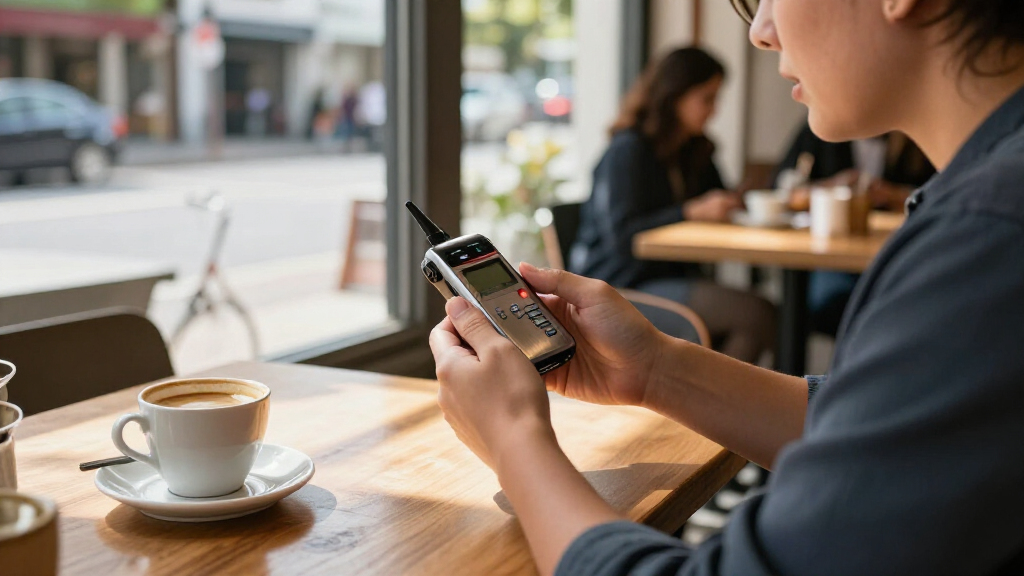
How We Picked
I ranked these digital voice recorders for journalists by how well their advertised features map to real reporting tasks: recording interviews, managing long sessions, locating and transferring files, and preparing transcripts. I gave more weight to practical control and workflow than to storage figures alone, since a large capacity does little for a reporter who cannot quickly confirm a recording or move it to an editing device. I also considered whether voice activation, playback, noise reduction, and transcription appear to serve a clear reporting need rather than simply lengthen a spec list.
The order reflects differences in use, not a claim that one device suits every newsroom. Models that combine broad capacity with features relevant to interview workflows rank ahead of basic record-and-playback options, while AI transcription products are judged with privacy and service dependence in mind. Where product details do not establish a feature or workflow clearly, I avoid treating it as a proven advantage. Buyers should confirm current recording formats, connection options, battery life, and transcription terms before relying on a recorder for publication work.
| digital voice recorders for journalist | Microphone |
|---|---|
| EVISTR L359 Digital Voice Reco | Built-in, mono |
| EVIDA 128GB Digital Voice Reco | Built-in, mono with noise cancellation |
| Arungo ZD70 128GB Digital Voic | Built-in stereo |
| Sunlan 16GB Digital Voice Reco | Built-in, mono with noise cancellation |
| Aiworth E36 Digital Voice Reco | — |
| 16GB Voice-Activated Digital V | Built-in stereo |
| Plaud Note Pro AI Voice Record | — |
| HoTiyan 8GB Digital Voice Reco | Built-in stereo |
| Tonfarb 136GB Digital Voice Re | — |
| EVISTR L357 64GB Digital Voice | Built-in stereo |
| Xelarvex 72GB Digital Voice Re | — |
| HoTiyan H-10003 Digital Voice | Built-in |
| iFLYTEK Offline Voice Recorder | — |
| Cappsu Digital Voice Recorder | — |
| Tonfarb 64GB Digital Voice Rec | Built-in stereo |
Factors to Consider When Choosing Digital Voice Recorders For Journalists
Choosing a recorder for reporting is less about collecting the most features and more about avoiding failures in the moments when a source is speaking. I would start with the assignment, the newsroom’s file-handling rules, and how quickly the recording must become usable text. These broader checks can matter more than a headline capacity number or an AI label.
Match the Recorder to the Interview Setting
A quiet one-on-one interview and a crowded press event place different demands on a recorder. For sit-down conversations, clear placement, easy level checks, and reliable playback may matter more than advanced processing. In a noisy room, microphone direction and distance from the speaker often make a greater difference than a feature described as noise reduction. A recorder cannot reliably repair clipped speech or a microphone buried in a bag. Before buying, think through whether you can keep it close to the source, use an external microphone if needed, and monitor the recording. When the assignment varies, choose a device and setup that let you adapt rather than assuming one recorder setting suits every room.
Treat Voice Activation as a Convenience, Not a Safety Net
Voice activation can reduce empty stretches in a file and may help when recording long proceedings, but it can also create gaps if a speaker begins quietly or pauses between phrases. Threshold controls, if available, affect how well it fits a particular room; air conditioning or crowd noise can complicate the result. For an interview that cannot be repeated, continuous recording is usually the safer default unless you have checked activation behavior under similar conditions. A short test recording helps reveal whether the recorder cuts off soft speech or captures unwanted background sound. Keep a backup method for high-stakes conversations when consent and newsroom policy allow it. The time saved from shorter files is useful only if the important words remain intact.
Choose Storage for Your File Workflow, Not Just Capacity
High-capacity models such as the 128GB EVISTR L359, EVIDA, and Arungo ZD70 may suit reporters who keep many assignments on one device, but capacity alone does not tell you how many hours will fit. Recording format, bitrate, and whether files are compressed all affect storage use and audio quality. A large archive can also make it harder to find the right interview if file naming and folder management are awkward. Check how recordings reach your computer or newsroom system, and confirm that the connection works with your actual devices. Regularly transferring and backing up files is safer than treating the recorder as permanent storage. If your workflow clears recordings after each assignment, a smaller-capacity model may be easier to manage.
Weigh Transcription Convenience Against Confidentiality
AI transcription can speed up quote searches and rough drafts, but it does not replace listening to the original audio before publication. Names, specialist terms, overlapping voices, and accents can all produce errors that change a quote’s meaning. Cloud-based services may send recordings or transcripts outside your newsroom’s systems, so check data handling and retention rules before uploading source material. An offline transcription option, such as the iFLYTEK model, may appeal when network access or privacy is a concern, but confirm its language support and export process. Also check whether transcription requires an account, an app, or ongoing service access. For sensitive reporting, your newsroom’s policy should guide the choice before convenience does.
Prioritize Fast, Certain Controls Under Deadline Pressure
Journalists often need to start recording without navigating menus, confirm that capture has begun, and replay a section quickly. A simple physical record control and an unmistakable recording indicator can reduce avoidable mistakes, especially during a quick doorstep interview. Extra menus and playback functions can be helpful, but they add little if the recorder is slow to operate or difficult to review. Before choosing, check whether you can lock controls, locate a particular file, and listen through headphones or the built-in speaker as your workflow requires. Consider who else might use the recorder, such as an editor or a rotating reporter, and favor controls that are easy to explain. Ease of use is a reporting safeguard, not just a comfort feature.
Check Power, Connections, and Backup Plans Before an Assignment
A recorder that holds plenty of audio still fails if its battery runs down or its files cannot be transferred when needed. Confirm the stated battery arrangements, charging method, and whether recording while connected to power is supported; do not assume these details from the model name. Match the transfer connection to your laptop or phone and check whether the manufacturer requires special software. For field work, carry a charging cable and plan a second recording method for unusually important interviews. Test the full chain before leaving: record a sample, play it back, transfer it, and confirm the file opens in your newsroom tools. That routine catches compatibility problems before they become reporting problems.
Frequently Asked Questions
Should I choose a recorder with AI transcription or a simpler recorder?
Choose AI transcription when turning several long interviews into searchable text is a regular part of your work and the transcription workflow fits newsroom policy. A basic recorder may be a better fit if you mainly need dependable audio and already have a preferred transcription service. Treat generated text as a draft: verify quotations against the recording, especially names, numbers, and ambiguous passages. Before buying an AI model, check whether it needs an app, internet access, an account, or a subscription. If source confidentiality is a concern, confirm where audio and transcripts are processed and stored.
Is 128GB necessary for recording interviews and press events?
Not for every journalist. A 16GB or 32GB recorder may be enough if you transfer and delete files regularly, while higher capacity can help when assignments run back to back or internet access is limited. The number of hours a device holds depends on its recording format and quality settings, so capacity labels do not provide a direct recording-time comparison. Consider how often you can back up files and how quickly you need to locate an old recording. A disciplined transfer routine may be more useful than extra memory.
Can voice activation safely record an important interview?
It can, but I would not rely on voice activation for an unrepeatable interview until I had tested it in similar conditions. A quiet opening, a low speaking voice, or pauses may cause a recorder to miss words depending on its activation behavior. Background noise can also keep recording when no one is speaking. For a high-stakes conversation, continuous recording is generally the safer choice, subject to consent and newsroom rules. Review the file soon after the interview so any gap is discovered while follow-up is still possible.
Do I need offline transcription for confidential source interviews?
Offline transcription can reduce dependence on network access and may suit reporting where uploading source material is not permitted. It does not automatically mean that every part of the workflow is private, so check where the device stores recordings and how transcription data is handled. Ask your editor or newsroom security lead which services are approved before processing confidential material. If the recorder’s offline language support or export options are limited, a secure newsroom tool may be a better fit. Keep the original audio and verify any transcript before using it in a story.
What should I check before using a new recorder for a live assignment?
Make a test recording and confirm that you can hear both sides of a conversation clearly, then play it back through the method you expect to use in the field. Transfer the sample file to your editing device and verify that it opens in your normal software. Check battery state, available storage, recording indicators, and whether any voice-activation or noise-reduction setting changes the sound. Practice starting and stopping recording without looking at the controls. These checks help uncover workflow problems before a source is waiting or an event is underway.
Conclusion
For the broadest mix of capacity and reporting-oriented features, I would start with the EVISTR L359 as best overall, while checking its transcription workflow against newsroom privacy rules. The best value depends on whether you need transcription: reporters who mainly record and replay can favor a simpler option such as the Sunlan 16GB, while those wanting more room may compare the EVISTR L357 and other larger-capacity playback models. For a best premium direction, look at the Plaud Note Pro or iFLYTEK Offline Voice Recorder when their transcription approach matches your work; the iFLYTEK is the more relevant specific pick when offline processing matters. For beginners, a straightforward recorder with playback, such as the Cappsu 32GB, keeps the first setup focused on capturing and checking audio. For long sessions, compare the high-capacity EVIDA, Arungo ZD70, and Aiworth E36; for any recorder, test transfer, playback, and activation behavior before trusting it with an important interview.