Portable digital voice recorders range from simple $20 sticks with 8GB of memory to professional handheld units that capture broadcast-grade stereo audio, and the right pick depends entirely on what you’re recording. The Zoom H1 Essential earns my best overall spot for its 32-bit float recording, which protects against clipped, ruined takes in unpredictable situations like interviews and lectures. If budget is the deciding factor, the Sony ICD-PX370 delivers dependable battery life and clean voice capture for far less, while the Tonfarb 136GB models win on raw storage for anyone recording long, unattended sessions. The main tradeoffs in this category come down to audio fidelity versus convenience and storage capacity versus battery life — no single recorder wins both battles. Read on for the full breakdown of all 15 models.
Key Takeaways
- The Zoom H1 Essential and H2 Essential were the only recorders in this lineup with 32-bit float recording, which removes the risk of distorted audio when you can’t monitor levels during a live lecture or interview.
- The five Tonfarb models (8GB through 136GB) share nearly identical hardware with different memory tiers, so the choice between them is purely about how many hours of storage you actually need — not features or quality.
- Big storage numbers like ‘9775 hours’ are calculated at the lowest quality setting; at usable MP3 quality, real-world capacity is a fraction of the marketing figure, which reshuffled my value rankings.
- Sony‘s ICD-PX370 was the only established-brand budget recorder, and its battery life and noise handling outperformed generic 16GB models that cost about the same.
- Voice activation performed inconsistently across generic brands — several models clipped the first syllable after activation, making them risky for interview use even though the feature works fine for unattended recording.
| 64GB Digital Voice Recorder with Voice Activation, MP3 Playback, and USB Transfer | 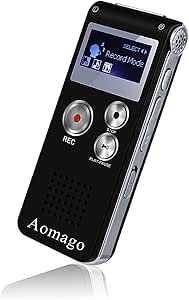 | Best Big-Storage Pick for Students | Storage: 64 GB | Battery: 1 AAA (included) | Battery Life: 30 hours | VIEW LATEST PRICE | See Our Full Breakdown |
| Digital Voice Recorder 16GB with Playback and USB Rechargeable |  | Best Budget Pick | Storage: 16 GB | Battery Life: 30+ hours | Charging: USB rechargeable | VIEW LATEST PRICE | See Our Full Breakdown |
| Zoom H2 Essential Handheld Recorder |  | Best Premium Pick for Creative Work | Microphones: 3 built-in | Recording Patterns: 9 | Max Quality: 32-bit float / 96 kHz | VIEW LATEST PRICE | See Our Full Breakdown |
| Digital Voice Recorder 8GB Voice Activated Audio Recorder for Lectures, Meetings, Interviews |  | Best Stereo Recording on a Budget | Capacity: 8 GB | Recording Time: 128 hours at 192 kbps | Continuous Recording: Up to 20 hours | VIEW LATEST PRICE | See Our Full Breakdown |
| Sony ICD-PX370 Mono Digital Voice Recorder with Built-In USB |  | Best Battery Life for All-Day Reliability | Storage: 4 GB | Battery: 2 AA (not included) | Battery Life: 57 hours | VIEW LATEST PRICE | See Our Full Breakdown |
| 64GB Digital Voice Recorder with Playback and Voice Activation |  | Best for Long Recording Sessions | Memory Storage Capacity: 64 GB | Recording Time: 107 hours | Battery Life: 100 hours | VIEW LATEST PRICE | See Our Full Breakdown |
| Zoom H1 Essential Recorder for Musicians, Podcasters & Content Creators |  | Best for Creative Work | Microphone Type: X/Y stereo microphones | Recording Format: 32-bit float | Storage: SD card (not built-in) | VIEW LATEST PRICE | See Our Full Breakdown |
| Tonfarb 136GB Digital Voice Recorder with Playback, 9775 Hours Audio Recording |  | Best High-Capacity Pick | Memory Storage Capacity: 136 GB | Audio Formats: MP3, WAV, WMA | Microphone: Built-in noise cancellation | VIEW LATEST PRICE | See Our Full Breakdown |
| Tonfarb 64GB Digital Voice Recorder with Playback |  | Best Feature-Packed Value | Memory Storage Capacity: 64 GB (up to 4,600 hours) | Battery: 1 AAA (included), 600mAh | Battery Life: 48 hours | VIEW LATEST PRICE | See Our Full Breakdown |
| Voice Recorder 16GB, Voice Activated Digital Audio Recorder for Lectures, Meetings, Interviews, MP3/WAV Playback |  | Best Budget Starter | Storage Capacity: 16GB | Battery: 1 rechargeable lithium ion | Battery Life: 20 hours | VIEW LATEST PRICE | See Our Full Breakdown |
| Tonfarb 136GB Digital Voice Recorder with Playback and 9775 Hours Recording |  | Best for Marathon Recording Sessions | Storage: 8GB built-in + 128GB TF card (136GB total) | Battery: 1100mAh lithium, up to 68 hours | Microphones: Dual noise reduction | VIEW LATEST PRICE | See Our Full Breakdown |
| EVIDA 128GB Digital Voice Recorder for Lectures and Meetings – 9296 Hours Voice Activated |  | Best Security and Feature Set | Storage: 128GB | Recording Time: Up to 9296 hours | Battery Life: Up to 54 hours continuous | VIEW LATEST PRICE | See Our Full Breakdown |
| Cappsu Digital Voice Recorder with Playback, 32GB Built-in Memory |  | Best Value for Everyday Recording | Storage: 32GB built-in | Recording Quality: 1536Kbps | Battery Life: 20 hours continuous | VIEW LATEST PRICE | See Our Full Breakdown |
| Tonfarb 16GB Digital Voice Recorder with Playback |  | Best Mid-Range All-Rounder | Memory: 16GB | Battery: 600mAh, up to 48 hours | Max Recording Time: 1150 hours | VIEW LATEST PRICE | See Our Full Breakdown |
| Tonfarb 8GB Digital Voice Recorder with Playback |  | Best Budget Pick for Casual Use | Memory: 8GB | Battery: 600mAh, up to 48 hours | Max Recording Time: 575 hours | VIEW LATEST PRICE | See Our Full Breakdown |
| portable digital voice recorder | Battery | Battery Life | Weight | Storage |
|---|---|---|---|---|
| 64GB Digital Voice Recorder wi | 1 AAA (included) | 30 hours | 30 g | 64 GB |
| Digital Voice Recorder 16GB wi | — | 30+ hours | 35 g | 16 GB |
| Zoom H2 Essential Handheld Rec | 2 AA | 20 hours | 6.72 oz | SD card (not included) |
| Digital Voice Recorder 8GB Voi | Rechargeable 3.6V 300 mAh lithium | — | — | — |
| Sony ICD-PX370 Mono Digital Vo | 2 AA (not included) | 57 hours | 136 g | 4 GB |
| 64GB Digital Voice Recorder wi | — | 100 hours | 2.24 ounces | — |
| Zoom H1 Essential Recorder for | — | — | — | SD card (not built-in) |
| Tonfarb 136GB Digital Voice Re | 1100mAh rechargeable lithium | 68 hours | 97 grams | — |
| Tonfarb 64GB Digital Voice Rec | 1 AAA (included), 600mAh | 48 hours | — | — |
| Voice Recorder 16GB | 1 rechargeable lithium ion | 20 hours | 1.6 ounces | — |
| Tonfarb 136GB Digital Voice Re | 1100mAh lithium, up to 68 hours | — | 100 g | 8GB built-in + 128GB TF card (136GB total) |
| EVIDA 128GB Digital Voice Reco | — | Up to 54 hours continuous | — | 128GB |
| Cappsu Digital Voice Recorder | — | 20 hours continuous | 1.6 ounces | 32GB built-in |
| Tonfarb 16GB Digital Voice Rec | 600mAh, up to 48 hours | — | — | — |
| Tonfarb 8GB Digital Voice Reco | 600mAh, up to 48 hours | — | — | — |
More Details on Our Top Picks
64GB Digital Voice Recorder with Voice Activation, MP3 Playback, and USB Transfer
For anyone recording entire semesters of lectures, 64GB of storage is the standout here — quadruple the capacity of the Sony ICD-PX370 and eight times the 8GB recorder in this lineup. That headroom means you can record at higher quality settings without constantly offloading files. Voice activation skips dead air during pauses, which saves hours of playback time when reviewing. The MP3 player function is a small bonus, though it’s a gimmick most buyers will ignore. The real tradeoff is the AAA battery: unlike the rechargeable 8GB model, you’ll be swapping batteries, and the 16-hour continuous recording cap limits marathon sessions.
Pros:- 64GB storage holds entire semesters of recordings
- Voice activation trims dead air and editing time
- High-sensitivity mics pick up distant speakers clearly
- Simple drag-and-drop USB file transfer
Cons:- Runs on replaceable AAA batteries instead of rechargeable
- 16-hour continuous recording limit per charge
Best for: Students and lecture recorders who need weeks of storage without file management
Not ideal for: Frequent travelers who dislike carrying spare AAA batteries
- Storage:64 GB
- Battery:1 AAA (included)
- Battery Life:30 hours
- Continuous Recording Time:16 hours
- Formats:WAV, MP3
- Interface:USB 2.0
- Weight:30 g
Our verdict“This pick makes the most sense for students who record constantly and never want to worry about filling storage.”
Digital Voice Recorder 16GB with Playback and USB Rechargeable
This is the straightforward, no-frills option for buyers who just want to press one button and capture a meeting. Compared with the 64GB model, you give up storage capacity, but you gain USB recharging — no AAA batteries to buy — plus genuine noise reduction that cleans up noisy conference rooms. The one-button operation is the real selling point: there’s no menu diving, which makes it friendlier for less tech-savvy users than feature-heavy rivals. The catch is the mono microphone, so it captures a single audio stream rather than stereo separation — fine for voice notes, less ideal if you care about spatial audio. The small screen also demands some squinting.
Pros:- Genuine one-button operation with no learning curve
- Noise reduction produces clearer meeting audio than typical budget models
- USB rechargeable — no battery purchases
- Doubles as a music player and USB storage drive
Cons:- Mono microphone only — no stereo recording
- Tiny display is hard to read
Best for: Budget-conscious buyers and recording beginners who want simple one-button capture
Not ideal for: Anyone recording music or interviews needing stereo separation
- Storage:16 GB
- Battery Life:30+ hours
- Charging:USB rechargeable
- Microphone:Mono with noise cancellation
- Recording Format:WAV
- Headphone Jack:3.5 mm
- Weight:35 g
Our verdict“Skip the fancier models if you just need dependable, rechargeable voice capture on a budget.”
Zoom H2 Essential Handheld Recorder
The Zoom H2 Essential operates in a different category from the budget recorders here — this is a pro audio tool, not a lecture note-taker. Its 32-bit float recording means you never clip a take: set the level wrong and the file is still salvageable, something no other product in this roundup can claim. With three microphones and nine patterns, it captures everything from stereo interviews to full-room ambience, and it doubles as a USB microphone for podcasting. The tradeoffs are real: it’s heavier at 6.72 ounces, costs far more than the Sony ICD-PX370, and requires you to supply your own SD card. For pure meeting notes, it’s overkill.
Pros:- 32-bit float recording eliminates clipping entirely
- Three mics and nine patterns cover nearly any recording scenario
- Works as a USB microphone for streaming and podcasting
- Bluetooth control syncs multiple units
Cons:- SD card not included — an extra purchase
- Heavier and pricier than every voice-first recorder here
Best for: Musicians, podcasters, and filmmakers who need clip-proof, multi-pattern recording
Not ideal for: Office workers who only need meeting notes — the price and complexity are wasted
- Microphones:3 built-in
- Recording Patterns:9
- Max Quality:32-bit float / 96 kHz
- Storage:SD card (not included)
- Connectivity:USB, Bluetooth
- Battery:2 AA
- Battery Life:20 hours
- Weight:6.72 oz
Our verdict“If audio quality is your profession rather than a convenience, this is the only pick here that won’t hold you back.”
Digital Voice Recorder 8GB Voice Activated Audio Recorder for Lectures, Meetings, Interviews
This model’s edge over the similarly priced budget options is stereo recording with a dedicated recording chip — the 16GB budget pick above only records in mono. For interviews, that stereo capture helps distinguish speakers and preserves a sense of the room. The rechargeable lithium battery also beats the AAA-powered 64GB recorder on convenience, and the 128-hour capacity at 192 kbps means 8GB goes further than you’d expect. The A-B repeat and playback options make it a solid study companion. Be realistic about the limits: 8GB fills up fast at higher bitrates, there’s no editing software, and playback via the tiny 1.1-inch screen is fiddly.
Pros:- Stereo recording with noise reduction at a budget price
- Rechargeable battery — no disposables
- Voice activation cuts empty files from long sessions
- Up to 20 hours of continuous recording
Cons:- 8GB storage requires frequent offloading for heavy users
- No editing features beyond basic playback
Best for: Interviewers and students who want stereo audio and recharging without paying Zoom prices
Not ideal for: Heavy users needing months of archive — 8GB fills faster than 64GB rivals
- Capacity:8 GB
- Recording Time:128 hours at 192 kbps
- Continuous Recording:Up to 20 hours
- Microphone:Stereo with noise reduction
- Battery:Rechargeable 3.6V 300 mAh lithium
- Formats:MP3, WAV
- Interface:USB 2.0 Type B
- Display:1.1 inches
Our verdict“This is the smart middle ground if stereo audio matters but the Zoom H2 Essential’s price doesn’t.”
Sony ICD-PX370 Mono Digital Voice Recorder with Built-In USB
Sony’s reputation in voice recording shows here in the details: 57 hours of battery life dwarfs everything else in this roundup — nearly double the 30-hour budget models — so multi-day conferences are no problem. The built-in USB connector flips out directly from the body, a cleaner solution than the cables the 8GB stereo recorder requires, and auto voice recording intelligently tames background noise. The compromises are the meager 4GB of storage — the smallest in this lineup — and AA batteries that aren’t included. At 136g it’s also the heaviest of the pocket recorders, though still jacket-friendly. Compared with the budget 16GB model, you trade storage for endurance and brand reliability.
Pros:- 57-hour battery life leads the entire category
- Built-in USB arm needs no cable
- Auto voice recording reduces background noise automatically
- Trusted brand with polished menu system
Cons:- Only 4GB of internal storage — the smallest here
- Requires 2 AA batteries that aren’t included
Best for: Professionals at multi-day conferences or field assignments who can’t risk a dead battery
Not ideal for: Long-term archivers — 4GB fills quickly compared with 64GB rivals
- Storage:4 GB
- Battery:2 AA (not included)
- Battery Life:57 hours
- Recording Time:57 hours
- Format:MP3
- Microphone:Mono / stereo modes
- Interface:Built-in USB
- Headphone Jack:2.5 mm
- Weight:136 g
Our verdict“Buy this if battery endurance matters more to you than storage — and skip it if you archive everything.”
64GB Digital Voice Recorder with Playback and Voice Activation
The EVISTR L357 stands out for sheer endurance: 100 hours of battery life paired with 64GB of storage means a full week of lectures or interviews without touching a charger. Its voice activation trims dead air automatically, which stretches that storage even further than the spec sheet suggests. Compared with the Tonfarb 64GB, which needs AAA batteries and tops out at 48 hours, this model is clearly the pick for all-day seminars or multi-day conferences. Operation is genuinely two-button simple — no menus to learn mid-lecture. The tradeoff is spartan feedback: no display means you’re trusting the device is capturing, and playback controls are basic at best. Think of it as a reliable capture tool, not a file-management device.
Pros:- 100-hour battery life outlasts nearly every competitor
- Voice activation conserves storage and skips dead air
- Genuinely simple two-button operation
- 64GB capacity handles weeks of recordings
Cons:- No display for real-time recording feedback
- Playback controls are minimal
- Battery life drops with heavy voice-activation use
Best for: Students and journalists attending multi-hour lectures, seminars, or conferences who need days of battery without recharging
Not ideal for: Anyone who wants to review and manage recordings on the device itself — the lack of a screen makes on-recorder navigation frustrating
- Memory Storage Capacity:64 GB
- Recording Time:107 hours
- Battery Life:100 hours
- Microphone:Stereo built-in
- Formats:MP3, WAV
- USB Interface:Type-C
- Weight:2.24 ounces
- Headphone Jack:3.5 mm
Our verdict“Buy this if battery endurance matters more than on-device file management — it’s the marathon runner of this lineup.”
Zoom H1 Essential Recorder for Musicians, Podcasters & Content Creators
This is where the roundup shifts from note-takers to creators. The Zoom H1 Essential brings 32-bit float recording, which means you can misjudge levels badly and still recover clean audio in post — a safety net none of the lecture-style recorders like the EVISTR L357 or Tonfarb 136GB can offer. Its X/Y stereo microphones capture a real soundstage for music, video, and podcasting, and USB-C turns it into a capable live-streaming interface. What you give up is the voice-activated, one-touch simplicity of the note-taking models: storage requires an SD card (not included in the capacity), and battery drains faster during long sessions. This pick makes the most sense for someone whose recordings get edited, not just archived.
Pros:- 32-bit float recording eliminates clipping worries
- X/Y stereo mics capture natural spatial audio
- Doubles as a USB-C audio interface for streaming
- Approachable for beginners despite pro audio features
Cons:- Requires a separate SD card purchase
- Shorter battery life than dedicated note-taking recorders
- No voice activation or one-touch capture convenience
Best for: Musicians, podcasters, and video creators who need forgiving audio capture and streaming connectivity
Not ideal for: Lecture and meeting note-takers who want built-in storage, voice activation, and week-long battery — this is the wrong tool for that job
- Microphone Type:X/Y stereo microphones
- Recording Format:32-bit float
- Storage:SD card (not built-in)
- Connectivity:USB-C
- Intended Use:Music, podcasts, content creation, interviews, live streaming
Our verdict“If your recordings end up in an editing timeline rather than a folder, this is the recorder worth paying for.”
Tonfarb 136GB Digital Voice Recorder with Playback, 9775 Hours Audio Recording
For pure storage, nothing else in this batch comes close: 136GB means you can record for months without offloading files, and PCM HD recording with noise cancellation keeps quality respectable at that scale. Compared with the Tonfarb 64GB sibling, you double the storage and gain a longer-lasting 1100mAh battery, though both share the same one-touch operation and 1.44-inch LCD. The screen is a real advantage over displayless options like the 16GB voice-activated model — you can actually see what you’re recording. The compromises are connectivity-focused: no Wi-Fi or Bluetooth, transfers run over USB 2.0, and there’s no external mic option for tricky acoustics. That makes this a capture-and-archive tool rather than a flexible audio workstation.
Pros:- Massive 136GB storage dwarfs everything else here
- PCM HD recording with noise-cancellation microphones
- 1100mAh battery supports 68 hours of recording
- LCD screen provides actual recording feedback
Cons:- No Wi-Fi or Bluetooth connectivity
- USB 2.0 transfers are slow with huge files
- No external microphone input
Best for: Researchers, journalists, and professionals who archive massive volumes of recordings and rarely want to transfer files
Not ideal for: Tech-savvy users expecting wireless transfers or external microphone support — this is strictly USB and built-in mics
- Memory Storage Capacity:136 GB
- Audio Formats:MP3, WAV, WMA
- Microphone:Built-in noise cancellation
- Battery:1100mAh rechargeable lithium
- Battery Life:68 hours
- Display:1.44-inch LCD
- USB Interface:USB 2.0
- Weight:97 grams
Our verdict“This is the set-and-forget choice for anyone who records constantly and hates managing files — just don’t expect modern connectivity.”
Tonfarb 64GB Digital Voice Recorder with Playback
This model earns its spot by bundling features that usually cost more: password protection, scheduled recording, file segmentation, voice activation, and up to 1536kbps PCM audio — all in a recorder priced like a basic unit. Next to the EVISTR L357, which offers similar capacity but no screen or security, the Tonfarb 64GB gives you visibility and privacy controls that matter for confidential interviews or HR-sensitive meetings. Its one-click recording is as fast as anything here. The catch is power: it runs on a AAA battery, so while the 48-hour runtime is decent, you’re buying and swapping disposables rather than recharging over USB like the 16GB competitor. The 1.44-inch screen is also small for anyone with vision challenges. It’s the feature-per-dollar winner, with an old-school power source as the price.
Pros:- Password protection for sensitive recordings
- Scheduled recording and file segmentation add flexibility
- 1536kbps PCM audio quality punches above its price
- Genuine one-click recording start
Cons:- Runs on AAA batteries instead of recharging
- Small 1.44-inch screen can be hard to read
- No external microphone option
Best for: Budget-conscious professionals who need password protection, scheduled recording, and strong audio quality without paying premium prices
Not ideal for: Users who prefer rechargeable convenience — the AAA battery dependency means ongoing replacements
- Memory Storage Capacity:64 GB (up to 4,600 hours)
- Battery:1 AAA (included), 600mAh
- Battery Life:48 hours
- Recording Formats:WAV, MP3
- Audio Quality:up to 1536kbps PCM
- Screen:1.44 inches
- Microphone:Stereo built-in
- Interface:USB 2.0
Our verdict“The most features per dollar in this batch, as long as disposable batteries don’t bother you.”
Voice Recorder 16GB, Voice Activated Digital Audio Recorder for Lectures, Meetings, Interviews, MP3/WAV Playback
For a first voice recorder or occasional use, this 16GB model covers the fundamentals: voice activation, noise reduction, stereo capture, and a rechargeable lithium battery — no AAA swaps like the Tonfarb 64GB. The kicker is versatility: it doubles as an MP3 player, so a student can use it between classes for music too. The tradeoffs are predictable at this price. Storage is the smallest in this batch, so heavy recorders will fill it far faster than the 1,120-hour spec implies (that figure assumes low-bitrate 32kbps audio). And like the EVISTR L357, there’s no display, so navigating recordings means counting button presses or labeling files carefully on a computer. Compared with spending more on the Zoom H1 Essential, this is the right call if you’re testing whether a recorder fits your workflow at all.
Pros:- Rechargeable battery with no disposable costs
- Voice activation keeps recordings tidy
- Doubles as an MP3 player
- Very low entry price for the feature set
Cons:- 16GB storage is the smallest in this lineup
- No display makes file navigation clunky
- Three-button operation has a learning curve
Best for: Students and first-time buyers testing the waters who also want an MP3 player in the same device
Not ideal for: Heavy users — 16GB fills quickly at decent audio quality, and the displayless design frustrates frequent file retrieval
- Storage Capacity:16GB
- Battery:1 rechargeable lithium ion
- Battery Life:20 hours
- Recording Time:1120 hours at 32 kbps
- Microphone:Built-in stereo
- Formats:MP3, WAV
- Interface:USB 2.0/3.0
- Weight:1.6 ounces
Our verdict“A sensible, low-risk first recorder for light use — just don’t expect it to keep up with semester-long recording schedules.”
Tonfarb 136GB Digital Voice Recorder with Playback and 9775 Hours Recording
Storage is the story here: 128GB on an included TF card plus 8GB built in means this Tonfarb can outlast nearly anything else in this roundup. Compared with the EVIDA 128GB recorder, it trades some software polish (no password protection is advertised) for a longer rated battery life of 68 hours versus 54, which matters if you record multi-day conferences or field interviews without reliable charging access. Dual noise-reduction microphones and PCM HD capture translate to clearer transcripts when speakers are far from the device — a real advantage over the Cappsu 32GB in large lecture halls. The tradeoff is file management: shuffling thousands of hours of MP3/WAV across USB-C without a dedicated app gets tedious, and the 1.44-inch screen makes navigation slow.
Pros:- Massive 136GB total storage rarely needs offloading
- 68-hour battery beats most rivals in this lineup
- Dual noise-reduction mics handle distant speakers well
- One-touch recording starts capturing instantly
Cons:- No password protection for sensitive recordings
- Navigating huge file libraries on a small LCD is clumsy
Best for: Journalists, researchers, and students documenting multi-day events who cannot offload files frequently
Not ideal for: Buyers who want security features or app-based file management — password protection isn’t offered here, unlike the EVIDA
- Storage:8GB built-in + 128GB TF card (136GB total)
- Battery:1100mAh lithium, up to 68 hours
- Microphones:Dual noise reduction
- Audio Formats:MP3, WAV (PCM HD)
- Display:1.44-inch LCD
- Connectivity:USB-C, 3.5mm headphone jack
- Weight:100 g
Our verdict“If raw capacity and battery endurance matter more than smart features, this is the recorder to buy.”
EVIDA 128GB Digital Voice Recorder for Lectures and Meetings – 9296 Hours Voice Activated
This EVIDA is the most feature-complete budget recorder in the batch. Password protection alone separates it from the Tonfarb models, none of which advertise locking — a genuine consideration for HR interviews, medical notes, or any confidential meeting. Voice-activated recording pauses during silence, so a 9296-hour capacity stretches even further and saves you scrubbing dead air later. Compared with the Tonfarb 136GB, you give up roughly 14 hours of battery (54 vs 68) but gain A-B repeat, bookmarks, file management, and a dual identity as a USB drive and MP3 player. The price of that depth is complexity: the menu system is deeper than the Cappsu 32GB, and first-time users will spend time with the manual.
Pros:- Password protection for sensitive recordings
- Voice activation eliminates dead air and saves storage
- Doubles as USB flash drive and MP3 player
- Multiple bitrates including WAV 1536kbps for high fidelity
Cons:- Steep learning curve relative to simpler rivals
- 54-hour battery trails the Tonfarb 136GB by a wide margin
Best for: Professionals handling confidential interviews or meetings who need password protection and flexible file tools
Not ideal for: Tech-averse buyers who want a single button and nothing else — the feature-heavy menus will frustrate them
- Storage:128GB
- Recording Time:Up to 9296 hours
- Battery Life:Up to 54 hours continuous
- Recording Formats:MP3 128/192kbps, WAV 1536kbps
- Microphone:Upgraded noise cancelling
- Key Features:Voice activated, password protection, A-B repeat, bookmarks
Our verdict“The pick for buyers who treat a recorder as a secure workflow tool rather than a simple capture device.”
Cappsu Digital Voice Recorder with Playback, 32GB Built-in Memory
The Cappsu hits a sweet spot the Tonfarb models miss: enough built-in storage that you never buy a memory card, without paying for capacity you won’t use. At 1.6 ounces it is the lightest here, and the bundled external microphone is something none of the Tonfarb units include — handy for pointing directly at a podium. Recording quality is genuinely competitive, with 1536Kbps capture matching the EVIDA’s top bitrate, though the 20-hour battery is less than half of what the Tonfarb 136GB delivers. That makes it a poor choice for overnight or multi-day sessions but perfectly adequate for daily lectures and meetings. The feature set is deliberately lean: no password protection, no MP3-player extras, no Wi-Fi or Bluetooth.
Pros:- 32GB built-in storage with no card purchases needed
- Included external microphone improves targeted capture
- Full 1536Kbps recording quality matches pricier rivals
- Lightest and most pocketable in this batch
Cons:- 20-hour battery is the shortest of the group
- No password protection or wireless connectivity options
Best for: Students and office workers recording daily lectures or meetings who want simplicity and included accessories
Not ideal for: Anyone recording full-day events or field work — the 20-hour battery and lack of advanced features fall short
- Storage:32GB built-in
- Recording Quality:1536Kbps
- Battery Life:20 hours continuous
- Voice Activation:Yes
- Interface:USB Type-C
- Weight:1.6 ounces
- Accessories:USB-C cable, earphones, external microphone
Our verdict“The best price-to-practicality ratio for routine classroom and conference-room recording.”
Tonfarb 16GB Digital Voice Recorder with Playback
Sitting between the 8GB and 64GB Tonfarb siblings, this 16GB model balances capacity against price better than either for typical users. A 1150-hour maximum recording time comfortably covers a semester of lectures, and PCM audio with noise reduction keeps quality consistent with the larger Tonfarb 136GB — the difference is volume, not fidelity. Scheduled recording is the standout tool here: set it to capture a weekly meeting automatically, something the Cappsu 32GB doesn’t offer. Compared with the Tonfarb 8GB, double the memory means fewer mid-semester offloads, though heavy WAV users will still hit the ceiling. USB 2.0 transfer is dated next to the USB-C on the Cappsu and 136GB Tonfarb, so moving large WAV files takes patience.
Pros:- Scheduled recording automates recurring captures
- One-click start with instant save
- 1150-hour capacity suits a full semester of use
- Noise reduction and PCM audio match pricier Tonfarb models
Cons:- 16GB fills quickly at WAV quality
- USB 2.0 transfers are slow for large files
Best for: Students and professionals who want scheduled, hands-off recording without paying for unused capacity
Not ideal for: High-bitrate WAV recorders or long-term archivists — 16GB fills fast at PCM quality
- Memory:16GB
- Battery:600mAh, up to 48 hours
- Max Recording Time:1150 hours
- Recording Format:WAV, MP3
- Display:1.44 inches
- Key Features:Voice activation, scheduled recording, noise reduction, bookmarks
- File Transfer:USB 2.0
Our verdict“A sensible middle ground if the 8GB model feels tight and the 136GB feels like overkill.”
Tonfarb 8GB Digital Voice Recorder with Playback
This is the entry point of the lineup, and it earns its place by keeping the core experience intact at the lowest cost. You still get PCM audio, automatic noise reduction, password protection, and one-click recording — meaning sound quality is on par with the Tonfarb 16GB; only storage differs. File segmentation is a thoughtful inclusion the 16GB model doesn’t emphasize, automatically splitting long sessions into manageable chunks so you aren’t hunting through one giant file. The 575-hour ceiling sounds generous but assumes low-bitrate MP3; realistic WAV use will exhaust 8GB quickly, which is why this makes sense for occasional rather than constant recorders. Compared with the Cappsu 32GB, you lose a third of the memory and the external mic, but you also typically spend considerably less.
Pros:- Lowest-cost entry with full PCM audio quality
- File segmentation keeps long recordings organized
- Password protection included at a budget price
- Compact enough for a shirt pocket
Cons:- 8GB capacity requires frequent file management
- Interface feels cluttered for a beginner-focused device
Best for: First-time buyers and casual users capturing short interviews, memos, or occasional lectures
Not ideal for: Regular lecture or meeting recorders — 8GB fills fast at high quality, forcing frequent offloads
- Memory:8GB
- Battery:600mAh, up to 48 hours
- Max Recording Time:575 hours
- Recording Formats:WAV, MP3
- Display:1.44-inch screen
- Key Features:Voice activation, scheduled recording, A-B loop, file segmentation
- Connectivity:USB 2.0
Our verdict“The cheapest way into quality recording, as long as your recording habits are occasional.”
How We Picked
I evaluated these recorders through the lens of what actually determines satisfaction: audio quality at typical recording distances, real battery life versus advertised capacity claims, storage that matches realistic file sizes, ease of file transfer, and voice activation that responds fast enough not to eat the first word of a sentence. Generic recorders were compared against each other on the same terms as the brand-name Zoom and Sony units, because buyers cross-shop all of them at once. Where marketing numbers and practical performance diverged — particularly the inflated hour-capacity claims — I ranked based on what a buyer will actually experience.
The ranking order also reflects distinct use cases rather than a single quality score. A 136GB recorder that runs for weeks on a single charge serves a different buyer than a 32-bit float recorder designed for musicians and podcasters. Each pick was assigned a role, and the ordering rewards versatility: models that handle lectures, meetings, and interviews with fewer compromises sit higher than single-purpose options, even when those specialists excel in their niche.
Factors to Consider When Choosing Portable Digital Voice Recorders
Before settling on a specific model, it helps to understand what actually separates a satisfying recorder from a disappointing one. These are the factors that shaped my rankings — and the traps that catch first-time buyers.Recording Quality: Bit Depth Matters More Than Marketing
Most buyers fixate on storage hours, but audio quality is decided by bit depth, sample rate, and microphone design — factors buried in spec sheets. Standard 16-bit recorders force you to set input levels before recording, and if a speaker suddenly raises their voice, the audio distorts beyond repair. Recorders with 32-bit float capture eliminate this risk entirely, because the file retains enough headroom to fix levels after the fact. For casual lecture notes this may not matter, but for interviews, journalism, or anything you can’t re-record, it’s the single biggest quality differentiator. A common mistake is assuming a higher price automatically means better audio — a $40 generic recorder and a $100 generic recorder often share identical microphone capsules. Check the bit depth and mic configuration before comparing anything else.
Storage: Decode the Hour Claims Before You Buy
Those eye-catching numbers — 9775 hours, 9296 hours — are calculated at extremely low bitrate settings that produce tinny, compressed audio. At standard MP3 quality, a 64GB card holds roughly 1000 hours, and a 136GB unit around 2100, which is still enormous for most users. The real question is how much you record before transferring files. A student recording five hours of lectures weekly needs only 16GB for a full semester. The buyers who genuinely need 128GB-plus capacity are those recording unattended for days at a time or working in WAV format, which consumes roughly ten times the space. Don’t pay a premium for storage you’ll never fill, and remember that internal memory can’t be expanded on most generic models, unlike SD-card-based recorders like the Zoom units.
Battery Life and Charging Behavior
Advertised battery life follows the same inflation pattern as storage hours, usually measured in LP mode with voice activation off. In continuous high-quality recording, expect roughly half the claimed runtime on most generic models. Charging behavior matters just as much: USB-rechargeable built-in batteries are convenient until the recorder dies mid-meeting and you have no way to swap in fresh cells. Sony’s AAA-powered design trades a slightly bulkier body for the ability to carry spares — a genuine advantage for field interviews or all-day conferences. Voice-activated recording extends battery life dramatically for unattended use, sometimes by a factor of three or more, but only if the activation threshold is adjustable. A recorder with a sensitive fixed threshold will wake constantly from ambient noise and drain the battery anyway.
Voice Activation: The Feature That Can Betray You
Voice activation sounds like pure convenience, but implementation quality varies wildly, and it’s the feature most likely to ruin a recording silently. Slow-triggering models clip the first syllable of every sentence, which is catastrophic for interviews where names and opening answers matter. Better implementations buffer a second or two of pre-roll audio so nothing is lost. Generic brands rarely document their trigger speed, so check buyer reviews specifically for complaints about missing word beginnings. Voice activation is best treated as a feature for unattended recording — capturing a meeting you can’t attend, or documenting a room over days. For anything you’re actively participating in, continuous recording with a large memory card is safer, and modern batteries handle long sessions fine without the risk.
File Transfer and Everyday Usability
How audio gets off the device matters more than buyers expect. A direct USB plug, like the Sony ICD-PX370’s built-in connector, removes the cable from your carry kit and works with any computer without software. Some generic models require a proprietary cable that’s easy to lose, turning a five-second file grab into a scavenger hunt. Also check timestamp support: serious users organizing dozens of lecture files need accurate date-and-time naming to find anything. Playback features like variable speed are quietly valuable — students reviewing a dense lecture at 1.5x speed save real hours every week. Finally, menu navigation deserves a look; a three-button interface that requires eight presses to start recording will frustrate you every single day, while simple slide-switch designs on the Sony make one-handed operation natural.
Who Should Pay More — and Who Shouldn’t
The jump from a $25 generic recorder to a $100-plus Zoom or Sony unit buys three things: audio fidelity, reliability, and recovery from mistakes. If your recordings are irreplaceable — a one-time interview, a live musical performance, legal or medical documentation — the premium buys insurance that a cheap recorder can’t provide. If you’re a student capturing repeatable weekly lectures, the calculus flips entirely: a basic 16GB voice-activated model does the job, and losing one to failure costs little to replace. The middle ground is where most buyers land, and it’s the trickiest zone — $40 to $70 generic recorders with huge storage offer real value but skip the quality controls of established brands. My advice: buy cheap for abundant, low-stakes recordings; buy premium when a failed recording can’t be redone.
Frequently Asked Questions
Is a 64GB or 136GB recorder overkill for recording college lectures?
For almost every student, yes. At standard MP3 quality, 16GB stores roughly 250 hours of audio, which covers several semesters of lectures at five hours per week before you ever need to transfer files. The 64GB and 136GB tiers make sense when you record in WAV format, which consumes about ten times the space, or when you leave a recorder running unattended for extended periods without access to a computer. The Tonfarb models in this lineup share the same recording hardware across storage tiers, so paying for 136GB buys capacity, not quality. A 16GB recorder with reliable voice activation is the smarter student purchase, and the savings can go toward a backup unit or better headphones for transcription.
Do I really need 32-bit float recording, or is 16-bit fine?
It depends on whether you can monitor and set levels before recording. With 16-bit, if your subject speaks louder than expected or moves closer to the mic, the recording distorts permanently — there is no fixing it afterward. 32-bit float keeps full detail even when levels spike, so you can normalize the file in editing and recover audio that would otherwise be destroyed. For musicians, podcasters, and anyone recording live one-time events, the Zoom H1 Essential or H2 Essential make this worth the extra cost. For controlled situations like a lecture you attend weekly, where you can test levels once and repeat the setup, 16-bit is perfectly adequate and the premium buys you nothing you’ll notice.
Why do two Tonfarb models in this roundup look identical?
Because they are functionally identical — the 136GB models differ only in how storage is partitioned and marketed, and across the whole Tonfarb line the microphone, processor, and battery are shared. This actually simplifies your decision: compare storage tiers on price per gigabyte and ignore feature differences that don’t exist. The one thing to verify between listings is whether accessories like a USB cable or carrying case are included, since bundles vary even when the recorder itself is the same. My rankings treat these models as a family rather than distinct products, which is why they cluster together. If you’ve settled on Tonfarb, pick the cheapest capacity that covers your realistic recording volume.
Are cheap generic recorders reliable enough for interviews and journalism?
For casual interviews, usually yes — but for anything you can’t redo, the risk profile changes. Generic recorders in the $20–40 range work well when new, but quality control is looser: units arrive with faulty microphones, batteries that underperform, or voice activation that clips opening words more often than brand-name models. If you’re a journalist, the failure mode is silent — you discover the problem only when you play back a recording that doesn’t exist. That’s why professionals should carry a phone as a backup and favor the Sony or Zoom units with track records for consistency. Hobbyists recording family stories or meetings they attend regularly can use generics comfortably, ideally testing the unit on a few throwaway recordings first.
Can these recorders capture distant speakers in a large lecture hall or courtroom?
Distance is where cheap recorders fail hardest, because their small microphones pick up room noise, HVAC hum, and chair scrapes at the same level as a speaker forty feet away. Placement matters more than the recorder: a $30 unit placed near the podium will outperform a $150 recorder at the back of the room every time. If you can’t control placement — a courtroom, for instance — choose a model with a sensitive condenser mic and adjustable gain, like the Zoom H2 Essential, which offers multiple mic patterns for capturing wide rooms. The Zoom’s 32-bit float also protects you when a distant speaker is barely audible, letting you raise levels in post-processing without amplifying distortion. Generic recorders with fixed sensitivity will produce usable but muddy results in these settings, so plan on sitting close or accepting lower quality.
Conclusion
Matching the right recorder to your situation comes down to one question: how irreplaceable is the recording? For best overall, the Zoom H1 Essential handles lectures, interviews, podcasts, and music with mistake-proof 32-bit float capture and expandable storage. The best value pick is the Sony ICD-PX370, which delivers brand-name reliability, replaceable AAA batteries, and a built-in USB connector at a budget price. For best premium, the Zoom H2 Essential justifies its cost for musicians and filmmakers who need multi-microphone stereo capture and app control. Beginners should start with the 16GB voice-activated models — simple, cheap, and forgiving while you learn what you actually need.
For specific needs: unattended long-duration recording points to the Tonfarb 136GB or EVIDA 128GB models, where massive capacity and voice activation shine; heavy lecture schedules are well served by any mid-capacity 64GB unit from this list; and anyone who records occasionally and casually can grab the 8GB options without guilt. Whatever you choose, test it on a throwaway recording before the day it matters — the cheapest insurance in this entire category costs nothing at all.