TL;DR
The FCC authorized SpaceX to deploy up to 1 million proposed data-centre satellites under the Starmind name, with milestones running from 2033 to 2040. The approval covers specified radio links and deployment conditions; the agency did not assess whether orbital data centres will work or prove commercially viable.
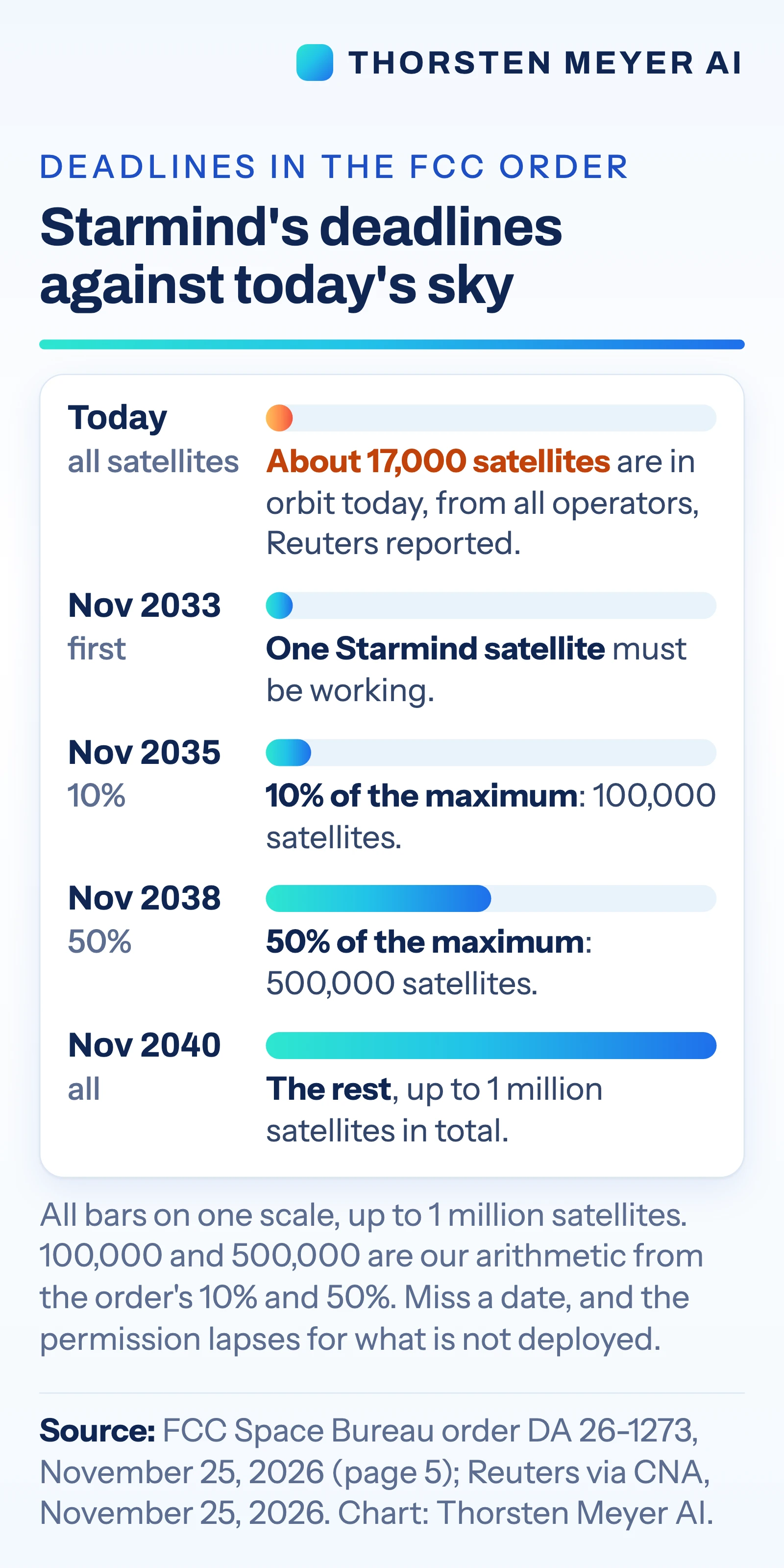
The FCC Space Bureau granted most of SpaceX’s application and set deployment milestones: one working satellite by November 25, 2033, half the authorized fleet by 2038 and the full deployment by 2040. The authorization can lapse if SpaceX misses those deadlines. The order places the proposed satellites in orbital shells between 500 and 1,002 kilometers above Earth.

Get everyday essentials delivered free with Prime
- Fast, free delivery on millions of items
- Prime Video, Amazon Music and more included
- Member-only deals all year
The license concerns radio use. It covers backup and emergency control links on two radio bands; SpaceX says the satellites would carry their main data traffic through laser links between satellites. The FCC said whether the data centres can function or make economic sense falls outside the questions it decided in this licensing proceeding.
The agency denied petitions seeking rejection of the plan from Amazon’s satellite unit, Viasat and the American Astronomical Society, according to the supplied account of the decision. It deferred the part of SpaceX’s request involving disposal above 600 kilometers, requiring further information before that aspect can proceed. The FCC’s news release described the authorization as the first in U.S. history for a constellation of data centres in space.
A License Before Any Launch
The decision gives SpaceX a regulatory path to develop a large orbital computing system, but it does not provide a service customers can use. Businesses seeking AI capacity should treat computing from orbit as a proposal: no satellite covered by this authorization is in orbit, and the first deployment milestone is in 2033.
If the system can be built and operated as SpaceX describes, it could offer another approach to powering computing infrastructure. SpaceX argues that solar energy in orbit could help meet AI’s electricity needs. That rationale is the company’s case for the project, not a finding made by the FCC. The authorization settles radio licensing questions and deadlines; it does not resolve engineering, cost or performance questions.
The decision also has consequences beyond SpaceX’s plans. Satellite deployment at the proposed scale drew objections from competitors and astronomers. The FCC denied their petitions, but the order’s deferral on disposal above 600 kilometers leaves part of the end-of-life plan for further review.
Popular right now

Sony 65 Inch BRAVIA 5 Mini LED 4K HDR Smart Google TV (K-65XR50)

Vitamix 5200 Blender with 64 oz. Container, Black

De'Longhi Classic Signature Espresso Machine with Adjustable Milk Frother
As an affiliate, we earn on qualifying purchases.
How Starmind Reached the FCC
SpaceX’s proposal, called Starmind, envisions satellites performing data-centre computing in orbit and connecting with one another by laser. SpaceX told the FCC that the system could use near-constant solar power with low operating or maintenance costs, Reuters reported. The Verge reported that SpaceX described Starmind as a way to capture solar energy in space to power AI on Earth. Those are company claims; the authorization itself does not verify them.
The FCC regulates radio spectrum and satellite communications. In this case, the agency authorized radio links for backup and emergency control, while SpaceX says lasers would carry the primary data links. The distinction matters: permission to use radio frequencies is not approval of the system’s technical or economic performance.
The proposed orbital shells would sit roughly 500 to 1,002 kilometers above Earth, according to the supplied summary of the FCC order. The FCC’s decision followed objections from satellite-industry companies and the American Astronomical Society. The order denied their petitions while deferring the disposal-orbit issue above 600 kilometers.
““the first authorization in U.S. history for a constellation of data centers in space””
— Federal Communications Commission
Performance And Disposal Questions
The authorization does not show whether orbital data centres can reliably run computing workloads, connect to users at useful speeds or compete on cost with Earth-based facilities. No performance or commercial results are available because no satellite has been launched under this permission. The FCC said those questions were outside its role in this proceeding.
The supplied account says astronomers raised concerns about heat and light from a constellation of this scale. It says the FCC did not add conditions addressing those concerns. The available source material does not specify the expected brightness, thermal effects or how those effects would be measured.
The disposal plan for satellites above 600 kilometers remains unresolved in the decision: the FCC deferred that request and requires more detail. The supplied material does not state what disposal design SpaceX will propose or when the FCC will rule on it.
First Deployment Deadline In 2033
SpaceX must have at least one satellite operating by November 25, 2033, then half the authorized fleet by 2038 and the complete deployment by 2040. The authorization’s milestones give the company years to develop the system, but the first deadline is the earliest stated test of whether deployment has begun under the license.
SpaceX must also provide further information about disposal for satellites above 600 kilometers before that part of its request can move forward. The FCC’s next action on that issue, and any additional conditions, was not specified in the supplied material.
For now, the practical status is limited: the FCC has granted permission subject to deadlines and conditions, while technical feasibility, operating costs and service availability remain unproven. Readers should look for launch activity, regulatory updates on disposal and evidence of working satellite links as the project develops.
Key Questions
What did the FCC authorize SpaceX to do?
The FCC authorized SpaceX to deploy up to 1 million proposed data-centre satellites under its Starmind plan, subject to deployment milestones and other conditions.
No. No satellites have been launched under the authorization. The first required operating satellite is due by November 25, 2033.
Did the FCC confirm that the system will work or be profitable?
No. The FCC said whether space data centres work or pay off was outside the scope of its decision. Those questions remain open.
What part of SpaceX’s request did the FCC defer?
The FCC deferred SpaceX’s request concerning disposal orbits above 600 kilometers and said the company must provide more detail.
Source: Thorsten Meyer AI