
TL;DR

Get everyday essentials delivered free — and shop member deals
- Fast, free delivery on millions of items
- Access to Prime Big Deal Days deals on October 6–7
- Prime Video, Amazon Music and more included
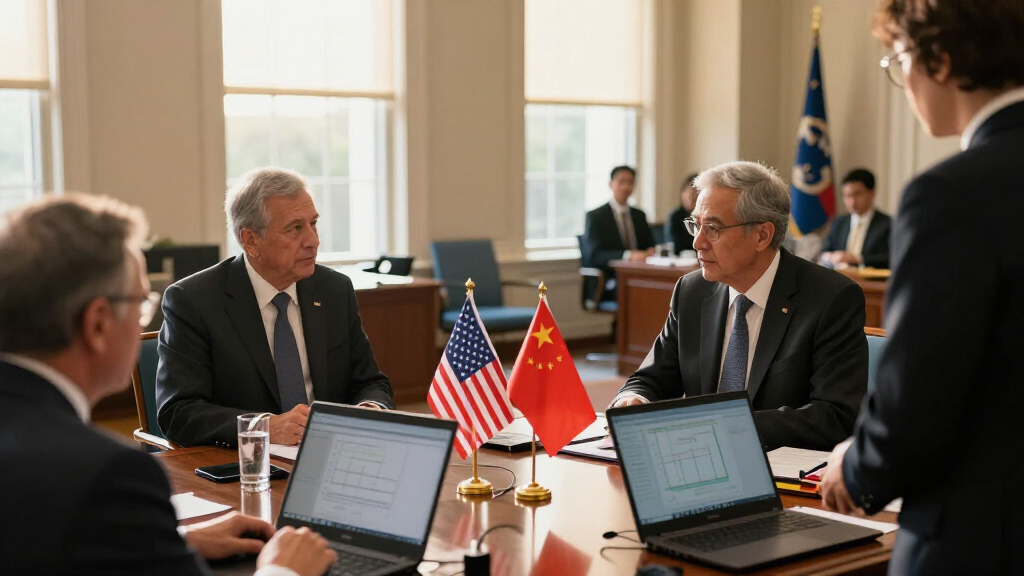
Donald Trump and Xi Jinping wrapped up a highly ceremonial Washington summit with a two-month extension of their tariff truce and a pledge to discuss cooperation on AI-related incident alerts. They made no major trade deal, and Iran and Taiwan were left off the agenda, according to the source report.
Donald Trump and Xi Jinping concluded their Washington summit with a two-month extension of the tariff truce and a pledge to cooperate on an AI-related alert system, but no major agreements. The extension gives the world’s two largest economies until January 10 to pursue a more stable trade framework, while major issues including Iran and Taiwan were not addressed, according to the source report.
The tariff truce, agreed nearly a year ago and due to expire on November 10, was extended by two months. The report said the additional time is intended to allow Washington and Beijing to work toward a more durable trade arrangement, though consensus remains distant. US Treasury Secretary Scott Bessent and Chinese Vice Premier He Lifeng led negotiations in parallel with the leaders’ meeting in Washington.
On artificial intelligence, the United States offered to share a common alert system for AI-related incidents. The report provided no technical details or implementation timeline. Trump also praised his idea of renaming AI “Superintelligence,” saying Xi “seemed to like” it, but that exchange was not described as a formal agreement.
The summit featured a military parade, a fighter-jet flyover and a state dinner at the White House. Xi announced that two pandas, Ping Ping and Fu Shuang, would be sent to Atlanta Zoo as a gesture of friendship. Trump said Xi and his wife, Peng, departed Washington on Friday and announced plans for two further meetings before year’s end.
Washington summit · Trade & technology
Trump-Xi Summit Extends Trade Truce, Yields Few Deals
Donald Trump and Xi Jinping extended their tariff truce and discussed a possible AI incident alert system. The high-profile summit produced no major trade deal, while Iran and Taiwan were absent from the reported agenda.
Summit recap · Reported outcomes“More time to negotiate. Few commitments.”
The truce extension sets a new deadline; a durable trade framework remains an unresolved goal.
01 / What changed
A Truce Near Its Deadline
The existing tariff truce was due to expire November 10. Its extension moves the next deadline to January 10, creating a short window for Washington and Beijing to pursue a more stable trade framework.
Two more months
The extension delays the immediate risk of the truce expiring. It does not resolve the underlying dispute or define new trade terms.
Officials keep talking
US Treasury Secretary Scott Bessent and Chinese Vice Premier He Lifeng led negotiations alongside the leaders’ meeting.
No broad package
The report describes consensus as distant. The summit’s ceremony and friendly language did not yield a major trade agreement.
02 / Technology pledge
An AI Channel, With Details Missing
The United States offered to share a common alert system for AI-related incidents. The proposal could create a channel for cooperation amid competition in advanced technology, but its practical scope remains undefined.
Shared incident alerts
The reported offer concerns a common alert system for AI-related incidents between the two countries.
Scope and safeguards
No technical design, information-sharing rules, safeguards or operating timeline were provided in the report.
“Superintelligence”
Trump praised his idea of renaming AI “Superintelligence,” saying Xi seemed to like it. The report did not describe this as a formal agreement.
03 / What was left open
Diplomacy on Display, Policy Still Narrow
The summit paired ceremonial gestures with a limited set of reported policy outcomes. Several major questions remain unanswered.
A highly staged welcome
Trump greeted Xi on the tarmac. The visit included a military parade, fighter-jet flyover and White House state dinner. Xi announced that pandas Ping Ping and Fu Shuang would be sent to Atlanta Zoo.
Important gaps
- Iran and Taiwan were left off the reported agenda.
- The report does not say whether either topic arose privately.
- No specific trade measures or AI implementation plan were announced.
04 / What comes next
Two Meetings Set Before Year-End
Trump announced plans to meet Xi again at the APEC forum in Shenzhen and at the G20 summit in Miami. Both are scheduled before the truce’s January 10 deadline; agendas and expected outcomes were not provided in the report.
Original expiry
The existing tariff truce was due to end.
APEC meeting planned
Trump announced a further meeting at the APEC forum.
G20 meeting planned
A second planned meeting is at the G20 summit.
New truce deadline
The next test is whether talks produce concrete terms.
05 / Key questions
What the Report Says—and Doesn’t
What did Trump and Xi agree to?
They extended the existing tariff truce by two months, through January 10. The US also offered to share an AI incident alert system. No major trade deal was reported.
Did the summit resolve the trade dispute?
No. The extension gives negotiators more time to pursue a stable framework, but the report says consensus remains a long way off.
What is known about the AI proposal?
The offer is for a common alert system covering AI-related incidents. Its design, operating rules, safeguards and timeline were not specified.
When might the leaders meet again?
Trump announced plans for APEC in Shenzhen in November and the G20 in Miami in December. The report provides no agendas for either meeting.
Trade Truce Buys Two Months
The extension delays the immediate risk of the tariff truce expiring, giving negotiators additional time to work. It does not settle the underlying trade dispute: the source report describes a more stable framework as a goal, with agreement still a long way off. The January 10 deadline therefore provides a near-term marker for whether the extra time produces concrete progress.
The AI pledge points to a possible channel for cooperation between the two countries even as they compete in advanced technology. Its practical significance remains limited until the system’s scope, information-sharing rules and safeguards are specified. The summit’s high-profile ceremony and friendly public language did not translate into a broad package of commitments.
Top picks for "trump summit extend"
As an affiliate, we earn on qualifying purchases.
A Truce Near Its Deadline
The trade truce was approaching its scheduled expiration on November 10. The summit’s central practical outcome was to move that deadline to January 10, leaving the governments with roughly two more months for negotiations. The report says the truce had been agreed nearly a year earlier but does not detail its original terms.
Xi’s visit was marked by formal welcomes and gestures of goodwill. Trump greeted him at the tarmac, and the state dinner included sparkling wine of the kind Richard Nixon had served Chinese Premier Zhou Enlai in 1972, according to the report. The source also notes that Trump’s reception of Xi followed his own visit to Beijing the previous May. These diplomatic gestures framed the meeting, while the reported policy outcomes remained narrow.
Details Still Missing From Pledges
The source report does not explain what the proposed AI incident alert system would cover, how the two governments would exchange information or when it might begin operating. It also does not identify specific trade measures that negotiators will pursue before the January 10 deadline.
Although the report says the summit skirted Iran and Taiwan, it gives no account of whether those subjects were raised privately. The announced future meetings are plans, and the source provides no agenda or confirmation of what outcomes either side expects from them.
Two Meetings Set Before Year-End
Trump announced that he and Xi plan to meet again at the Asia-Pacific Economic Cooperation forum in Shenzhen in November and at the G20 summit in Miami in December. Those meetings would take place before the tariff truce’s new January 10 end date, giving leaders further opportunities to review negotiations.
The immediate next test is whether US and Chinese negotiators can turn the added time into terms for a more stable trade framework. The source report does not specify when the AI alert proposal will be developed further or whether additional agreements are expected before the leaders meet again.
Key Questions
What did Trump and Xi agree to at the summit?
They extended the existing tariff truce by two months, through January 10, and the United States offered to share a common alert system for AI-related incidents. The report described no major trade deal.
Did the summit resolve the US-China trade dispute?
No. The extension gives negotiators additional time to pursue a more stable trade framework, but the source report says consensus remains a long way off.
What was proposed on artificial intelligence?
The United States offered to share a common alert system for AI-related incidents. The proposal’s design, operating rules and timeline were not specified in the report.
When are Trump and Xi expected to meet again?
Trump announced plans for meetings at the APEC forum in Shenzhen in November and the G20 summit in Miami in December. The source report does not provide agendas for either meeting.
Source: rss
Fall Picks
fall essentials
As an affiliate, we earn on qualifying purchases.