
TL;DR

Get everyday essentials delivered free with Prime
- Fast, free delivery on millions of items
- Prime Video, Amazon Music and more included
- Member-only deals all year
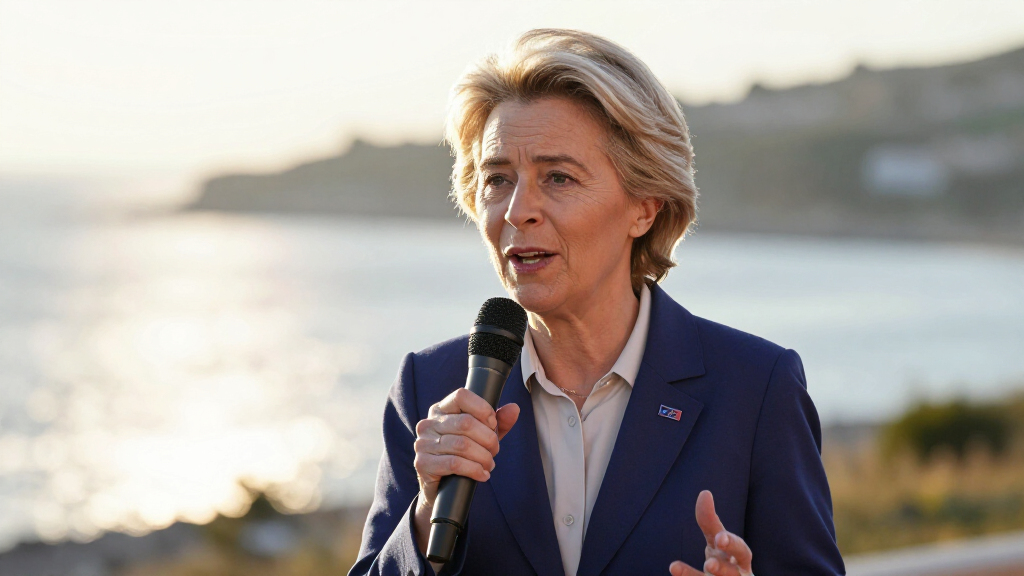
European Commission President Ursula von der Leyen announced the signing of a joint declaration with Greenland, marking a new partnership focused on climate, sustainable development, and economic cooperation. The event signals increased EU engagement in Arctic affairs, though details remain limited. Read more about EU and NATO cooperation.
European Commission President Ursula von der Leyen announced the signing of a joint declaration with Greenland during a formal ceremony today, emphasizing a new partnership aimed at climate cooperation, sustainable development, and regional stability in the Arctic. This development marks a significant step in EU engagement with Greenland, a key player in Arctic geopolitics and environmental issues.
The event took place at the EU headquarters, where President von der Leyen officially signed the EU-Greenland Joint Declaration. The declaration is described as a framework for increased cooperation on climate change mitigation, sustainable resource management, and economic development. Learn about EU climate initiatives. According to the European Commission, the agreement aims to strengthen the EU’s presence and influence in Arctic affairs, an area of growing geopolitical and environmental importance.
During her speech, von der Leyen highlighted Greenland’s strategic importance and the EU’s commitment to supporting Greenland’s sustainable development goals. She emphasized that the partnership will foster joint efforts on climate research, renewable energy, and environmental protection, aligning with the EU’s broader climate policies. See EU’s latest emergency response strategies. The event was attended by Greenlandic officials and EU representatives, signaling a high-level diplomatic engagement.
While the exact contents of the declaration remain confidential, officials indicated that cooperation will include funding initiatives, research programs, and policy dialogues. The signing is part of a broader EU strategy to increase its footprint in the Arctic, where melting ice caps and resource exploration are reshaping regional dynamics.
Implications for Arctic Climate and Geopolitics
This development is significant because it signals a shift in EU policy towards a more active role in Arctic affairs, traditionally dominated by Arctic nations and other global powers. The partnership with Greenland could influence regional stability, resource management, and climate change mitigation efforts. For Greenland, the agreement offers opportunities for economic development and international support, but also raises questions about sovereignty and environmental impacts.
For the EU, this signals a strategic move to diversify its climate and security policies, aligning with its climate goals and geopolitical interests. The partnership could also serve as a precedent for increased EU engagement with other Arctic stakeholders, potentially shaping future international cooperation in the region.
Popular right now

LG 85-inch QNED75B Mini LED Smart TV Bundle with HDMI and CPS Protection Plan

Shark Navigator Robot Vacuum with Self-Empty Base, Dark Grey (RV2120AE)

TCL 85-Inch QM6K Series QLED Mini LED 4K HDR Smart Google TV
As an affiliate, we earn on qualifying purchases.
Greenland’s Growing Role in Arctic Diplomacy
Greenland has increasingly become a focal point in Arctic geopolitics due to its strategic location and vast natural resources. Historically, Greenland’s relationship with Denmark has been close, but recent years have seen a push for greater independence and international engagement. The EU’s interest in Greenland has grown amid concerns over climate change, melting ice, and resource opportunities.
Previous discussions have centered on environmental protection and sustainable development, but recent geopolitical shifts, including increased activity by Russia, China, and the United States, have heightened interest in Arctic cooperation. The EU’s signing of this joint declaration reflects a broader trend of increased diplomatic activity aimed at securing influence and promoting stability in the region.
While details of the EU-Greenland partnership remain under wraps, the event underscores Greenland’s emerging role as a key player in Arctic diplomacy, with potential implications for regional security and environmental governance.
Details of the EU-Greenland Agreement Remain Confidential
It is not yet clear what specific projects or funding commitments are included in the joint declaration, as officials have not released the full text. The scope of cooperation on environmental and economic issues remains to be clarified, and how Greenland’s sovereignty will be affected is still under discussion.
Additionally, the long-term impact of this partnership on regional geopolitics and environmental policy is uncertain, given the evolving Arctic landscape and competing interests of global powers.
Next Steps in EU-Greenland Diplomatic Engagement
Following the signing, officials are expected to hold detailed negotiations to finalize the implementation framework of the partnership. Funding allocations, joint research initiatives, and policy coordination are likely to be outlined in upcoming meetings.
Greenland’s government has indicated it will review the agreement’s specifics in the coming weeks, with potential public announcements about projects and initiatives. The EU may also expand its Arctic strategy to include new diplomatic and environmental programs, aiming to solidify its role in the region.
Key Questions
What is the main purpose of the EU-Greenland joint declaration?
The declaration aims to establish a framework for cooperation on climate change, sustainable development, and regional stability in the Arctic region.
How might this partnership affect Greenland’s sovereignty?
Details remain unclear, but the agreement emphasizes collaboration and support, which could influence Greenland’s economic and environmental policies without directly impacting sovereignty.
Will this partnership lead to resource exploitation in Greenland?
While the declaration emphasizes sustainability, increased cooperation could open opportunities for resource development, though specific projects have not been publicly disclosed.
What are the strategic interests of the EU in Greenland?
The EU seeks to strengthen its influence in Arctic geopolitics, support climate initiatives, and ensure regional stability amid rising global competition.
When will the details of the agreement be made public?
Officials have not specified a timeline, but further negotiations and announcements are expected in the coming weeks.
Source: primary