
TL;DR

Get everyday essentials delivered free — and shop member deals
- Fast, free delivery on millions of items
- Access to Prime Big Deal Days deals on October 6–7
- Prime Video, Amazon Music and more included
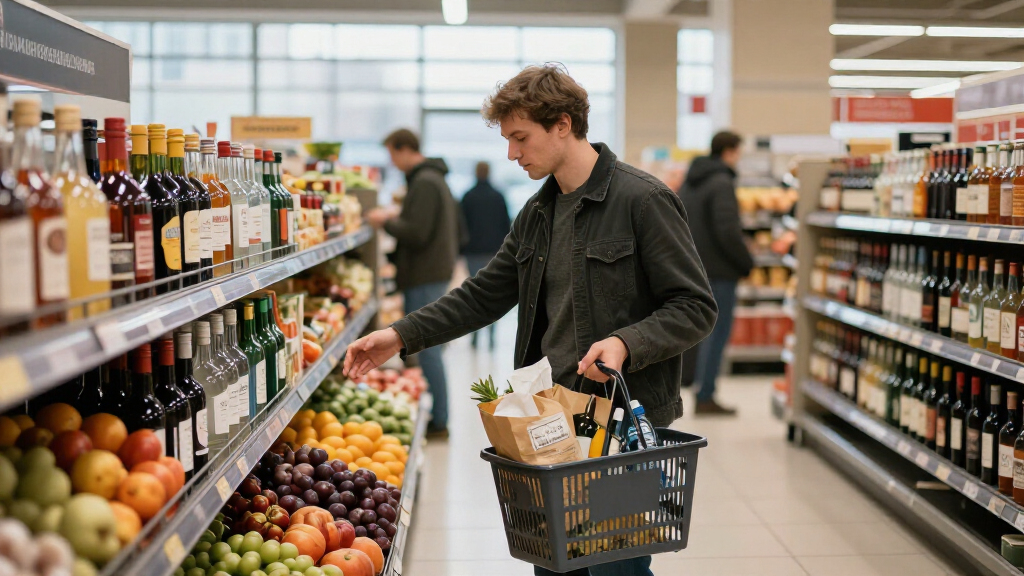
Spending on groceries and alcohol now accounts for an increasing share of purchases at Russian malls. This trend reflects changing consumer priorities and shopping behaviors, though the exact causes remain unconfirmed. The development could impact retail strategies and economic indicators in Russia.
Recent analysis of consumer spending patterns at Russian malls shows that groceries and alcohol now constitute a growing share of total expenditures. This shift is noteworthy amid broader economic changes and fluctuating retail dynamics, making it a significant development for retailers, economists, and policymakers monitoring Russian consumer behavior.
According to recent trend signals, the proportion of spending on groceries and alcohol at Russian shopping centers has increased over the past year. While specific data points are limited, industry observers note a visible rise in sales of food and beverage items, particularly in malls that traditionally relied on clothing, electronics, and entertainment sales. Experts suggest this may reflect a combination of factors, including inflation, changing shopping habits, and consumer preferences shifting toward essential goods.
Sources indicate that this trend is driven partly by economic pressures, with consumers prioritizing daily necessities over discretionary spending. Retailers report increased foot traffic in grocery and alcohol sections, even as sales of non-essential items fluctuate. Analysts caution that while the trend appears clear, detailed quantitative data remains scarce, and the full scope of the shift is still being studied.
Implications for Retail and Consumer Behavior in Russia
This trend signals a potential reorientation of consumer priorities within Russia, with more money allocated to everyday essentials like food and alcohol. For retailers, it suggests an opportunity to adapt offerings and marketing strategies to meet these changing demands. Economically, it may indicate a shift in disposable income allocation, possibly influenced by inflation or economic uncertainty, which could have broader implications for retail sales and economic stability.
As an affiliate, we earn on qualifying purchases.
Recent Trends and Economic Factors Influencing Spending
Over the past year, Russian consumers have faced various economic pressures, including inflation and currency fluctuations, which have impacted their purchasing power. Retail data shows a decline in discretionary spending on non-essential goods, while sales of groceries and alcohol have maintained or increased their share of total retail sales. Industry insiders note that shopping mall foot traffic remains stable or even rises in grocery and alcohol sections, contrasting with declines in other categories.
While some analysts interpret this as a sign of consumers tightening budgets, others see it as a strategic adjustment to current economic conditions. The trend’s full scope is still under analysis, and official data confirming the precise share increase is not yet available.
As an affiliate, we earn on qualifying purchases.
Unconfirmed Data and Causes Behind the Shift
Specific quantitative data confirming the exact increase in spending shares is not yet publicly available. It remains unclear whether the trend reflects a temporary response to current economic conditions or a longer-term shift in consumer behavior. The precise reasons—such as inflation, changes in social habits, or other factors—are still under investigation, and official statistics are pending.
As an affiliate, we earn on qualifying purchases.
Monitoring Retail Data and Consumer Spending Patterns
Further detailed retail and consumer expenditure data from Russian authorities and market research firms are expected in the coming months. Analysts will closely watch whether the trend persists or evolves, and how retailers adapt their strategies accordingly. Policymakers may also assess this shift as part of broader economic planning and consumer protection measures.
As an affiliate, we earn on qualifying purchases.
Key Questions
Why are groceries and alcohol spending increasing at Russian malls?
While precise causes are still being studied, factors may include inflation, economic pressures, and changing consumer priorities toward essential goods amid uncertainty.
Is this trend expected to continue long-term?
The persistence of the trend remains uncertain. Future retail data and economic conditions will influence whether this shift is temporary or more permanent.
How might this impact retailers and shopping mall strategies?
Retailers may focus more on grocery and alcohol sections, adjusting marketing and inventory to cater to the increased demand for essentials.
Does this trend reflect broader economic issues in Russia?
It could indicate economic pressures like inflation and income redistribution, but further data is needed to confirm the broader implications.
Are other categories of retail sales declining as a result?
Some reports suggest discretionary spending has decreased, but detailed data on declines in specific categories is not yet available.
Source: rss
Fall Picks
fall essentials
As an affiliate, we earn on qualifying purchases.