
You use private labels to control product costs and protect profit margins by offering lower-priced options compared to national brands. This allows you to manage sourcing, production, and distribution directly, reducing reliance on third-party brands and cutting costs. Private labels also help build customer loyalty through exclusive products and consistency, boosting repeat business. If you want to discover more strategies retailers use to maximize margins, keep exploring how these practices can work for you.
Key Takeaways
- Private labels offer lower-cost alternatives, reducing reliance on expensive national brands and protecting profit margins.
- Retailers control product development and sourcing, minimizing costs and ensuring consistent quality.
- Exclusive private label products differentiate stores, fostering customer loyalty and repeat business.
- Streamlined supply chain management and digital tools enable quick market response, reducing stock shortages and waste.
- Maintaining strict quality standards ensures product reliability, minimizing costly disruptions and returns.
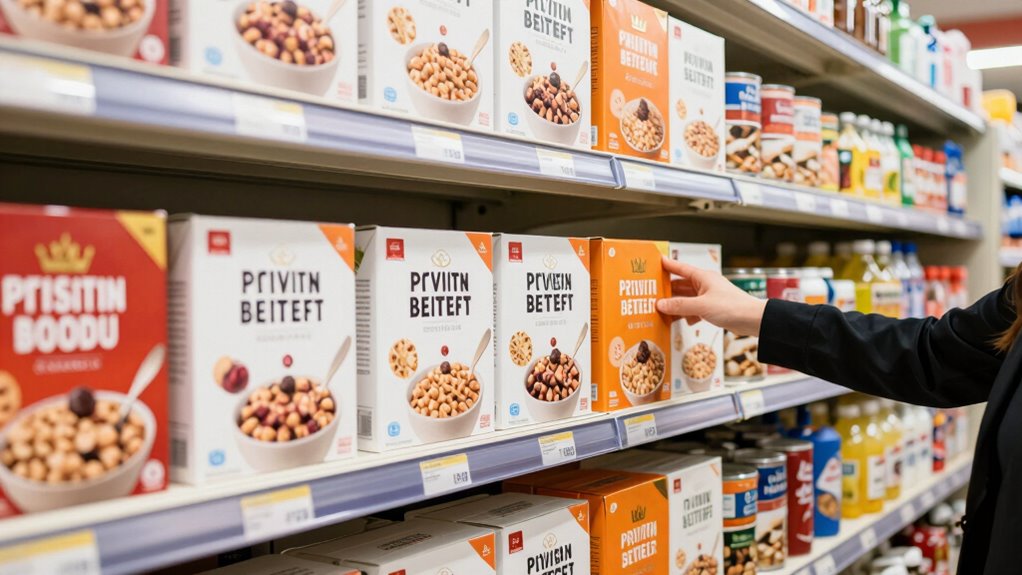
Have you ever wondered why many retailers now offer their own private label products? It’s a strategic move that helps them protect their margins and build stronger connections with customers. When you purchase a private label item, you’re often getting a product that’s priced lower than national brands but still maintains quality. This shift isn’t just about saving money; it’s a way for retailers to foster brand loyalty. By offering exclusive products under their own label, they create a sense of familiarity and trust, encouraging you to stick with their store rather than switching to competitors. Over time, this builds a loyal customer base that keeps coming back for the private label options.
Another key reason retailers push private labels is controlling their supply chain. When they develop and manage products directly, they can oversee every aspect—from sourcing materials to production and distribution. This control allows them to reduce reliance on third-party brands, which often come with higher costs and less flexibility. By streamlining their supply chain, retailers can cut costs, improve efficiency, and respond more quickly to market changes. They can also ensure consistent quality and availability, which reassures you as a customer. Having control over the supply chain means they can avoid disruptions that might arise when dealing with external suppliers, helping them protect profit margins and avoid price fluctuations that could impact your shopping experience. Additionally, understanding how product specifications are derived helps retailers optimize their offerings and maintain quality standards, often by applying supply chain management strategies to improve overall efficiency. Furthermore, leveraging digital concepts allows retailers to analyze data and forecast demand more accurately, enhancing their ability to meet customer expectations. A comprehensive grasp of quality control standards also plays a crucial role in maintaining product consistency and customer trust.

500 Pcs Not for Resale Labels for Retail Store,Quality Control,Inventory Control,Shipping Handling Retail Store,Sample,Showcase Products,2 Inches Inventory Stickers(Roll)
- Sticker Size: 2 Inch diameter
- Quantity: 500 stickers per roll
- Material: Semi-gloss paper
As an affiliate, we earn on qualifying purchases.
As an affiliate, we earn on qualifying purchases.
Frequently Asked Questions
How Do Private Labels Impact a Retailer’s Brand Image?
Private labels can positively influence your brand perception when you offer quality products that meet customer expectations. They help build customer loyalty by providing affordable options, fostering trust and repeat business. However, if private labels are perceived as lower quality, they might harm your brand image. To succeed, guarantee your private labels align with your overall brand values, maintaining consistency and quality to strengthen customer loyalty and enhance your brand perception.
What Are the Initial Costs of Developing Private Label Products?
The initial costs of developing private label products typically range from $50,000 to $250,000, depending on scale and complexity. You need a thorough cost analysis to understand manufacturing, packaging, and distribution expenses. Quality control is essential—you’ll invest in testing and supplier audits to guarantee your products meet standards. These upfront investments are indispensable for creating a successful private label, ultimately helping you protect margins and build customer loyalty.
How Do Private Labels Influence Supplier Relationships?
Private labels influence supplier relationships by giving you more leverage during negotiations, as you control product differentiation and branding. You can push for better prices, quality standards, or exclusive terms, strengthening your bargaining power. This often leads to closer collaborations with suppliers, fostering innovation and tailored products. Ultimately, your private labels can improve supply chain efficiency and reduce dependency on national brands, helping you maintain healthier margins.
Can Private Labels Help Retailers Expand Into New Markets?
Yes, private labels can help you expand into new markets. They enable you to tailor products to local consumer perception, making your offerings more appealing and relevant. With strategic market entry, private labels differentiate your brand from competitors and build loyalty. By understanding local preferences and adjusting your private label products accordingly, you increase your chances of successfully entering and establishing a presence in new markets.
What Are Common Challenges in Managing Private Label Brands?
Did you know that 60% of consumers prefer private labels for value? Managing these brands can be tricky, especially when maintaining brand loyalty and product differentiation. You face challenges like ensuring consistent quality, differentiating your private label from competitors, managing supply chain complexities, and convincing customers of your private label’s value. Balancing cost-effectiveness with quality is key to overcoming these hurdles and building a successful private label strategy.

500 Pieces Thank You Stickers Small Business Shop Business Stickers Package Labels for Envelope Seals Gift Bags Packaging, 4 Styles, 1.77 Inches
- Quantity: 500 thank you stickers in 4 styles
- Strong Adhesion: Sticks firmly on various surfaces
- Cute Designs: Bright, charming, and eye-catching patterns
As an affiliate, we earn on qualifying purchases.
As an affiliate, we earn on qualifying purchases.
Conclusion
By building bold, branded private labels, you bolster your bottom line and block out big-name competitors. Private labels provide protection, profit, and power—pivoting your retail strategy toward sustainable success. When you prioritize private labels, you prevent price wars and preserve margins, making your market more manageable and more profitable. So, seize this strategic stance, strengthen your store’s stance, and stand tall with private labels that protect profits and propel your retail success.

62-Pack Solar PV System Label Kit – Code 2020/2023 Compliant Photovoltaic Stickers – UV Resistant & Reflective Vinyl – Complete Solar Warning Labels for Installers, Inspectors & Homeowners
- Complies with NEC 2020/2023: Meets latest solar code requirements
- Complete 62-Piece Kit: Includes all essential solar warning labels
- UV-Resistant Vinyl Material: Withstands extreme outdoor conditions
As an affiliate, we earn on qualifying purchases.
As an affiliate, we earn on qualifying purchases.

Custom Tool Name Labels – Personalized Name Stickers for Boxes, Saws, Drills, Power Tools, etc. (64 Labels)
- Prevent Permanent Marker Damage: Upgrade tools with custom stickers
- Easy Tool Identification: Personalized labels prevent mix-ups
- Multiple Label Sizes: Includes 8 long, 32 small, 24 mini labels
As an affiliate, we earn on qualifying purchases.
As an affiliate, we earn on qualifying purchases.