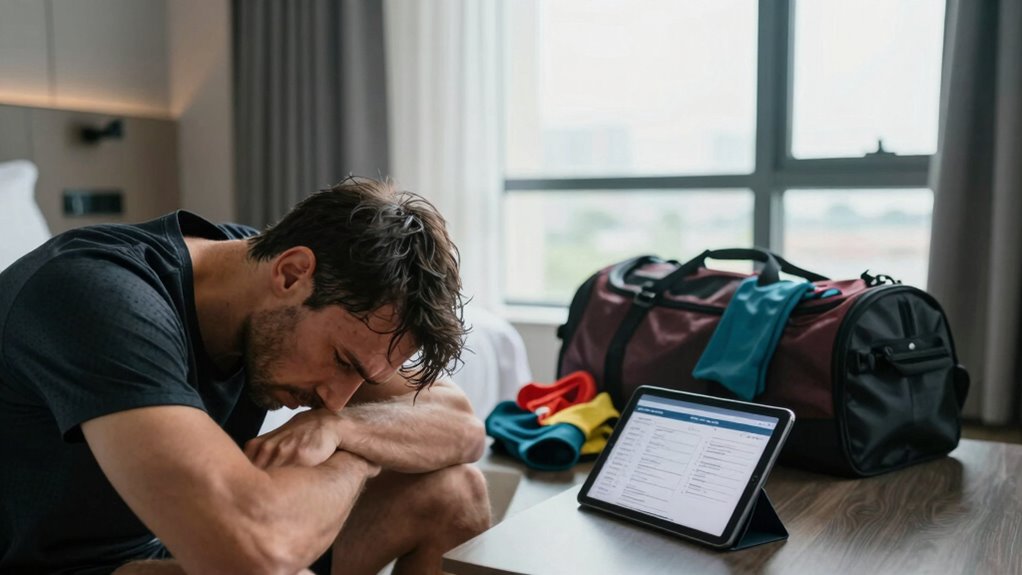

Travel schedules can considerably impact your recovery as crossing time zones disrupts your internal clock, leading to fatigue and slower healing. Jet lag throws off your sleep, affecting muscle repair and immune function, while physical and mental stress from travel raises cortisol levels that hinder recovery. Poor environment and disrupted routines make it harder to stay consistent with training. To optimize recovery despite travel challenges, understanding these effects is essential — stay with us for more insights.

Get everyday essentials delivered free with Prime
- Fast, free delivery on millions of items
- Prime Video, Amazon Music and more included
- Member-only deals all year
Key Takeaways
- Crossing multiple time zones disrupts circadian rhythms, impairing sleep quality and delaying recovery.
- Jet lag causes fatigue and cognitive impairment, reducing training effectiveness and increasing injury risk.
- Travel-related stress elevates cortisol levels, hindering muscle repair and immune function essential for recovery.
- Sleep disruptions during travel prevent deep and REM sleep, vital for muscle repair and hormone regulation.
- Environmental factors like poor air quality and unfamiliar settings further compromise sleep and recovery efficiency.

Travel schedules can considerably impact an athlete’s recovery process, especially when crossing multiple time zones or tight itineraries are involved. When you travel across different regions, your body faces the challenge of adjusting to new time cues, which often results in jet lag. Jet lag disrupts your internal clock, making it harder to sleep at the right times and recover effectively. This disruption doesn’t just cause fatigue; it also impairs cognitive function, reaction times, and overall performance. You might find yourself feeling drowsy during training or competition, which can increase the risk of injury and reduce your ability to perform at your best.
Sleep disruption is one of the most immediate and noticeable effects of travel on recovery. When your sleep cycles are thrown off, your body struggles to enter the restorative stages of sleep, such as deep sleep and REM sleep. These stages are vital for muscle repair, immune function, and hormone regulation. As a result, inadequate sleep hampers your recovery process, prolongs muscle soreness, and weakens your immune defenses. If you’re constantly on the move, it becomes even more essential to prioritize sleep hygiene. You need to create an environment conducive to rest, even in unfamiliar settings—using blackout curtains, maintaining a cool room temperature, and avoiding screens before bed.
Your body’s circadian rhythms are sensitive to light exposure, meal times, and activity schedules—all of which are often disrupted during travel. When these rhythms are misaligned, your energy levels fluctuate unpredictably, and your recovery slows down. You might feel energized at odd hours or experience periods of exhaustion, making it difficult to stick to training routines or recovery protocols. To mitigate these effects, you should try to adapt to the new time zone as quickly as possible. This can involve adjusting your sleep and wake times gradually before departure, seeking natural sunlight during the day, and staying hydrated. Additionally, understanding how light exposure influences circadian alignment can help optimize your adjustment to new environments.
Furthermore, the physical and mental stress of travel compounds sleep disruption and jet lag. Long flights, crowded airports, and tight schedules drain your energy and increase fatigue. This cumulative stress can elevate cortisol levels, which impede recovery by breaking down muscle tissue and suppressing immune response. To counteract this, you need to incorporate rest periods, proper nutrition, and relaxation techniques into your travel routine. Recognizing how travel schedules influence your body’s recovery processes is essential for maintaining peak performance and ensuring you bounce back quickly after each trip. Additionally, being aware of indoor air quality factors like dust and microplastics can help create a healthier environment during travel, supporting better sleep and recovery.
As an affiliate, we earn on qualifying purchases.
Frequently Asked Questions
How Do Time Zone Changes Impact Athlete Performance?
Time zone changes can markedly impact your performance by causing jet lag and circadian disruption. When your internal clock gets thrown off, you may experience fatigue, decreased alertness, and slower reaction times. These symptoms hinder your ability to perform at your best. To minimize effects, try adjusting your sleep schedule before travel, stay hydrated, and expose yourself to natural light. Proper management helps your body adapt quicker and maintains peak performance.
What Are the Best Strategies for Adjusting Sleep Schedules?
Like Odysseus steering treacherous waters, you must prioritize sleep hygiene and circadian alignment to adjust your sleep schedules effectively. Establish consistent sleep and wake times, even during travel, to signal your body it’s time to rest. Limit exposure to screens before bed, and create a relaxing environment. Strategic naps can help, but avoid disrupting your natural rhythm. These practices help your body adapt smoothly and recover faster.
How Does Travel Fatigue Influence Injury Risk?
Travel fatigue increases your injury risk because it weakens your immune system, impairs coordination, and reduces focus. When you’re exhausted from travel, you’re more prone to accidents and overuse injuries. To prevent injuries, prioritize injury prevention strategies like proper rest, hydration, and gentle recovery exercises. Managing travel fatigue effectively helps you stay alert and resilient, lowering your chances of injury and supporting best performance during competitions or training.
What Role Does Nutrition Play During Travel?
During travel, your nutrition plays a essential role in recovery. You should pay attention to meal timing, eating balanced meals at regular intervals to maintain energy levels and support muscle repair. Additionally, hydration strategies are critical; drinking enough water prevents dehydration and fatigue. Pack healthy snacks, and plan your meals to guarantee consistent nutrition. Properly fueling your body helps reduce fatigue and keeps you prepared for peak performance upon arrival.
How Can Teams Optimize Travel to Minimize Recovery Time?
Imagine travel logistics as a well-orchestrated symphony, where smooth shifts and precise timing set the tone. You can optimize recovery by streamlining equipment management, ensuring gear is ready and in place, reducing stress. Prioritize early planning, minimize layovers, and coordinate schedules to keep athletes moving seamlessly. This harmony allows their bodies to recover faster, keeping them fresh and ready to perform at their peak.
As an affiliate, we earn on qualifying purchases.
Conclusion
Travel schedules can profoundly impact your recovery, often disrupting sleep and increasing stress levels. Did you know that athletes who travel across multiple time zones experience a 30% decrease in recovery efficiency? This means your body has to work harder to repair itself, making rest and proper planning even more essential. By understanding these effects, you can better manage your schedule, ensuring you recover faster and perform at your best. Keep travel stress in check for ideal results.
As an affiliate, we earn on qualifying purchases.
As an affiliate, we earn on qualifying purchases.
Halloween Picks
halloween
As an affiliate, we earn on qualifying purchases.