Tournament seeding ranks teams based on their past performance, strength, and other factors to create a fair and exciting matchup. It spreads out the top teams so they don’t face each other early, making the tournament more unpredictable and thrilling. Upsets happen when lower-ranked teams surprise favorites, adding excitement. Different tournaments use various methods for seeding, which can sometimes raise fair play debates. Want to find out more about how this all shapes the tournament’s excitement?

Get everyday essentials delivered free with Prime
- Fast, free delivery on millions of items
- Prime Video, Amazon Music and more included
- Member-only deals all year
Key Takeaways
- Seeding ranks teams based on past performance and strength to create a fair, balanced bracket.
- Higher seeds are placed to avoid early matchups with other top teams, promoting fairness and excitement.
- Upsets occur when lower-ranked teams beat higher seeds, adding unpredictability and thrill to the tournament.
- Different tournaments may use various methods to determine seeding, which can affect fairness.
- Deep runs by lower seeds are major surprises that highlight the tournament’s unpredictability and excitement.
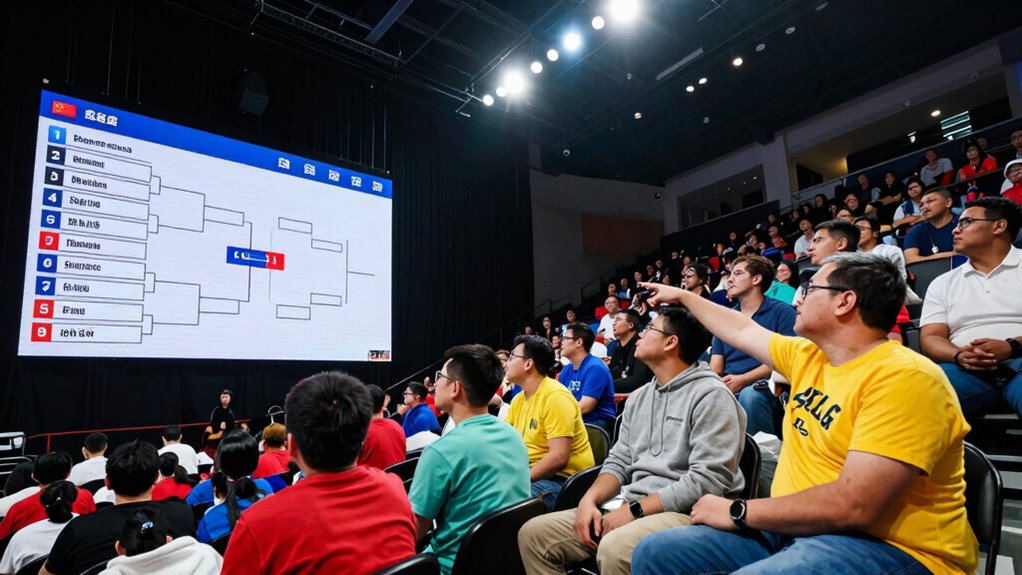
Ever wondered how teams are ranked and matched up in a tournament? Understanding the seeding process can seem complicated at first, but it’s really about organizing teams in a way that aims to create a fair and exhilarating competition. Seeding involves ranking teams based on their performance, strength, and sometimes even past results, so the top teams are spread out across the bracket. This setup helps prevent the best teams from facing each other in the early rounds, giving everyone a better shot at advancing deep into the tournament. Additionally, landscape design principles can influence how tournaments are hosted, especially in outdoor venues, by creating optimal viewing and playing environments.
For casual fans, it’s useful to know that seeding isn’t always perfect, and that’s where upset predictions come into play. Sometimes, lower-seeded teams surprise everyone by knocking out higher-ranked opponents. These upsets are part of what makes tournaments thrilling to watch, and they often challenge the initial expectations set by the seeding. When you see a lower seed beat a favorite, it’s a reminder that rankings aren’t foolproof and that tournament outcomes can be unpredictable, which adds to the excitement. Recognizing this helps you enjoy the unpredictability and excitement that makes tournaments so enthralling.
Additionally, the ranking systems used in seeding can vary between tournaments, which can influence the perceived fairness of the matchups. Sometimes, a team with a tough schedule or facing weaker opponents ends up with a high seed, while a team with a tougher schedule might be underseeded. These discrepancies can lead to heated discussions about fairness and accuracy. As a casual viewer, it’s good to keep in mind that seeding involves a lot of subjective judgments and that it’s an imperfect system. It’s not just about who’s the best team but also about how they performed during the regular season, strength of schedule, and sometimes even recent form. Recognizing that seeding fairness can be debated helps you better understand the dynamics behind tournament brackets. Interestingly, some tournaments also incorporate advanced metrics or computer models to try to improve the accuracy of seeding, though no system is perfect.
Knowing about seeding controversies and upsets can also help you better understand tournament brackets and predictions. When a lower seed makes a deep run, it’s often seen as a major upset, but it also highlights the unpredictability that makes tournament brackets so fun to follow. You’ll start to see that no matter how much ranking and seeding try to organize the competition, the unexpected can— and often does— happen. By keeping these insights in mind, you’ll enjoy the tournament more, appreciating both the skill of top teams and the excitement of surprising upsets. It’s all part of what makes tournament season such a rollercoaster ride for casual fans like you.
Popular right now

Ninja Mega Kitchen System Blender and Food Processor, 1500W, 72-oz Pitcher, 8-Cup Bowl, Black (BL770)

Dreame G10 Pro Wet and Dry Vacuum Mop

Sony WH-1000XM4C (M4 2nd Gen) Wireless Noise-Cancelling Headphones, Black
As an affiliate, we earn on qualifying purchases.
Frequently Asked Questions
How Are Seedings Different in Single-Elimination vs. Double-Elimination Tournaments?
In single-elimination tournaments, seed ranking determines matchups, with higher seeds facing lower ones, but there’s a higher upset potential since one loss ends your run. In double-elimination, seeds still guide initial matchups, but players have a second chance, reducing upset potential. This structure rewards consistency, making it more forgiving for lower seeds, while still emphasizing seed ranking to predict likely winners and shape tournament dynamics.
Do Seedings Change After Initial Rounds?
Yes, seedings can change after the initial rounds, especially if a seed upset occurs, disrupting expectations. These ranking adjustments reflect how players perform, revealing surprises and reshaping the tournament’s landscape. As unexpected victories happen, lower-ranked players may move up, and top seeds might drop in the standings. This unpredictability keeps fans on edge, proving that initial seedings aren’t set in stone and that each match can shift the tournament’s trajectory.
How Is Seed Placement Determined in Large Tournaments?
In large tournaments, seed placement is determined by rankings, recent performances, and sometimes bracket prediction models to guarantee seed fairness. Organizers aim to prevent top seeds from facing each other early, promoting balanced competition. You should know that seedings can be adjusted if there are significant upsets or injuries, but generally, they set the stage for a fair and exciting tournament. This helps fans better understand matchups and tournament dynamics.
Can a Lower Seed Win the Tournament?
Yes, a lower seed can win the tournament. Upset potential is always present, especially when underdogs are motivated and perform well. The seed impact isn’t absolute; higher seeds are favored but not guaranteed victory. In fact, many tournaments have seen lower seeds defeat top-ranked teams, proving that skill, strategy, and determination can overcome seed rankings. So, as a casual fan, stay excited—you never know when an upset might happen!
What Happens if a Top Seed Drops Out Early?
If a top seed drops out early, it can markedly impact the tournament’s upset impacts and seed resilience. You’ll see lower seeds gain confidence and better chances, as the path to victory opens up. This shift often surprises fans and changes game dynamics, proving that even top seeds aren’t invincible. It highlights how the tournament’s unpredictability makes it exciting, with seed resilience tested and upsets adding to the drama.
Conclusion
Now that you understand the basics of tournament seeding, you’re ready to see the brackets in a new light. But remember, even the top seeds aren’t invincible, and surprises lurk around every corner. As the tournament unfolds, keep your eyes open—upsets can happen when you least expect them. Will the favorites hold strong, or will an underdog rise to the occasion? That’s the thrill of the game, and only time will tell what’s next.