In the race to build biodegradable printed circuit boards, researchers focus on using eco-friendly materials like biodegradable polymers, renewable substrates, and environmentally safe conductive inks. They aim to replace traditional metals with sustainable alternatives and adopt greener manufacturing processes to reduce hazardous waste. Industry and consumers play essential roles by supporting sustainable options. If you continue exploring, you’ll uncover the innovative materials and techniques that could revolutionize electronics and protect the environment.
Key Takeaways
- Researchers are developing eco-friendly substrates, like cellulose and biodegradable polymers, to replace traditional non-degradable PCB materials.
- Innovative conductive inks and bio-composites are being created to eliminate or reduce reliance on harmful metals like copper.
- Industry efforts focus on environmentally friendly manufacturing processes that minimize hazardous chemicals and waste.
- The goal is to produce fully biodegradable, high-performance PCBs that decompose naturally after their lifecycle.
- Collaboration between industry, researchers, and consumers accelerates adoption of sustainable, eco-friendly electronic components.
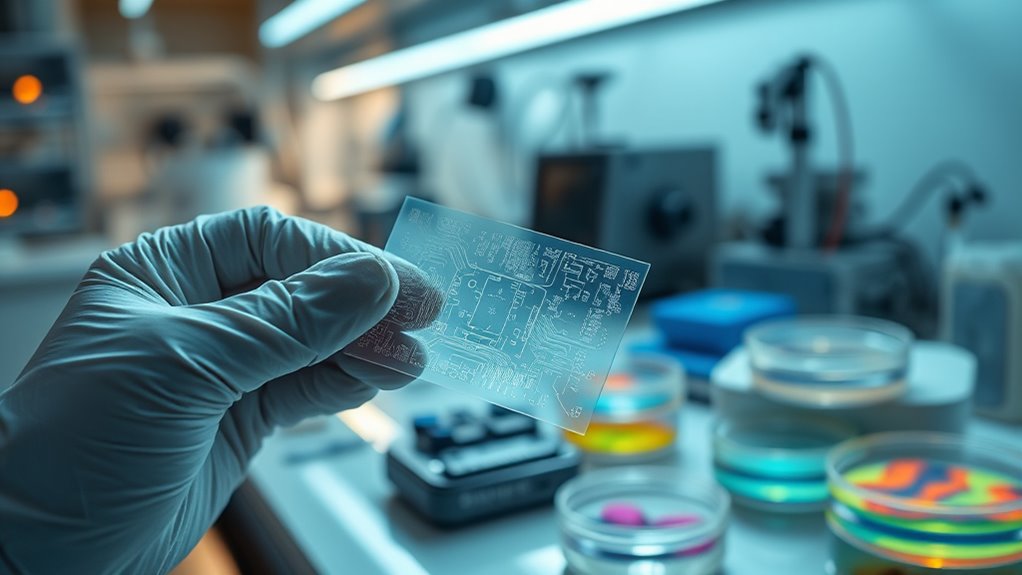
As electronic waste continues to pile up globally, researchers and companies are racing to develop biodegradable printed circuit boards (PCBs) that can break down safely after use. This effort addresses the mounting environmental concerns caused by discarded electronics, which often contain non-degradable materials that linger in landfills for centuries. To make a real impact, innovators focus on using sustainable materials that can decompose naturally, reducing the long-term footprint of electronic devices. These materials are chosen not only for their eco-friendly properties but also for their ability to match the electrical performance required by modern electronics. By prioritizing biodegradable components, developers aim to create PCBs that serve their purpose effectively but leave no lasting environmental damage once discarded.
Developing biodegradable PCBs to reduce electronic waste and environmental impact while maintaining performance and safety.
In pursuit of eco-friendly manufacturing, companies are exploring new fabrication techniques that minimize waste and energy consumption. Traditional PCB production often involves hazardous chemicals and resource-intensive processes, which contribute to pollution and environmental degradation. *Switching* to sustainable materials allows manufacturers to adopt cleaner, greener methods that are less harmful to the planet. For instance, some are experimenting with bio-based substrates derived from renewable resources like cellulose or biodegradable polymers, which can be processed using environmentally friendly methods. These innovations help reduce reliance on toxic substances and lower the carbon footprint associated with manufacturing. The *shift* toward eco-friendly manufacturing not only benefits the environment but also aligns with growing consumer demand for sustainable products.
You’ll find that researchers are also investigating natural alternatives for the conductive traces and components on these PCBs. Instead of using conventional metals like copper, which can be difficult to recycle and often contain harmful additives, they’re exploring bio-composites or conductive inks made from biodegradable materials. These solutions enable the construction of fully compostable or biodegradable PCBs, ensuring that every part of the circuit board contributes to the overall sustainability goal. *Furthermore*, the development of such materials often involves innovative processing techniques that further reduce environmental impact, making the entire lifecycle of the PCB more eco-friendly.
Ultimately, your role as a consumer or industry stakeholder becomes *essential* in supporting this *shift* toward biodegradable PCBs. Choosing electronics made with sustainable materials and eco-friendly manufacturing practices encourages companies to prioritize environmental responsibility. As the race to develop these green alternatives accelerates, the goal is clear: to create electronic components that perform well while also protecting our planet for future generations. By embracing biodegradable PCBs, you’re helping to steer the industry toward a more sustainable, less wasteful future—one circuit board at a time.
Frequently Asked Questions
What Are the Main Environmental Benefits of Biodegradable PCBS?
Biodegradable PCBs offer significant environmental benefits by reducing electronic waste and easing recycling challenges. You’ll find that they break down naturally, minimizing landfill accumulation. While regulatory hurdles exist, these innovative materials promote sustainability and lower pollution. By choosing biodegradable options, you help decrease toxin release and support eco-friendly disposal methods, making a positive impact on the environment. Embracing this technology aligns your efforts with global sustainability goals.
How Do Biodegradable PCBS Perform Compared to Traditional Ones?
Imagine biodegradable PCBs outshining traditional ones, revolutionizing electronics! Their performance metrics are rapidly improving, making them nearly as durable as conventional boards, though some may argue they’re a tad less tough initially. The durability comparison is promising, showing these eco-friendly boards can withstand daily wear, but long-term performance still needs more testing. Ultimately, they’re closing the gap, promising a sustainable future without sacrificing quality.
What Materials Are Used to Make Biodegradable Printed Circuit Boards?
You’ll find that biodegradable printed circuit boards often use eco-friendly polymers like polylactic acid (PLA) and natural fiber composites, such as hemp or jute. These materials break down more easily in the environment and reduce electronic waste. By combining these sustainable polymers with natural fibers, manufacturers create circuits that perform well while being environmentally responsible, helping to move away from traditional, non-degradable materials used in standard PCBs.
Are Biodegradable PCBS Cost-Effective for Mass Production?
You might find that biodegradable PCBs can be cost-effective, especially as manufacturing scalability improves. While their initial cost comparison to traditional PCBs varies, advancements in production processes are reducing expenses. As you scale up manufacturing, you’ll likely see prices drop further, making biodegradable options more competitive. Ultimately, investing in these eco-friendly PCBs could benefit your business by balancing sustainability with cost efficiency.
What Industries Are Most Likely to Adopt Biodegradable PCBS First?
You’ll find that consumer electronics, healthcare, and environmental sectors lead the way in adopting biodegradable PCBs first. These industries prioritize electronics recycling and face regulatory challenges, pushing them toward sustainable solutions. As regulations tighten and eco-consciousness grows, they seek environmentally friendly options to reduce e-waste and meet compliance. Biodegradable PCBs offer a promising, eco-friendly alternative, helping these industries stay ahead in sustainability and regulatory adherence.
Conclusion
As you explore the race to create biodegradable printed circuit boards, you see innovation, sustainability, and urgency driving progress. You witness materials transforming, processes improving, and solutions emerging. You feel the challenge to balance performance with eco-friendliness, the excitement of breakthroughs, and the importance of responsibility. You realize that, in this race, advancing technology, protecting the planet, and shaping the future go hand in hand—pushing you to imagine a world where electronics are both smart and sustainable.