Wireless news reporter microphone kits range from handheld interview systems to tiny clip-on transmitters, and the right format depends on how you report. I’d choose the Movo WMX-7-TH+RX as the best overall fit for traditional street interviews because it uses a dedicated handheld microphone and receiver. The RØDE Wireless PRO stands out for crews that need two transmitters and a handheld adapter, while the COMICA Revo S offers a phone-focused handheld alternative. The main tradeoff is between a reporter-ready mic you can pass between speakers and a compact lavalier kit that leaves both hands free. Read on for the full breakdown and guidance on matching a kit to your camera, phone, and reporting style.

Get everyday essentials delivered free with Prime
- Fast, free delivery on millions of items
- Prime Video, Amazon Music and more included
- Member-only deals all year
Complete the kit


Key Takeaways
- Handheld form matters for vox pops: The Movo WMX-7-TH+RX and COMICA Revo S are shaped for on-camera interviews, unlike the clip-on lavalier kits.
- The strongest two-person options are not all handheld: RØDE Wireless PRO and DJI Mic Mini include two transmitters, but their core use is compact wireless capture; the RØDE adds an Interview GO handheld adapter.
- Phone connections divide this lineup: COMICA Revo S, CaTeFo, MAYBESTA, and Mini Mic Pro are aimed at mobile recording, while camera-oriented kits need the right receiver or adapter for a phone.
- More included gear can add setup complexity: The GoPro kit bundles two transmitters, two receivers, and a charging case, a different proposition from simpler reporter-focused systems.
- Choose around your interview format, not transmitter count alone: A single handheld mic may suit quick public interviews better than a dual-transmitter lavalier kit, even when the latter supports more people.
| Movo WMX-7-TH+RX Handheld Wireless Microphone System |  | Best for Traditional Handheld Reporting | Microphone type: Handheld, omnidirectional | Transmission: VHF | Channels: 12 | VIEW LATEST PRICE | See Our Full Breakdown |
| COMICA Revo S Wireless Handheld Microphone for iPhone 17/16, Android Phone, PC |  | Best for Direct USB-C Phone Reporting | Microphone capsule: 14 mm condenser | Polar pattern: Cardioid, unidirectional | Recording quality: 48 kHz/24-bit | VIEW LATEST PRICE | See Our Full Breakdown |
| Rode Wireless ME Wireless Microphone System Bundle with Interview GO Handheld Adaptor | 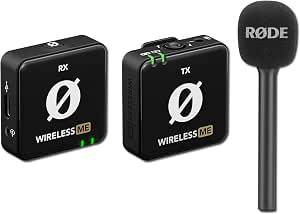 | Best for Two-Person Interviews | Microphones: Two built-in omnidirectional condenser microphones | Wireless link: 2.4 GHz Series IV digital link with 128-bit encryption | Wireless range: Up to 328 ft line of sight | VIEW LATEST PRICE | See Our Full Breakdown |
| RØDE Wireless Micro Compact Wireless Microphone Camera Kit |  | Best Compact Camera-and-Phone Kit | Included components: Two transmitters, camera receiver, USB-C smartphone receiver, and charging case | Microphone pattern: Omnidirectional | Channels: 2 | VIEW LATEST PRICE | See Our Full Breakdown |
| COMICA Revo S Wireless Handheld Microphone with USB-C Receiver |  | Best for Multi-Device Mobile Reporting | Microphone capsule: 14 mm condenser | Polar pattern: Cardioid, unidirectional | Recording resolution: 48 kHz/24-bit | VIEW LATEST PRICE | See Our Full Breakdown |
| DJI Mic Mini Wireless Microphone Kit (2 Transmitters, Mobile Receiver) |  | Best for Two-Person Mobile Reporting | Kit contents: 2 transmitters, 1 mobile receiver, accessories | Transmitter weight: 10 g | Maximum transmission range: 300 m | VIEW LATEST PRICE | See Our Full Breakdown |
| MAYBESTA Wireless Mini Lavalier Microphone for iPhone and Android |  | Best for Low-Fuss Phone Reporting | Microphone type: Mini lavalier | Connectors: Lightning, USB Type-C | Included microphones: 2 | VIEW LATEST PRICE | See Our Full Breakdown |
| CaTeFo Wireless Handheld Microphone with USB-C, Lightning, and USB Adapters |  | Best Handheld for Long Events | Microphone form factor: Handheld | Adapters included: USB-C, Lightning, and USB | Wireless range: Up to 656 ft (200 m), line of sight | VIEW LATEST PRICE | See Our Full Breakdown |
| Mini Mic Pro – Wireless Lavalier Microphone for iPhone & Android | 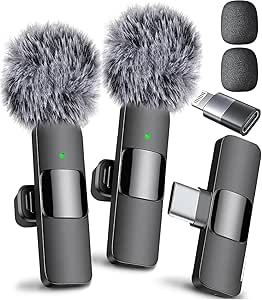 | Best Compact Lavalier | Microphone form factor: Mini lavalier | Connector type: Lightning, USB-C | Polar pattern: Omnidirectional | VIEW LATEST PRICE | See Our Full Breakdown |
| GoPro Wireless Mic Complete Kit with 2 Transmitters, 2 Receivers, and Charging Case |  | Best for Camera and Mobile Flexibility | Transmitters: 2 | Receivers: 3.5 mm TRS and USB-C | Channels: 2 | VIEW LATEST PRICE | See Our Full Breakdown |
| RØDE Wireless PRO 2-Transmitter Microphone System with Interview GO Handheld Adapter |  | Best for Time-Synced Field Reporting | Channels: 2 | Transmitter storage: 32 GB per transmitter | Audio recording: 32-bit float WAV | VIEW LATEST PRICE | See Our Full Breakdown |
| wireless news reporter microphone kit | Channels | Polar pattern |
|---|---|---|
| Movo WMX-7-TH+RX Handheld Wire | 12 | — |
| COMICA Revo S Wireless Handhel | — | Cardioid, unidirectional |
| Rode Wireless ME Wireless Micr | — | — |
| RØDE Wireless Micro Compact Wi | 2 | — |
| COMICA Revo S Wireless Handhel | — | Cardioid, unidirectional |
| DJI Mic Mini Wireless Micropho | — | Omnidirectional |
| MAYBESTA Wireless Mini Lavalie | 1 | Omnidirectional |
| CaTeFo Wireless Handheld Micro | 1 | Unidirectional |
| Mini Mic Pro | — | Omnidirectional |
| GoPro Wireless Mic Complete Ki | 2 | — |
| RØDE Wireless PRO 2-Transmitte | 2 | — |
More Details on Our Top Picks
Movo WMX-7-TH+RX Handheld Wireless Microphone System
The Movo WMX-7-TH+RX suits reporters who want a familiar handheld mic rather than a clip-on transmitter. Its omnidirectional pickup can capture a reporter and interviewee sharing the mic, while the receiver’s belt clip and detachable cold-shoe mount give it flexible placement on a person or camera rig. Compared with the RØDE Wireless ME bundle, this is a more straightforward one-mic setup, without a second built-in mic or automatic level control. The Movo instead offers 12 VHF channels, which gives users channel choices, but VHF is a different wireless approach from the RØDE’s 2.4 GHz digital link. Its main practical cost is battery management: the system requires four AA batteries, and the listed frequency response tops out at 13 kHz.
Pros:- Handheld omnidirectional pickup works for shared-mic interviews
- Twelve VHF channels provide channel selection
- Receiver includes both a belt clip and detachable cold-shoe mount
- Familiar handheld format is easy to present visibly on camera
Cons:- Requires four AA batteries, adding ongoing battery changes
- 3.5 mm auxiliary connectivity is less direct for many modern phones
- Listed frequency response ends at 13 kHz
Best for: Field reporters who prefer passing a full-size handheld microphone between an interviewer and guest and need a receiver that can mount on a camera or belt.
Not ideal for: Mobile reporters seeking direct USB-C phone connection, automatic level control, or a compact clip-on setup; this system uses a 3.5 mm auxiliary connection and four AA batteries.
- Microphone type:Handheld, omnidirectional
- Transmission:VHF
- Channels:12
- Connectivity:3.5 mm auxiliary jack
- Frequency range:50 Hz–15 kHz
- Frequency response:13,000 Hz
- Signal-to-noise ratio:70 dB
- Power:4 AA batteries required
- Warranty:1 year
Our verdict“Choose the Movo if a traditional pass-around handheld matters more than phone-first convenience or automatic audio leveling.”
COMICA Revo S Wireless Handheld Microphone for iPhone 17/16, Android Phone, PC
The COMICA Revo S is aimed at reporters who record straight to a USB-C phone, tablet, or computer and want a handheld form without a separate analog receiver connection. Its cardioid condenser capsule focuses more on sound in front of the mic than the Movo WMX-7-TH+RX’s omnidirectional pickup, making it a better fit when the reporter can point the mic toward each speaker. The 48 kHz/24-bit output, three gain settings, and one-key denoise offer useful control for mobile interviews, while up to 15 hours of battery life supports longer reporting days. This is less adaptable for iPhones with Lightning: the listed USB-C version needs an OTG adapter. The included bundle’s adapter situation is less clear than the separate Revo S kit, which specifies Lightning and USB-A adapters.
Pros:- USB-C digital connection supports direct recording to compatible devices
- Cardioid 14 mm condenser capsule favors the speaker the mic faces
- 48 kHz/24-bit recording with three gain levels
- One-key denoise and up to 15 hours of battery life
Cons:- Lightning iPhones require an additional USB-C-to-Lightning OTG adapter
- Single handheld setup does not provide a second mic for two-person simultaneous recording
- Less suited to shared-mic interviews where omnidirectional pickup is preferred
Best for: Reporters recording interviews directly to USB-C Android phones, tablets, or computers who want a handheld mic with adjustable gain and noise reduction.
Not ideal for: Lightning iPhone users who want a ready-to-connect kit, or crews needing two wireless microphones; this listing calls for an extra USB-C-to-Lightning OTG adapter and describes a single handheld mic.
- Microphone capsule:14 mm condenser
- Polar pattern:Cardioid, unidirectional
- Recording quality:48 kHz/24-bit
- Connection:USB Type-C
- Noise reduction:One-key Calmix® denoise
- Gain adjustment:3 levels
- Battery life:Up to 15 hours
- Battery capacity:350 mAh
- Compatible devices:Laptop, smartphone, and tablet
Our verdict“Pick this Revo S listing for USB-C-first mobile reporting, but choose the adapter-inclusive Revo S kit for a broader mix of device connections.”
Rode Wireless ME Wireless Microphone System Bundle with Interview GO Handheld Adaptor
The RØDE Wireless ME bundle is the strongest fit here when both the reporter and subject need their own microphone. The transmitter and receiver each contain an omnidirectional mic, and GainAssist automatically adjusts levels, reducing the need to monitor every volume change during a moving interview. The included Interview GO adaptor turns a transmitter into a handheld-style mic, so it can look more like a conventional news setup than the clip-on RØDE Wireless Micro kit. Compared with the Movo WMX-7-TH+RX, it records two voices without passing one microphone back and forth and includes connections for cameras, phones, and computers. The tradeoff is a more involved kit, with up to seven hours of battery life per unit and a 328-foot range specified only for line of sight. A third mic requires an external lavalier.
Pros:- Built-in microphones on both transmitter and receiver can capture two people
- GainAssist automatically adjusts audio levels
- Interview GO adaptor and foam windshield support handheld-style reporting
- Includes 3.5 mm, USB-C, and Lightning connectivity options
Cons:- Up to seven hours of battery life per unit is shorter than the Revo S’s listed runtime
- 328-foot range is specified for line-of-sight conditions
- A third microphone requires adding an external lavalier
Best for: Video journalists recording reporter-and-guest conversations who want separate mic placement, automatic level adjustment, and a handheld presentation option.
Not ideal for: Reporters prioritizing the longest listed battery life or a simple single handheld system; each unit is rated for up to seven hours, and adding a third mic requires an external lavalier.
- Microphones:Two built-in omnidirectional condenser microphones
- Wireless link:2.4 GHz Series IV digital link with 128-bit encryption
- Wireless range:Up to 328 ft line of sight
- Audio:24-bit
- Battery life:Up to 7 hours per unit
- Charging:USB-C
- Included handheld adaptor:9.3-inch ergonomic ABS grip; 2.9 oz
- Connectivity:3.5 mm TRS, TRRS, USB-C, and Lightning cables included
Our verdict“Choose this bundle for two-person reporting with automatic level control and a handheld adaptor, rather than for maximum runtime or the simplest setup.”
RØDE Wireless Micro Compact Wireless Microphone Camera Kit
The RØDE Wireless Micro Compact favors a light, quick-deploy setup over a visible handheld microphone. Two clip-on transmitters, a camera receiver, and a separate USB-C smartphone receiver let a reporter move between camera and compatible phone recording without relying on one connection style. GainAssist helps manage level changes, while the charging case brings listed battery life to up to 21 hours—a longer stated runtime than the Wireless ME bundle’s seven hours per unit. Unlike the Wireless ME, though, this kit has no Interview GO handheld adaptor in the supplied components; its built-in omnidirectional mics are worn rather than passed between speakers. The USB-C phone receiver also limits direct use with devices that lack USB-C. I’d choose it for compact run-and-gun coverage, not for a classic on-camera reporter mic presentation.
Pros:- Includes both a camera receiver and USB-C smartphone receiver
- Two omnidirectional transmitters can mic two people
- GainAssist automatically adjusts audio levels
- Charging case provides up to 21 hours of battery life
Cons:- No handheld adaptor is listed, unlike the Wireless ME interview bundle
- USB-C smartphone receiver limits direct compatibility with non-USB-C devices
- Clip-on microphones do not provide the familiar pass-around format of a handheld reporter mic
Best for: Mobile journalists who want two discreet clip-on mics and dedicated receivers for a camera and USB-C smartphone, with a charging case for extended recording days.
Not ideal for: Reporters who need a handheld mic to pass between interviewees, or who record on phones without USB-C; the kit is clip-on focused and its smartphone receiver is USB-C.
- Included components:Two transmitters, camera receiver, USB-C smartphone receiver, and charging case
- Microphone pattern:Omnidirectional
- Channels:2
- Battery life:Up to 21 hours with charging case
- Connectivity:USB-C
- Signal-to-noise ratio:73 dB
- Weight:121.1 g
- Dimensions:5.86 × 5.19 × 2.09 inches
- Warranty:2 years
Our verdict“Pick this kit for compact two-person camera and USB-C phone coverage, but choose the Wireless ME bundle if handheld interview presentation is part of the job.”
COMICA Revo S Wireless Handheld Microphone with USB-C Receiver
This COMICA Revo S kit is the more flexible pick for reporters who switch among USB-C phones, Lightning iPhones, and USB-A computers. Its included USB-C-to-Lightning and USB-C-to-USB-A adapters address a compatibility gap in the other Revo S listing, which requires an additional Lightning OTG adapter. The handheld mic records 48 kHz/24-bit audio, with three gain levels and one-key noise reduction for quick adjustments during mobile interviews. Its cardioid pattern suits a reporter who can aim the mic toward each speaker, but differs from the Movo WMX-7-TH+RX’s omnidirectional pickup for shared-mic use. The listed wireless range is up to 65 feet and may vary with conditions, so it is less reassuring for wide or obstructed locations. This is a phone-and-computer convenience choice, not a two-mic system.
Pros:- Includes USB-C-to-Lightning and USB-C-to-USB-A adapters
- 48 kHz/24-bit recording with a 14 mm condenser capsule
- Three gain levels and one-key noise reduction
- Up to 15 hours of battery life
Cons:- Listed wireless range is up to 65 feet and can vary with recording conditions
- Single handheld microphone does not capture two speakers on separate wireless channels
- Cardioid pickup requires aiming the mic toward the speaker
Best for: Independent reporters who record on a mix of USB-C phones, Lightning iPhones, and USB-A computers and want an adapter-inclusive handheld kit.
Not ideal for: Crews needing two separately mic’d people, or reporters working at long distances and through obstacles; this is a single handheld mic with a listed range of up to 65 feet.
- Microphone capsule:14 mm condenser
- Polar pattern:Cardioid, unidirectional
- Recording resolution:48 kHz/24-bit
- Wireless range:Up to 65 ft
- Battery life:Up to 15 hours
- Battery capacity:350 mAh
- Gain control:Three levels
- Signal-to-noise ratio:60 dB
- Included adapters:USB-C to Lightning and USB-C to USB-A
Our verdict“Choose this Revo S set over the USB-C-only listing if you need included adapters for mixed-device reporting, but not if you need multiple wireless mics.”
DJI Mic Mini Wireless Microphone Kit (2 Transmitters, Mobile Receiver)
For phone-based interviews with two people, the DJI Mic Mini offers a more complete recording setup than the single-channel CaTeFo Wireless Handheld Microphone: it includes two transmitters, so each speaker can wear a mic. Its USB-C mobile receiver works with compatible phones, tablets, and computers, while the compact 10 g transmitters are easier to keep unobtrusive on camera than a handheld mic. A stated range of up to 300 m and operating time of up to 11.5 hours suit long field sessions, and two noise-cancellation levels plus automatic volume limiting give reporters some help with changing sound levels. The tradeoff is that this is a USB-C-centered kit, not a universal connector bundle, and it is not waterproof. Buyers using an Osmo Mobile series setup should also check the specified module requirement.
Pros:- Two transmitters capture two interview participants
- Lightweight 10 g transmitters are discreet on camera
- Up to 11.5 hours of operating time suits extended assignments
- Two noise-cancellation levels and automatic volume limiting help manage changing audio
Cons:- Not waterproof for reporting in rain or wet conditions
- Mobile receiver is USB-C, so Lightning-device users may need another connection solution
- Osmo Mobile series connection requires a first-generation DJI OM Multifunctional Module
Best for: Mobile reporters recording two-person interviews on compatible USB-C phones, tablets, or computers who want small transmitters and long operating time.
Not ideal for: Reporters who need a weather-resistant kit, a handheld interview microphone, or direct Lightning connectivity without an adapter.
- Kit contents:2 transmitters, 1 mobile receiver, accessories
- Transmitter weight:10 g
- Maximum transmission range:300 m
- Maximum operating time:11.5 hours
- Audio format:48 kHz, 24-bit direct connection to supported OsmoAudio devices
- Noise cancellation:2 levels: Basic and Strong
- Connectivity:Bluetooth, Wi-Fi, USB Type-C
- Polar pattern:Omnidirectional
Our verdict“Choose the DJI Mic Mini for two-person mobile interviews when discreet transmitters and long operating time matter more than weather protection or a handheld form.”
MAYBESTA Wireless Mini Lavalier Microphone for iPhone and Android
The MAYBESTA WM356-1 is aimed at reporters who want a straightforward lavalier setup for a compatible phone rather than a more involved camera-oriented kit. Its listed Lightning and USB-C connectors give it broader phone coverage than the USB-C-only receiver included with the DJI Mic Mini, and plug-and-play pairing avoids adding an app-based setup step before a quick stand-up. The package also includes two lavalier microphones, plus mute and noise-reduction functions. That makes it a flexible option for basic mobile recording, though the listing gives no battery runtime or wireless range, leaving two field-use limits hard to plan around. It is listed as one channel despite including two microphones, so I would not treat the pair as proof of independent two-person recording. Device compatibility may also vary across the broad list.
Pros:- Lightning and USB-C connectors cover a wider range of phones than a USB-C-only receiver
- Plug-and-play pairing keeps setup simple
- Includes two lavalier microphones and three clips
- Mute and noise-reduction functions are useful for mobile recording
Cons:- Battery runtime is not specified
- Wireless range is not specified
- Listed as one channel, so two included microphones do not establish independent two-person capture
Best for: Phone-first reporters who want a simple lavalier kit with Lightning and USB-C connectors for short interviews, stand-ups, or streams.
Not ideal for: Field crews who need a stated operating range, dependable runtime planning, or verified independent recording from two microphones.
- Microphone type:Mini lavalier
- Connectors:Lightning, USB Type-C
- Included microphones:2
- Polar pattern:Omnidirectional
- Features:Mute function, noise reduction, plug and play
- Signal-to-noise ratio:80 dB
- Channels:1
- Included components:1 receiver, 1 USB charging cable, 2 sponge tips, 2 lavalier microphones, 3 clips
Our verdict“Pick the MAYBESTA for simple phone-based reporting across Lightning and USB-C devices, but skip it if your assignment depends on known range or runtime.”
CaTeFo Wireless Handheld Microphone with USB-C, Lightning, and USB Adapters
When a reporter needs to pass a mic between speakers or hold it visibly during a stand-up, the CaTeFo Wireless Handheld fits the assignment better than clip-on kits such as the Mini Mic Pro. Its USB-C, Lightning, and USB adapters support a range of phones and computers, while the pre-paired receiver avoids app or Bluetooth setup. The stated line-of-sight range reaches 200 m, and the claimed battery life of up to 60 hours makes it appealing for event coverage with long gaps between charging opportunities. One-touch noise reduction is a quick control, but the system is single-channel, so it is not the pick for separately capturing two interviewees. Its range figure is also explicitly line-of-sight; buildings, crowds, and obstructions can limit practical use.
Pros:- Handheld form suits visible interviews and passing the mic between speakers
- Includes USB-C, Lightning, and USB adapters
- Pre-paired plug-and-play setup needs no Bluetooth or app
- Up to 60 hours of battery life and one-touch noise reduction
Cons:- Single channel limits separate capture of multiple speakers
- The 200 m range is specified for line-of-sight use
- Handheld design is less discreet than the DJI Mic Mini or Mini Mic Pro lavaliers
Best for: Event reporters and field hosts who prefer a handheld mic, need several adapter types, and value long stated battery life.
Not ideal for: Reporters who need separate channels for multiple speakers, discreet lavaliers, or reliable range through obstacles.
- Microphone form factor:Handheld
- Adapters included:USB-C, Lightning, and USB
- Wireless range:Up to 656 ft (200 m), line of sight
- Battery life:Up to 60 hours
- Noise reduction:One-touch
- Polar pattern:Unidirectional
- Channels:1
- Frequency range:20 Hz–20 kHz
Our verdict“Choose the CaTeFo for handheld event reporting across several device types, but choose a two-channel kit for separately recording multiple speakers.”
Mini Mic Pro – Wireless Lavalier Microphone for iPhone & Android
The Mini Mic Pro suits solo reporters who want a small clip-on microphone and a quick connection to a phone, tablet, or laptop. Its included Lightning and USB-C adapters give it more device flexibility than the DJI Mic Mini’s USB-C mobile receiver, while the no-app, no-Bluetooth setup reduces steps before recording. Wind protection and noise reduction are useful for outdoor stand-ups, and the stated up to 6 hours of recording time covers shorter assignments. Compared with the two-transmitter DJI kit, though, this is a more limited choice for interviews: it is listed as a single-channel microphone. The supplied data also describes rechargeable power while listing two C-type batteries, which is an unusual specification worth verifying before relying on it for field work.
Pros:- Pocket-sized lavalier design weighs 80 g as listed
- Lightning and USB-C adapters support compatible iPhone and Android devices
- No app or Bluetooth required for connection
- Wind protection, noise reduction, and up to 6 hours of recording time
Cons:- Single-channel setup is less suited to separate two-person recording than the DJI Mic Mini
- Up to 6 hours of recording time may not cover a long assignment
- Power details are unclear: the listing describes rechargeable power and two C-type batteries
Best for: Solo mobile journalists who want a pocket-sized lavalier with Lightning and USB-C adapters for short stand-ups and interviews.
Not ideal for: Two-person interview crews, long-shift reporters who need more than six hours of stated recording time, or buyers who want clear battery specifications.
- Microphone form factor:Mini lavalier
- Connector type:Lightning, USB-C
- Polar pattern:Omnidirectional
- Recording time:Up to 6 hours
- Features:1-touch recording, battery indicator light, clip, noise reduction
- Item weight:80 g
- Enclosure material:Acrylonitrile Butadiene Styrene (ABS)
- Frequency response:2.4 GHz wireless
Our verdict“Choose the Mini Mic Pro for compact solo reporting across Lightning and USB-C devices, but select a multi-transmitter kit for two-person interviews.”
GoPro Wireless Mic Complete Kit with 2 Transmitters, 2 Receivers, and Charging Case
For reporters moving between a camera and a USB-C mobile device, the GoPro Wireless Mic Complete Kit has the most receiver variety in this group: it includes both a 3.5 mm TRS receiver and a USB-C receiver, along with two transmitters. That makes it a more camera-ready choice than the phone-focused MAYBESTA and Mini Mic Pro, while its two-channel setup supports two-person capture. The transmitters weigh 10 g each, and the charging case, windscreens, mounting magnets, and pouch make the kit easier to carry as a field package. It records at 24-bit, 48 kHz, with a stated range of up to 150 m. The tradeoff is compatibility: cameras need a TRS audio port or compatible GoPro Media Mod, and listed mobile compatibility is for USB-C phones. Check your device connections before choosing it.
Pros:- Two transmitters and two channels support two-person recording
- Includes both 3.5 mm TRS and USB-C receivers
- 24-bit, 48 kHz audio and a stated range up to 150 m
- Charging case, windscreens, mounting magnets, cables, and pouch suit field transport
Cons:- Camera compatibility depends on a 3.5 mm TRS input or compatible GoPro Media Mod
- Listed mobile compatibility is limited to USB-C phones
- More kit components and a 250 g listed item weight mean more to carry than a compact lavalier setup
Best for: Camera-based news crews recording two people who also want a USB-C receiver for compatible mobile devices and a carry-ready kit.
Not ideal for: Reporters using Lightning-only phones or cameras without a 3.5 mm TRS input or compatible GoPro Media Mod.
- Transmitters:2
- Receivers:3.5 mm TRS and USB-C
- Channels:2
- Audio quality:24-bit, 48 kHz
- Wireless range:Up to 492 ft (150 m)
- Transmitter weight:10 g each
- Item weight:250 g
- Included components:2 transmitters, 2 windscreens, 2 mounting magnets, 3.5 mm TRS receiver and cable, USB-C receiver, charging case, USB-C charging cable, storage pouch
Our verdict“Choose the GoPro kit for two-person reporting across compatible cameras and USB-C devices, but verify your ports before taking it into the field.”
RØDE Wireless PRO 2-Transmitter Microphone System with Interview GO Handheld Adapter
For reporters who need both a handheld interview setup and dependable files for post-production, this bundle offers more safeguards than compact phone-first kits such as the COMICA Revo S. Its two transmitters record 32-bit float WAV audio to 32 GB of onboard storage apiece, giving editors local recordings to work with if a wireless feed is compromised. SMPTE timecode generation also helps align audio with video in multi-camera or tightly scheduled production. The included Interview GO grip and foam windshield turn a transmitter into a familiar handheld interview mic without a separate accessory purchase. The tradeoff is a more production-focused setup than a simple mobile mic: the description gives no wireless range or battery-life figures, so I can’t judge coverage or runtime from the listed data. Compared with the Rode Wireless ME bundle, this pick emphasizes recording resilience and timecode rather than a simpler reporter setup.
Pros:- 32-bit float WAV recording on 32 GB of internal storage per transmitter provides a local audio source for editing.
- SMPTE-compliant timecode generation can simplify syncing audio and video.
- An independent safety channel offers a backup recording path.
- Included Interview GO grip and foam windshield suit handheld field interviews.
Cons:- The product data does not specify wireless range, making it hard to assess suitability for distant subjects.
- Battery life is not provided, limiting planning for long reporting days.
- Its timecode and onboard-recording strengths may be more than a solo reporter needs for simple phone interviews.
Best for: Field reporters and small video crews who need two microphone channels, onboard backup recordings, and timecode for syncing interviews with camera footage.
Not ideal for: Phone-first creators seeking a plug-and-play mobile kit, or crews that need confirmed wireless range and battery runtime before choosing equipment.
- Channels:2
- Transmitter storage:32 GB per transmitter
- Audio recording:32-bit float WAV
- Timecode:SMPTE-compliant generation
- Connector:3.5 mm jack
- Compatible devices:Camera, laptop, personal computer, smartphone
- Microphone form factor:Handheld and lavalier
- Included accessory:Black Interview GO handheld adapter with foam windshield
- Interview GO grip:9.3 in long; body weight 2.9 oz
Our verdict“Choose this kit for two-person field reporting where onboard recording and timecode matter more than a minimal, phone-first setup.”
How We Picked
I ranked these wireless news reporter microphone kits by how directly each product supports real reporting tasks: quick interviews, clear speaker capture, reliable connections to common recording devices, and manageable setup in the field. I gave extra weight to a purpose-built handheld microphone or a useful handheld adapter, since reporters often need to point the mic toward different speakers rather than attach one mic to a single person. I also considered whether the kit supports one or two transmitters, what receivers and adapters are included, and how much extra gear a buyer must carry.
The ranking favors reporter-ready handling and practical compatibility over feature counts alone. Phone-first lavalier kits can be a better fit for solo mobile reporting, but they rank below dedicated handheld systems for traditional interview work. Products with broader two-person support or a more adaptable kit earn attention, though added parts do not automatically make them easier to use. Since the listed products span different formats and device connections, buyers should verify their own phone or camera ports and recording workflow before choosing.
| wireless news reporter microphone kit | Polar pattern |
|---|---|
| Movo WMX-7-TH+RX Handheld Wire | — |
| COMICA Revo S Wireless Handhel | Cardioid, unidirectional |
| Rode Wireless ME Wireless Micr | — |
| RØDE Wireless Micro Compact Wi | — |
| COMICA Revo S Wireless Handhel | Cardioid, unidirectional |
| DJI Mic Mini Wireless Micropho | Omnidirectional |
| MAYBESTA Wireless Mini Lavalie | Omnidirectional |
| CaTeFo Wireless Handheld Micro | Unidirectional |
| Mini Mic Pro | Omnidirectional |
| GoPro Wireless Mic Complete Ki | — |
| RØDE Wireless PRO 2-Transmitte | — |
Factors to Consider When Choosing Wireless News Reporter Microphone Kits
The best choice starts with the way you gather answers, not the longest feature list. Use these distinctions to avoid buying a kit that records sound but does not suit your reporting routine.
Match the microphone shape to the interview
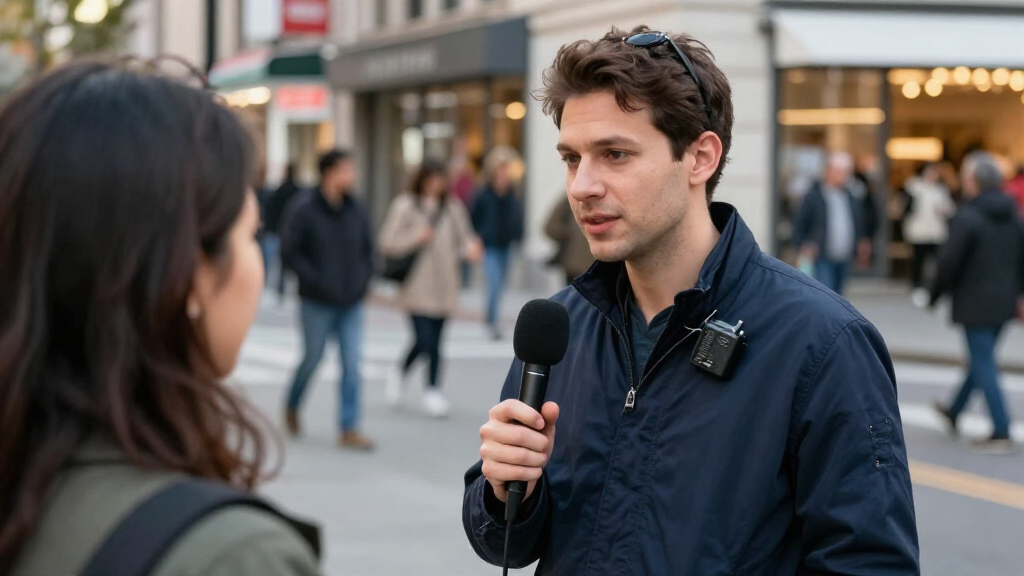
A handheld microphone is easy to point between a reporter and a guest, which helps during fast street interviews and group reactions. A lavalier stays on one speaker, leaving hands free but making speaker changes less immediate. A compact clip-on transmitter can also be more visible than a traditional reporter mic, which may affect how formal an interview looks on camera. Think about whether you will pass a mic, hold it yourself, or attach it to a subject before choosing a format. A common mistake is buying a dual-transmitter kit for its channel count when a single handheld would be faster for short public interviews. For sit-down or walk-and-talk segments, a lavalier setup may be more comfortable and less intrusive.
Check the full connection path to your recorder
Compatibility means more than seeing USB-C, Lightning, or a camera receiver mentioned on a product listing. Confirm that the kit’s included receiver connects to your exact device and that your recording app accepts audio from that input. Phone ports, cases, adapters, and camera inputs can all affect whether a setup works cleanly. If you report across both a phone and a camera, check whether the kit includes the needed receiver or whether you would need separate accessories. Avoid assuming that a connector adapter will solve every issue; some devices handle external audio differently. A direct, tested-by-the-manufacturer connection path usually saves time in the field.
Decide whether you need one or two wireless channels
Two transmitters help when a reporter and guest need separate microphones or when two guests speak on camera. They can also create more setup work: both transmitters must be charged, assigned, and monitored, and the recording workflow may need separate tracks. For a reporter who holds one mic and interviews one person at a time, a single-transmitter or handheld system can be simpler. Do not treat a second transmitter as a substitute for a handheld interview microphone; the physical format still shapes how naturally you can manage conversation. Choose two channels when simultaneous, independently mic’d speakers are part of your regular work. Otherwise, a simpler kit can reduce the equipment you need to manage.
Plan for field setup, power, and carry weight
News work often involves moving between locations, so the receiver, transmitters, cables, adapters, and charging gear should fit your daily bag and setup routine. A charging case can make multiple components easier to store and replenish, but a larger bundle may be more equipment than a solo reporter needs. Tiny lavalier kits can be convenient to carry, though their small parts are easier to misplace. Before buying, list what must be charged and whether the kit provides a clear way to keep its pieces together. Consider how quickly you can connect and check audio while a subject is waiting. A few seconds saved at each interview can matter more than a feature you rarely use.
Choose handling and appearance for the story
Equipment affects how an interview looks as well as how it sounds. A handheld mic signals a conventional interview and gives the reporter visible control, while a small lavalier is less conspicuous and can suit informal video. Wind, clothing friction, and mic placement also affect capture, so leave room in your workflow for a quick sound check and repositioning. If you record in noisy public places, think about where the mic will sit relative to the speaker and surrounding sound rather than relying on a kit’s name or marketing category. Buyers sometimes prioritize invisibility even when a visible handheld would make speaker handoffs clearer. Pick the look and handling style that fits the format your audience will see.
Pay for flexibility only when your workflow uses it
A premium multi-part kit can make sense for a reporter who switches between interviews, two-person segments, and camera or phone recording. It is harder to justify if most work consists of simple single-speaker phone clips. Extra adapters and channels are useful only when they support devices and formats you actually use. Compare the included components with your existing gear before paying for duplicates or planning around accessories that are not in the box. For a first kit, prioritize a straightforward connection and a microphone format you already understand. Experienced crews may get more from broader routing and two-transmitter flexibility, provided they are ready to manage the additional setup.
Frequently Asked Questions
Should I choose a handheld system or a wireless lavalier for street interviews?
Choose a handheld system if you frequently ask questions in public and need to move the microphone between speakers quickly. It is easier to signal who is speaking and to manage short exchanges without attaching a mic to each person. A lavalier is better when one person speaks for longer, you need both hands free, or you want a less prominent microphone in frame. For a reporter who does both, check whether a handheld-focused kit can cover the common interview format before adding a separate lavalier system. The right answer depends more on how speakers take turns than on how many transmitters a kit includes.
Can I use a camera-focused wireless kit with my phone?
Sometimes, but the receiver and connection are what matter—not just the transmitters. Check that the exact kit includes a receiver or adapter compatible with your phone’s port and that your recording app can accept its audio input. A camera receiver may require a separate cable or phone-specific accessory, and a phone may not behave like a camera even when a connector fits. Phone-first products in this roundup reduce that uncertainty for mobile reporting, while camera-oriented options may suit a mixed setup better. Confirm the connection details for your device model before recording an important assignment.
Is a two-transmitter kit necessary for interviews?
Not for every interview. Two transmitters are useful when you need separate microphones on a reporter and guest, or when two guests must be captured at once. For quick one-at-a-time interviews, a handheld mic can be easier to point and manage than fitting multiple people with clip-on transmitters. Also account for the extra charging, pairing, and monitoring that a second transmitter brings. Buy two channels because your reporting format needs them, not simply because a larger kit appears more capable.
Which type of kit is easiest for a first-time mobile reporter?
A phone-first kit with a receiver designed for your phone is usually the simplest starting point, especially if you record one speaker at a time. Before choosing, confirm the phone connector and recording app support; those details prevent common setup surprises. A lavalier can be straightforward for a fixed interview, while a handheld system may feel more natural for street reporting and guest handoffs. Keep the workflow small at first: charge the components, connect the receiver, and make a short test recording before an assignment. If your typical work is on-camera interviews, prioritize handling over the smallest possible size.
When does a premium kit make sense over a simpler reporter microphone?
A premium system makes more sense when you regularly need two transmitters, multiple recording setups, or a handheld adapter that changes how a compact wireless mic is used. Those capabilities can reduce the need to carry separate systems for different assignments. They add little value if you only record short, single-person clips on one phone, where a simpler compatible kit may be easier to operate. Compare the included receivers and adapters with your current camera and mobile gear before committing. The best upgrade is the one that removes a recurring workflow limitation, not one that adds unused components.
Conclusion
For best overall traditional reporting, I’d start with the Movo WMX-7-TH+RX because its dedicated handheld format aligns with quick interview work. The COMICA Revo S is my best value-style pick for phone-first handheld reporting, while the RØDE Wireless PRO is the best premium choice for crews needing two transmitters and a handheld adapter. For beginners recording on a phone, I’d favor a phone-oriented kit such as the COMICA Revo S or a simple lavalier option after checking the exact connector. Choose the DJI Mic Mini or GoPro kit when compact multi-person capture or a larger bundled setup better fits your production workflow. If you mainly interview people face-to-face, choose a handheld system; if you record one speaker hands-free, a lavalier is the more natural fit.